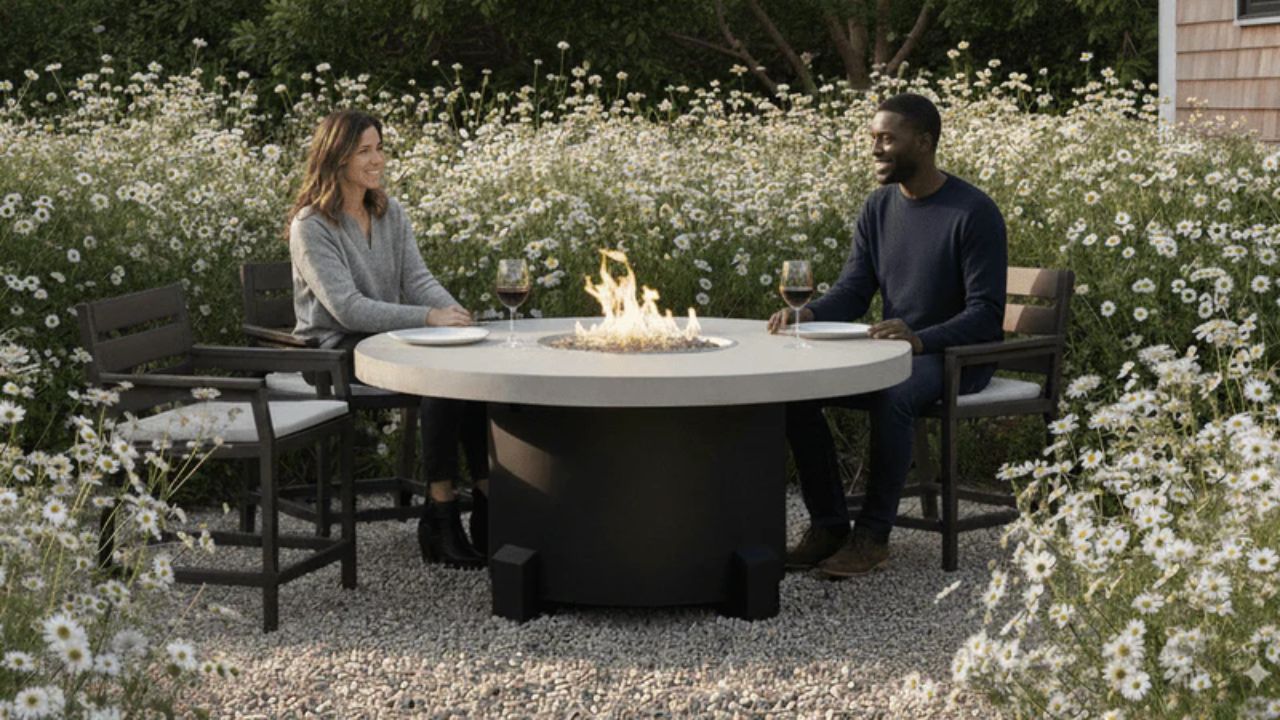
Fire Table Design Inspiration: Sources for Commercial Property Luxury Ideas
Key Takeaways
- Luxury fire table design for commercial properties depends on more than aesthetics, with scale, placement, and premium outdoor-ready materials shaping whether the feature feels intentional and high-end.
- The best inspiration sources come from hospitality properties, design portfolios, trade shows, and site-specific cues, because successful concepts must match architecture, traffic flow, and brand identity.
- Custom fire tables can strengthen property branding and guest experience by increasing dwell time, encouraging social interaction, and creating memorable, photo-worthy moments that support revenue and satisfaction.
- Turning inspiration into a buildable concept requires practical decisions about format, fuel type, code compliance, and maintenance, so the final installation performs well operationally as well as visually.
- Common mistakes such as trend copying without context, poor seating and wind planning, and low-grade material choices can make expensive installations look generic, underperform, or require early replacement.
Commercial properties compete for attention through memorable outdoor spaces. Fire table design ideas that work for residential patios often fall flat in hotel courtyards, resort pools, and rooftop lounges. The difference comes down to scale, materials, and intentional styling that matches the property's brand. This guide covers where to find luxury outdoor ideas, how custom fire tables create guest experiences worth photographing, and what separates installations that impress from those that disappoint. Whether you're specifying luxury outdoor furniture for a new build or upgrading an existing space, these insights will sharpen your approach.
What Makes a Fire Table Design Feel Luxurious in a Commercial Property Setting?
Luxury reads differently in commercial spaces than in backyards. Guests judge quality within seconds of approaching an outdoor table with a fire pit installation. Three factors determine whether a fire table elevates a space or blends into a forgettable background: design elements, scale, and material selection.
Which Design Elements Signal "Luxury" to Guests at First Glance?
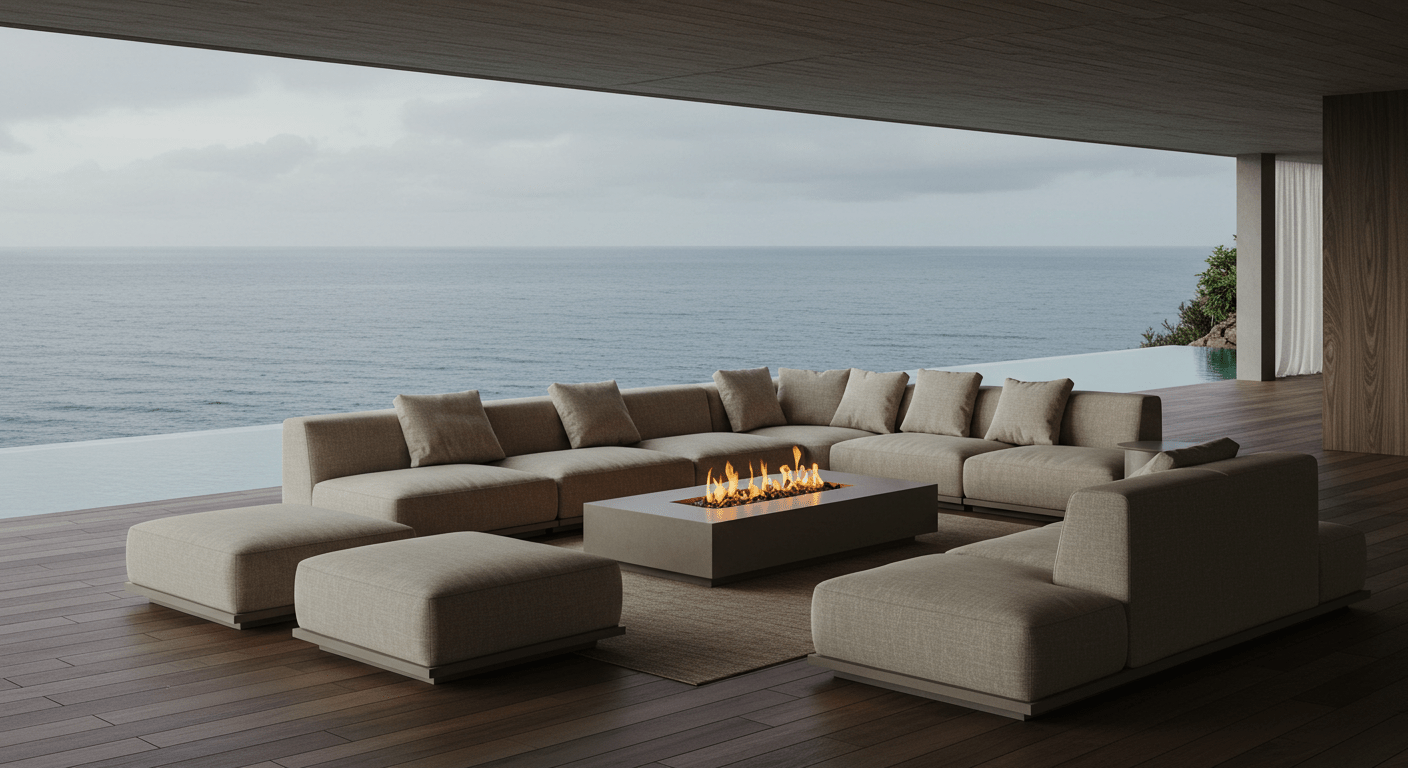
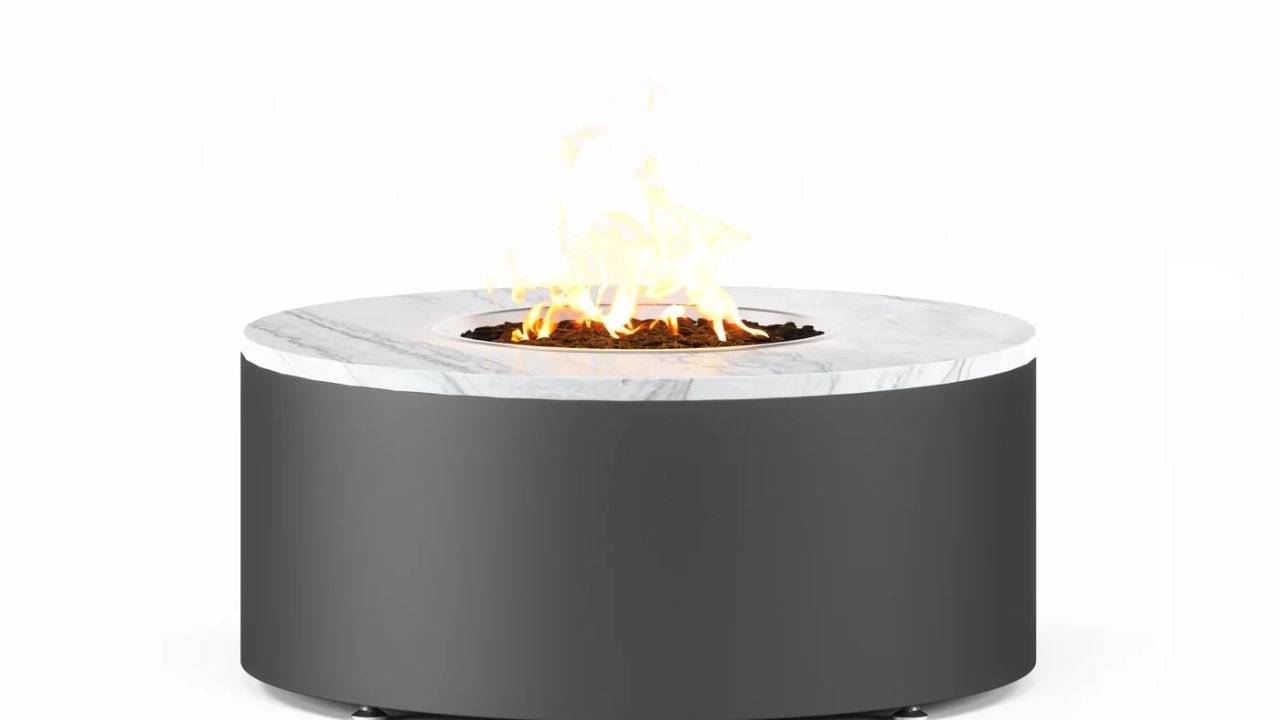
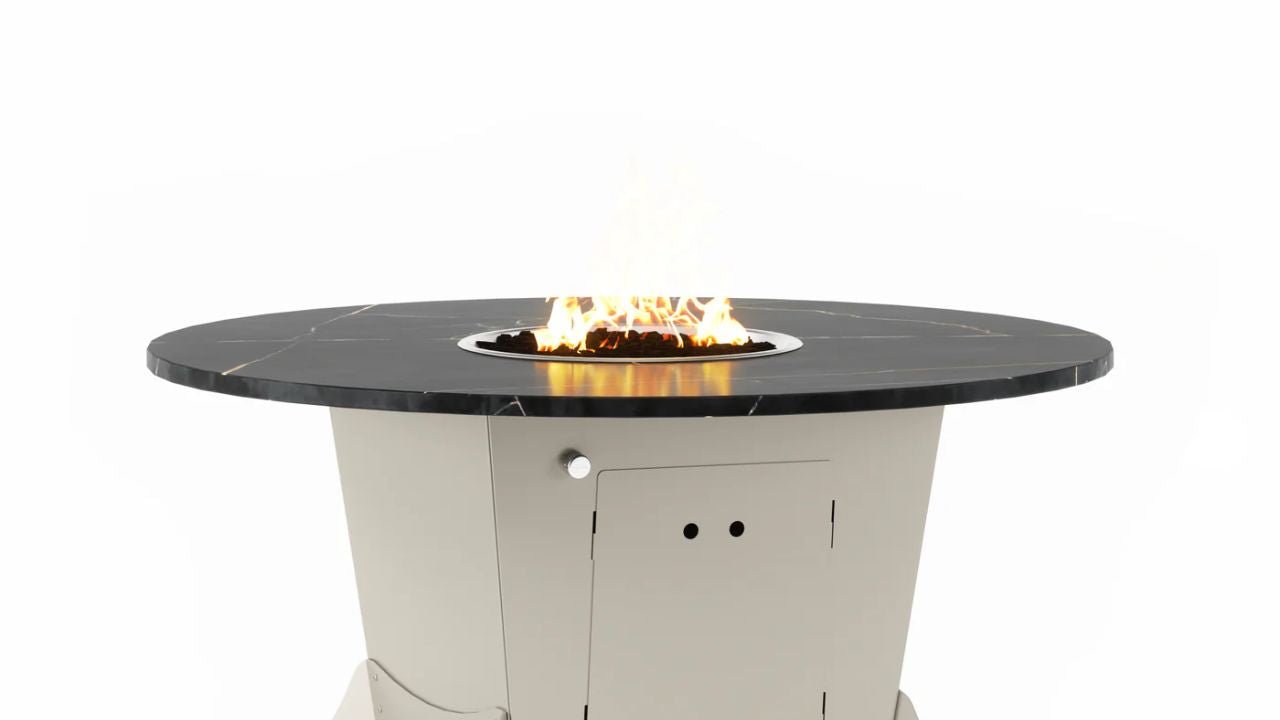
Contemporary Luxury style combines marble surrounds, brass accents, and LED lighting integration into a cohesive statement. These elements signal investment and intention. Linear fire pit shapes are the fastest-growing form factor in the market because they read as architectural features rather than accessories. Tabletop fire designs are growing at 10.2% annually as fire features merge with functional furniture, creating signature fire table design moments that serve both ambiance and utility.
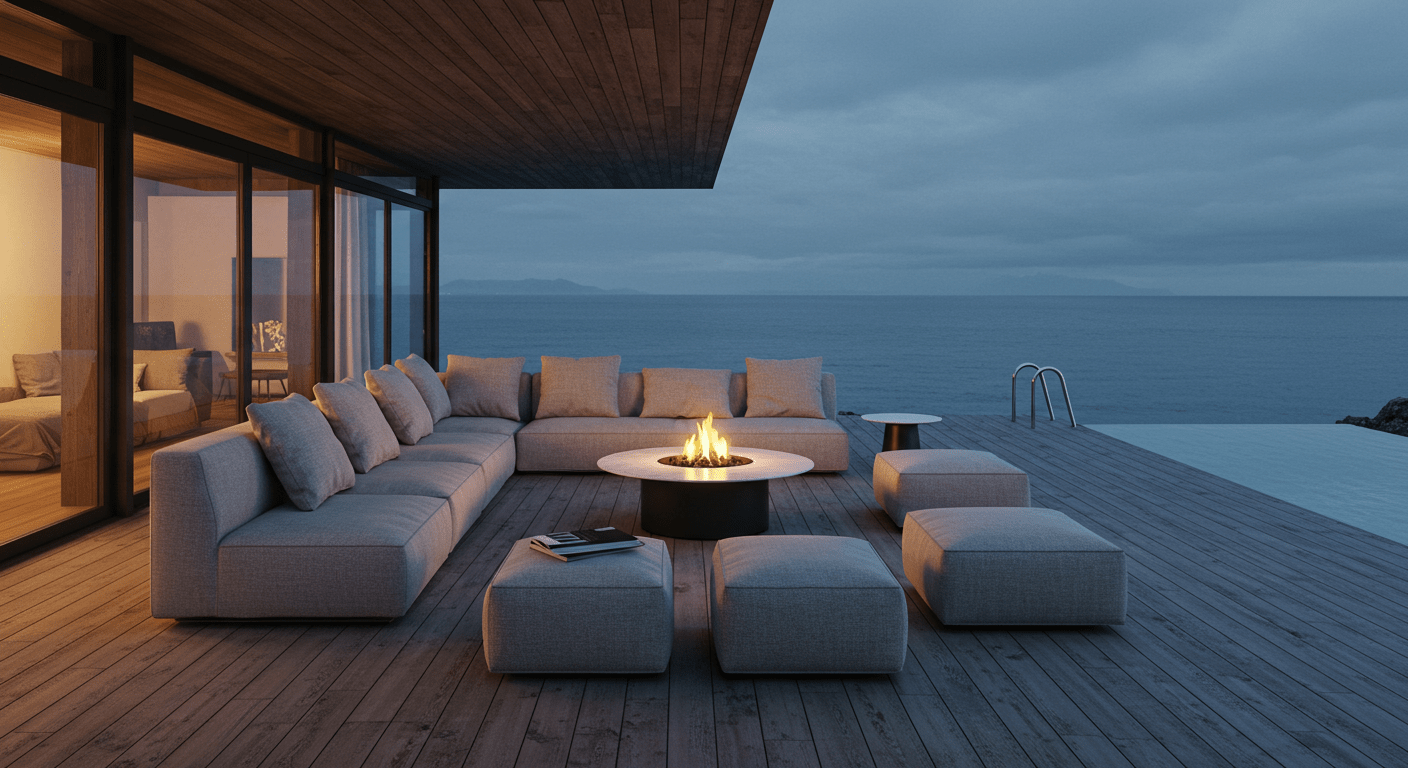
Choose linear designs if your property features modern architecture with clean sightlines. Choose round or organic shapes when your design language emphasizes natural materials or Mediterranean warmth.
How Do Scale, Proportion, and Placement Shape Perceived Value?
Size communicates commitment. Modern Minimalist linear features typically range 6–12 feet in length for residential-scale projects. Contemporary Luxury custom fire tables for commercial properties extend to 8–15 feet or more. Undersized fire features in large outdoor spaces look like afterthoughts rather than intentional design choices.
Placement requires code-driven planning that also serves aesthetics. Commercial installations need 3 feet minimum clearance around the fire pit for foot traffic, 5–6 feet from any structure, and 7+ feet of overhead clearance under pergolas. These clearances create the breathing room that makes a fire feature feel deliberate.
Choose a larger scale (10+ feet) if your seating area accommodates 12 or more guests. Choose a moderate scale (6–8 feet) when the fire table anchors an intimate conversation zone.
What Materials and Finishes Look Premium While Staying Practical Outdoors?
Material selection determines both first impression and total cost of ownership. GFRC (Glass Fiber Reinforced Concrete) delivers 30–50+ year lifespans with exceptional design flexibility. It can be cast into virtually any shape while remaining lighter than poured concrete. A stone outdoor table with a fire pit offers 25–40 year durability with timeless appeal that suits traditional and transitional properties.
Sintered stone options like Dekton and Neolith represent the premium tier at 25–50+ years with minimal maintenance requirements. For properties seeking distinctive character, Corten steel develops a rust-orange patina that actually protects the underlying metal while creating visual warmth that improves with age.
Choose GFRC if you need custom shapes and modern aesthetics. Choose natural stone when your property's design language favors organic textures. Choose Corten steel if industrial-chic aesthetics align with your brand.
Where Can Commercial Property Teams Find the Best Fire Table Design Inspiration?
Five-star hospitality brands have already solved the problems you're facing. They've tested what works, measured guest response, and refined their approaches over thousands of installations. Studying their strategies—alongside proven outdoor high-end fire table design inspiration sources and site-specific analysis—shortens your learning curve.
What Can Hotels, Resorts, and Rooftop Lounges Teach About Fire Feature Styling?
Luxury hospitality brands treat fire features as curated experiences rather than standard amenities. Their approaches reveal transferable strategies for any commercial property.
Montage Deer Valley places fire pits in Vista View Two Bedroom Suites—two private terraces per suite spanning 1,650–1,800 square feet for up to 9 adults. The fire pit becomes a private gathering anchor. Ritz-Carlton Lake Tahoe takes scarcity further: the property offers only 2 Reserved Private Firepits, creating exclusivity through deliberate limitation. Four Seasons Scottsdale integrates 500 square foot Luxury Casitas with private patio firepits facing Sonoran Desert views, using fire as a threshold between interior comfort and landscape.
Choose the private amenity model if your property targets guests seeking exclusivity. Choose shared communal fire features when your brand emphasizes social atmosphere and guest interaction.
How Can Designers Use Hospitality, Landscape, and Outdoor Furniture Portfolios for Ideas?
Industry awards and trade shows concentrate the best current work in one place. ASLA surveys consistently rank fire pits among the most popular outdoor design elements—71.5% of respondents rated them popular in 2017, with 66.0% in 2018.
HD Expo (Hospitality Design Expo) is the primary trade show for commercial fire table discovery. Manufacturers debut custom designs targeting hospitality designers and property developers. For ongoing inspiration between events, Instagram hashtags aggregate real installations: #luxuryfirefeature, #resortdesign, and #outdoorluxury provide visual reference from designers and properties worldwide.
Choose trade show attendance if you're specifying for a major project and want hands-on material evaluation. Choose digital research when you're in early ideation and need broad trend exposure.
Which On-Site Cues Should Guide Inspiration Choices?
Context determines which inspiration sources translate to your specific property. Fire table style must respond to architecture, sightlines, and traffic patterns—not just aesthetic preference.
Organic/Natural style featuring live-edge wood, boulder elements, and water feature integration succeeds where connection to nature is core to brand identity. Mediterranean/Resort style thrives in warm climates with extended outdoor seasons. Forcing either style into mismatched contexts creates visual tension that guests feel but can't articulate.
Stakeholder alignment matters as much as aesthetics. Data shows 90% of commercial fire table projects involve multiple decision-makers for final approval. Gathering inspiration that speaks to operations, design, and ownership perspectives accelerates consensus and prevents late-stage redesigns.
How Do Custom Fire Tables Enhance Luxury Property Branding and Guest Experience?
Fire tables do more than add warmth. They shape how guests perceive, interact with, and remember your property. The right installation becomes a brand asset that drives measurable business outcomes.
How Can a Fire Table Reflect a Property's Brand Identity, Theme, or Audience?
Custom fire tables transform generic outdoor features into brand expressions. Manufacturers like Cooke Furniture offer complete personalization—shape, size, materials, finishes, and branded elements including logos, brand colors, and signature motifs. A casino resort can incorporate gaming-inspired details. A wellness retreat can specify organic forms and natural stone.
The business case is clear. Ritz-Carlton properties that implemented fire feature programs report 30% increases in guest satisfaction scores tied directly to the outdoor experience.
Choose full customization if brand differentiation is a strategic priority and the budget allows a $12,000–$25,000+ investment. Choose premium off-the-shelf options when the timeline is compressed, or brand expression relies more on surrounding design elements.
Why Do Fire Tables Increase Dwell Time, Social Interaction, and Photo-Worthy Moments?
Fire features change guest behavior in ways that show up in operating metrics. Properties report 25–40% increases in customer dwell time after installing premium fire features. Extended time onthe property correlates directly with increased spending.
Guest preferences reinforce this pattern. Research shows 79% of hotel guests express a preference for properties offering outdoor fire pit experiences. Ritz-Carlton properties report 35% increases in food and beverage revenue tied to fire feature programs—guests who linger order more.
Fire tables also create natural photography backdrops. Guest social sharing extends brand reach at zero media cost.
What Customization Options Create a Signature Guest Experience Without Hurting Durability?
Technology integration defines the Contemporary Luxury tier without compromising longevity. Flame-tec's iFlame Pro app enables flame height adjustment, temperature control, and scheduling with Alexa and Google Home integration. Staff can manage multiple fire features across a property from a single device.
Modern Blaze and Cooke Furniture offer integrated LED lighting for programmable ambient effects. For properties seeking full sensory integration, Magna Audio's Oasis fire table incorporates a 360-degree all-weather sound system—fire, light, and audio in a single weatherproof unit.
Choose app-controlled technology if your property serves tech-forward guests and staff needs centralized management. Choose manual operation when simplicity, reliability, and minimal maintenance are priorities.
How Should You Translate Inspiration Into a Buildable Commercial Fire Table Concept?
Moving from inspiration to installation requires practical decisions about format, fuel, and compliance. The choices you make here determine both upfront costs and long-term operational burden.
How Do You Choose Between Built-In, Freestanding, and Modular Fire Table Formats?
Format selection depends on permanence requirements and budget. Current market pricing establishes clear tiers.
Portable and freestanding fire pit tables run $700–$2,500—suitable for seasonal operations or testing guest response before a major investment. Mid-range gas fire features cost $3,000–$7,500 for permanent installations with standard finishes. Custom luxury outdoor fire pits range from $8,000 to $25,000 for bespoke designs with premium materials. Premium commercial installations start at $20,000+ for large-scale or highly customized projects.
Choose freestanding if flexibility matters more than permanence or you're validating concepts before committing. Choose built-in when the fire table is integral to hardscape design and long-term property value.
What Fuel Type and Performance Specs Should Match the Property's Use Case?
Natural gas delivers lower operating costs but requires $1,500–$3,000 for line installation plus permits. Once connected, fuel management is minimal.
Propane offers placement flexibility—ideal for seasonal operations, rooftop installations, or properties without existing gas infrastructure. Market data reflects shifting preferences: propane fuel is growing at 9.4% annually, while natural gas grows at 7.2%. Wood-burning options are declining at 4.5% annually as properties prioritize convenience and air quality compliance.
Choose natural gas if you have existing infrastructure and want minimal ongoing fuel management. Choose propane when installation flexibility or seasonal use outweighs operational simplicity.
How Can Teams Balance Aesthetics, Code Compliance, and Maintenance Requirements?
Compliance isn't optional—it drives insurance coverage and liability protection. Fire tables must meet ANSI Z21.97/CSA 2.41 standards for outdoor gas appliances and carry UL/ETL electrical listings. Proper compliance can reduce insurance premiums by 10–15%, offsetting some specification costs.
Budget realistically for ongoing care. Premium commercial units require $800–$1,200 annual maintenance to protect the 20–30+ year lifespan that quality installations deliver. Skipping maintenance accelerates wear and voids warranties.
Choose premium-grade components if minimizing lifetime cost and maximizing reliability are priorities. Choose mid-range options only when budget constraints are firm, and you accept shorter replacement cycles.
What Design Mistakes Can Make a Luxury Fire Table Installation Look Generic or Underperform?
Even substantial investments fail when execution misses fundamentals. Understanding common mistakes helps you avoid expensive corrections and disappointed guests.
Why Does Copying Trends Without Site Context Weaken the Final Result?
Five dominant design styles serve different property types: Modern Minimalist, Organic/Natural, Industrial Chic, Mediterranean/Resort, and Contemporary Luxury. Selecting based on trend popularity rather than site context creates visual disconnects guests sense immediately.
Mediterranean/Resort style featuring travertine, tumbled stone, and curved forms thrives in warm climates with extended outdoor seasons. It looks forced on contemporary urban rooftops. Industrial Chic succeeds in converted warehouse properties but clashes with traditional resort architecture. Organic/Natural fits mountain lodges and coastal retreats but feels out of place in sleek metropolitan settings.
Choose your style based on existing architectural vocabulary and climate—understanding the differences between modern vs traditional fire tables helps match design to context rather than chasing Pinterest trends.
How Can Poor Seating Layout, Flame Scale, or Lighting Reduce Guest Comfort?
Fire tables fail when surrounding elements receive inadequate attention. Integrated seating areas designed specifically around fire features add $2,000–$5,000 to project budgets—but skipping this investment creates awkward gathering dynamics where guests can't comfortably face the flame.
Wind guards cost $100–$300 each and are essential for guest comfort in exposed locations. Without them, even premium fire tables become unusable in moderate wind. Flame scale matters too: undersized flames disappoint in large settings while oversized flames overwhelm intimate spaces.
Choose to invest in seating integration and wind protection upfront. Retrofitting costs more and disrupts operations.
What Finish and Material Choices Age Badly in High-Traffic Commercial Spaces?
Material shortcuts create replacement cycles that exceedthe premium initial investment. Budget fire table options typically fail within 3–5 years under commercial use intensity.
Marble fails in 5–10 years outdoors and is not suitable for commercial exterior applications despite its visual appeal. For burners, 304 stainless steel lasts only 4–10 years versus marine-grade 316 stainless at 10–25 years. Standard electronic ignition systems fail in 3–5 years while All-Weather Electronic Ignition Systems (AWEIS) extend service life to 7–15 years.
Choose marine-grade 316 stainless steel and AWEIS ignition if minimizing replacement cycles matters. Choose budget materials only when the installation is explicitly temporary.
How Can Property Owners Choose the Right Next Step After Gathering Fire Table Design Ideas?
Inspiration means nothing without execution. Moving forward requires clear documentation, objective comparison criteria, and visual validation before committing capital.
What Should Be Included in a Design Brief for Vendors or Fabricators?
Effective design briefs establish budget parameters and scope upfront. Premium commercial units typically price $12,000–$25,000 for the fire table itself, but that figure represents only part of the total project cost.
Additional budget line items include natural gas line installation at $1,500–$3,000, integrated seating at $2,000–$5,000, protective covers at $75–$250, and wind guards at $100–$300 each. Documenting these requirements prevents scope creep and ensures vendor quotes reflect actual project needs.
Include site dimensions, architectural context photos, brand guidelines, fuel source availability, and maintenance expectations. The more complete your brief, the more accurate your quotes.
How Can You Compare Concepts by Guest Impact, Lifecycle Cost, and Brand Fit?
Comparison requires metrics beyond aesthetics. Properties report 67% immediate ROI on premium fire table investments through increased bookings and guest spending.
Long-term value compounds further. Premium installations can increase property value by $25,000–$50,000 over 10 years. Short-term rental properties see nightly rates increase 20% with quality fire features. These returns assume appropriate lifespan—premium units deliver 20–30+ years versus budget options at 3–5 years.
Choose premium specifications if you're holding the property long-term and want maximum ROI. Choose mid-range options when near-term budget constraints outweigh lifecycle economics.
When Should You Request Mockups, Material Samples, or Prototype Visuals?
Request samples before finalizing any specification. The global fire pit market reached $6.8 billion in 2022, with projected 6.5% annual growth through 2030—meaning options multiply constantly. What looked cutting-edge during initial research may have alternatives worth considering.
Leading brands maintain extensive online portfolios for preliminary review: Cooke Furniture, Paloform, AK47 Design, and Nisho showcase real installations across property types. After narrowing options digitally, request physical material samples for any finish that will dominate visual presence.
Choose to invest time in samples and mockups for installations exceeding $15,000. Choose to streamline approval for smaller projects where revision costs exceed the sample evaluation effort.
Turn Your Fire Table Vision Into a Custom Installation
Great fire table design starts with inspiration but delivers value through execution. The difference between forgettable outdoor spaces and signature guest experiences comes down to material selection, scale, and brand-aligned customization. Commercial properties that invest in premium fire features see measurable returns—67% immediate ROI, 25–40% longer dwell times, and lasting impressions guests share long after checkout.
Cooke Furniture specializes in designer fire pit dining tables that balance commercial durability with the refined aesthetics luxury properties demand. From initial design concept through final installation, our California-based team guides property owners through every specification decision, ensuring materials, dimensions, and finishes align with your vision and operational requirements. Contact us to discuss your project, request material samples, and begin creating fire features that transform how guests experience your outdoor spaces.