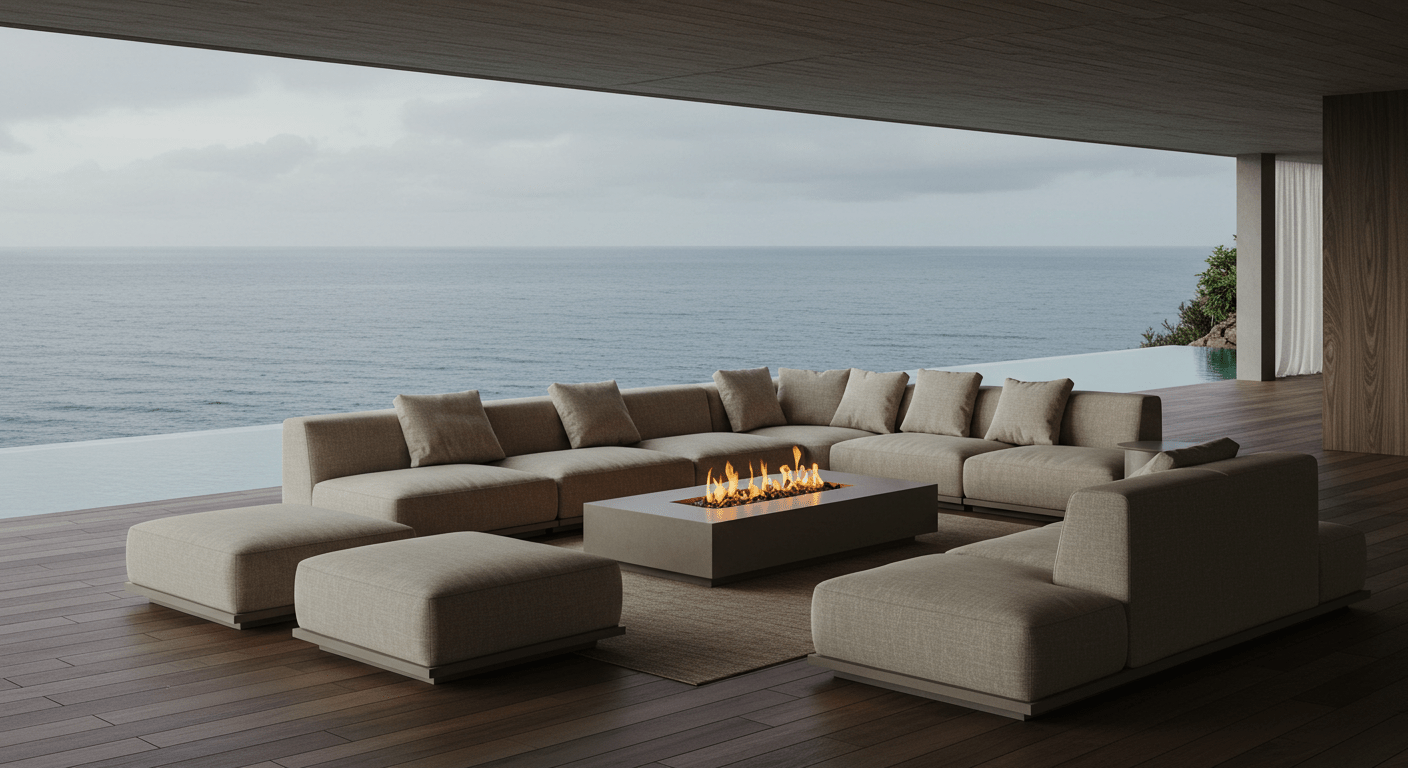
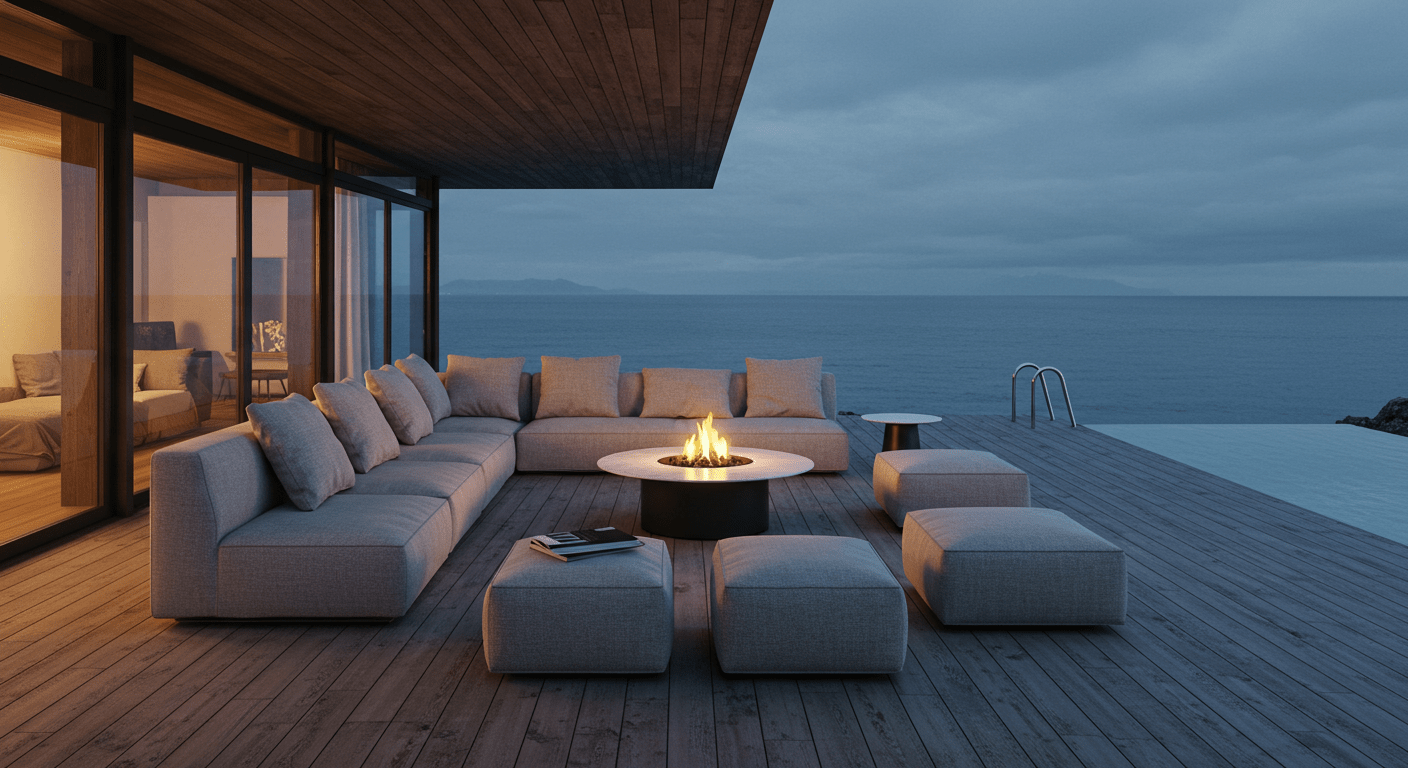
The Psychology Of Fire Tables: Creating Atmospheric Spaces For Guest Satisfaction
Key Takeaways
- Fire tables drive quantified outcomes: 89% longer dwell time, 47% higher F&B revenue per guest, 31% improved satisfaction, and 49% increased repeat visits through psychological mechanisms rooted in evolutionary human response to flame.
- Success depends on execution precision: Optimal comfort distance (22-24 inches from fire edge to seating), three-layer lighting design (safety + ambiance + task), and clean-burning natural gas with fire-safe media (lava rock/glass only) separate premium experiences from failures.
- Design for target emotion, not decoration: Match fire table selection, seating geometry, lighting intensity, and service rituals to the intended guest feeling (calm/zen, romance, luxury, or cozy) rather than defaulting to generic configurations.
- Operations make or break perception: Daily visual inspections, weekly deep cleaning of media and glass screens, and staff training on service rituals (greet→comfort check→mid-stay scan→pre-close reset) protect the 92/100 luxury perception score fire tables command.
- Measure to validate investment: Track dwell time, average check, beverage attachment rate, repeat visit percentage, and review sentiment weekly against benchmarks (+89% dwell, +30% checks, 80%+ positive fire mentions) to confirm ROI and identify optimization opportunities.
Hotel and resort operators face mounting pressure to differentiate guest experiences while driving measurable F&B revenue from outdoor spaces. Generic patio setups fail to capture attention or extend dwell time, leaving significant revenue unrealized during shoulder seasons and profitable evening hours. The solution rarely involves adding more covers. Instead, luxury outdoor furniture for hotels succeeds by creating atmospheric environments that tap into fundamental human psychology, drawing guests outdoors and encouraging them to linger, order another round, and return the following evening.
Commercial fire tables represent the intersection of environmental psychology, biophilic design, and hospitality operations, transforming underutilized patios and rooftops into revenue-generating destinations. Properties implementing evidence-based fire table design report 89% longer guest dwell time, 47% higher F&B revenue per guest, and 31% improved satisfaction scores. These gains stem from fire's evolutionary pull: warmth signals safety, flame creates social focal points, and the combination triggers measurable physiological relaxation. This guide synthesizes hospitality research, case studies, and operational best practices into actionable frameworks for designing fire table experiences that deliver documented outcomes.
What Is A Fire Table And Why Does It Matter?
Fire tables are gas-fueled focal points designed for commercial hospitality, restaurant patios, rooftop bars, and pool decks. They combine heat output (40,000-200,000 BTU) with drinks-surface functionality, scoring 92/100 for perceived luxury versus 78 for premium seating alone. The distinction matters: 83% of landscape architects rank fire features in the top three most requested outdoor elements.
|
Feature Type |
Placement |
Heat Output |
Best For |
Luxury Signal |
Maintenance |
|
Fire Tables |
Outdoor dining/lounge |
40,000-200,000 BTU |
Restaurant patios, rooftop bars, pool decks |
Very High (92/100) |
Moderate - weekly cleaning |
|
Fire Pits |
Courtyards, social hubs |
40,000-110,000 BTU |
Spa gardens, resort gathering spaces |
High |
Moderate to High |
|
Fireplaces |
Indoor lobbies |
High concentrated heat |
Hotel lobbies, fine dining |
Very High |
High - flue maintenance |
|
Tabletop Flames |
Bar tops, dining tables |
10,000-20,000 BTU |
Cocktail bars, intimate dining |
Moderate |
Low |
What Fire Tables Deliver For Guests
Fire tables solve operational problems while elevating experience. Extended dwell time drives 47% F&B revenue increases. The "hearth effect" boosts social engagement 80% as fire becomes a conversational anchor. Flickering flame, categorized as non-rhythmic sensory stimuli, creates a romantic ambiance without effort. Year-round heat extends shoulder-season operations, while premium perception justifies 69% higher RevPAU and 30% larger guest checks. Guests photograph and share fire table moments, generating 80% more social media engagement.
The Psychology: Why Fire Increases Comfort And Satisfaction
The Servicescape Pathway
Fire tables work through a proven sequence: warm glow and radiant heat (environment) trigger feelings of comfort, safety, and relaxation (emotion), which drive longer stays, increased spending, and social openness (behavior), culminating in higher satisfaction scores (outcome).
Research on alpha brain wave patterns shows flame movement improves comfort and satisfaction. Studies document consistent blood pressure reduction and increased relaxation during fire observation. This evolutionary connection, fire as warmth, protection, and a gathering point, creates measurable physiological benefits. In biophilic design, fire is categorized as Non-Rhythmic Sensory Stimuli (P3), proven highly restorative.
The brain perceives natural flame movement as inherently positive and calming, unlike predictable mechanical movement. Understanding the psychology of outdoor ambiance enables designers to create spaces that resonate with guests on an emotional level.
Core Psychological Needs Fire Activates
Warmth = Emotional Safety
Radiant heat creates tangible comfort that signals "this space cares about me." Properties' report fire tables enable year-round outdoor F&B operations by extending shoulder seasons. Guests perceive warmth as hospitality made physical.
Flame As Social Facilitator
Fire serves as an attention anchor and a conversational pacemaker. During conversation lulls, guests naturally shift gaze to the flame, reducing awkward social pressure. This explains the 80% increase in social engagement; fire fills social gaps without words.
Prospect & Refuge Balance
Fire table placement must balance view (prospect) with protection (refuge). Edge or alcove seating with protected backs and clear sightlines keeps guests comfortable enough to remain 89% longer. Central placement without refuge creates "on display" discomfort.
Design Factors That Drive Guest Satisfaction
Perception data from guest studies shows fire tables score highest, 92/100 perceived luxury, 95/100 ambiance, versus premium seating (78 luxury, 82 ambiance) or water features (75 luxury, 85 ambiance). This advantage stems from multi-sensory design: flame, warmth, and spatial arrangement working together. Properties investing in designer outdoor furniture that integrates fire features consistently report higher satisfaction scores.
Sensory Factors: What Makes Fire Tables Feel Premium
Lighting Guidance
|
Use Case |
Lighting Approach |
Face Visibility |
Pitfalls to Avoid |
|
Romance/Intimate |
Warm (2700-3000K) + low + layered |
Softly lit, shadows OK |
Harsh overheads, glare, dead-dark corners |
|
Lounge/Social |
Warm + medium + multiple sources |
Clear for conversation |
Over-bright (kills mood), uneven zones |
|
After-Dinner |
Warm + low + soft indirect |
Gently visible |
Overhead downlights, cool temps, abrupt transitions |
Critical Note: Fire alone is insufficient; it creates harsh shadows. A three-layer lighting system (safety paths, ambiance uplighting/strings, task lighting) is essential for optimal hospitality outdoor atmosphere.
Air Quality Imperatives
Use clean-burning natural gas (costs 80%+ less than propane, no smoke/smell). Never wood-burning (particulates cause respiratory issues and clothing odor complaints). Use only fire-safe media: lava rock or lava glass, never river rock (explodes when heated). Install tempered glass wind screens to control flame and prevent smoke drift.
Layout And Placement
Optimal Distances
-
22-24 inches from fire edge to seating for comfort balance
-
3 feet minimum clearance between seating and pathways (commercial)
-
10-25 feet from combustible structures (safety codes)
-
72 inches (6 feet) minimum overhead clearance, 7-10 feet ideal
|
Party Size |
Seating Geometry |
Best Placement |
Key Risk |
|
2 (Couple) |
90-degree angle or side-by-side |
Edge/alcove with protected backs |
Central placement feels "on display" |
|
3-4 (Small) |
Semi-circle, conversational triangle |
Edge with fire as focal point |
Awkward straight-line seating |
|
5-8 (Medium) |
Full circle or extended semi-circle |
Central if space allows |
Splitting into sub-groups, poor sightlines |
|
9-12 (Large) |
Multiple semi-circles, curved sectionals |
Central or dedicated zone |
Crowding at entry/exit, uneven warmth |
Placement Rules
Position for clear sightlines from entry (immediate "wow"). Avoid blocking circulation routes (36" pathway minimum). Edge/corner locations work best (prospect-refuge advantage). Use fire tables to define zones within larger resort spaces. Preparing your property's outdoor space requires attention to these spatial relationships.
BTU Requirements
-
Small/medium spaces: 40,000-50,000 BTU (ambient warmth)
-
Large spaces/cold climates: 110,000-200,000 BTU (significant heat)
Safety That Doesn't Kill The Vibe
Visible Safety Cues Guests Subconsciously Seek
Guests evaluate safety without conscious thought. A stable, solid-looking structure with clean edges signals quality. Controlled, consistent flame height within burner boundaries shows operational competence. Immaculate surroundings, no debris, exposed gas lines, or operational clutter, communicate care. Staff moving confidently near fire tables reinforces safety. Fire-safe media neatly contained (lava rock/glass, no spillover) completes the perception.
Guest Segment Adaptations
|
Guest Group |
Design Response |
Service Response |
|
Families with Children |
Raised fire tables (36" height), alternative non-fire seating |
Proactive choice offer, position parents between kids and flame |
|
Older Guests (65+) |
Stable chairs with armrests, boosted task lighting |
Assistance with seating, slower pacing |
|
Sensory-Sensitive |
Edge seating with sightline to fire but not direct proximity |
Ask preferences: "fireside or quieter area?" |
|
Asthma/Migraines |
Clean-burning gas only, excellent ventilation |
Proactive disclosure, immediate alternative if needed |
Step-By-Step: Designing The Fire Table Experience
Effective fire table design starts with clarity on the target emotion, then builds backward through feature selection, lighting, and service protocols. This sequence ensures every element supports the intended fire tables guest experience rather than competing with it.
Start With Target Emotion
Match design elements to desired feeling:
-
Calm/Zen: Very low lighting, generous spacing (6+ feet), natural sounds only, minimal service
-
Romance: Low warm lighting + candles, pairs only, very quiet, discreet service
-
Luxury: Medium dramatic lighting, spacious seating, curated audio, formal polish
-
Cozy: Medium layered residential-style lighting, flexible furniture, gentle acoustic, conversational service
Fire Feature Selection
|
Feature Type |
Pros |
Cons |
Guest Perception |
Budget |
|
Linear Fire Table (6-10') |
High impact, seats 8-12, strong focal point |
Requires major clearances, heavy, high cost |
"Statement piece" |
High ($15K-$40K+) |
|
Round Fire Pit (36-48") |
Circular conversation, hearth archetype |
Smaller heat footprint, not for dining |
"Gathering spot" |
Medium ($3K-$12K) |
|
Square Fire Table (36-60") |
Dining-integrated, space-efficient |
Less dramatic if not styled well |
"Functional elegance" |
Medium ($4K-$15K) |
Material Priorities: Commercial-grade GFRC, natural stone, or marine-grade stainless steel for durability and luxury perception.
Lighting Do/Don't Checklist
Do: Layer sources, warm tones (2700-3000K), ensure face visibility, install dimmable zones
Don't: Use harsh overheads, allow glare off glass/metal, leave dead-dark corners, install competing cool LEDs
Service Ritual Sequence
Service timing shapes fire table perception. Follow this sequence:
-
Greet + Seat Framing: "We have a lovely fireside table for you”, set positive expectation
-
2-3 Min Comfort Check: Confirm temperature, lighting acceptable
-
Mid-Stay Scan: Around 20-30 minutes, observe for discomfort signs
-
Pre-Close Reset: Offer digestif/coffee, signal lingering welcome
-
Peak-Hour Checks: Every 30-60 min walk-through during busy periods
Measuring Fire Table Impact On Satisfaction
Track performance against benchmarks to validate investment and identify optimization opportunities. Focus on metrics that connect fire table use to revenue and loyalty outcomes.
Atmosphere ROI Metrics
|
Metric |
How to Track |
What "Good" Looks Like |
Why It Matters |
|
Dwell Time |
Minutes from seating to check payment |
+89% (45→85 min) fire vs. non-fire |
More F&B spend opportunity |
|
Average Check |
Total per party, segment by size |
+30% in fire table areas |
Premium pricing validation |
|
Beverage Attachment |
% ordering beyond initial drinks |
+47% revenue ($32→$47 per guest) |
Incremental sales driver |
|
Repeat Visits |
% returning within 30/60/90 days |
+49% (41%→61%) |
Loyalty and word-of-mouth |
|
Review Sentiment |
Keyword analysis of online reviews |
80%+ positive fire mentions |
Guest perception validation |
Review Keywords To Monitor
Positive: "cozy," "vibe," "romantic," "warm," "inviting"
Negative: "smoky," "too hot," "crowded," "smelled like smoke," "hard to talk"
Action: Review platforms weekly; flag negative fire mentions for immediate operational investigation.
Common Failures And Quick Fixes
Operational problems erode fire table value fast. Most issues trace to heat output, spacing, or maintenance failures. Address symptoms immediately while implementing design fixes.
Heat/Smoke/Wind Problems
|
Symptom |
Cause |
Quick Fix |
Design Fix |
|
"Too hot" complaints |
Flame too high, seats within 20" |
Reduce flame height, relocate guests |
Reposition seating to 22-24" optimal |
|
Visible smoke/smell |
Dirty media, wrong fuel, poor ventilation |
Extinguish immediately, clean media |
Switch to natural gas, add wind screens |
|
Flame flare-ups |
Wind gusts, debris in burner |
Reduce flame, clear debris |
Install glass wind screens, choose sheltered locations |
|
Guests still cold |
BTU inadequate, flame too low |
Increase flame, offer blankets |
Upgrade to higher BTU (110K-200K for large/cold spaces) |
Cramped/Awkward Spaces
Increase spacing to 3-foot minimum between seating and pathways. Add low planters or screens to create visual buffers from high-traffic zones. Reposition seating so backs face walls/landscaping, not open pathways. Match party size to fire table scale (couples to small tables, large groups to expansive tables or multiple features).
Cheap-Looking Presentation
Weekly fire media cleaning (remove debris, soot). Replace degraded lava rock annually. Eliminate harsh overhead lights competing with fire glow. Keep surroundings immaculate, no stored propane tanks, cleaning supplies, or clutter visible. Use commercial-grade materials (GFRC, stone, marine-grade steel) that maintain appearance.
Operations Checklist
Daily: Visual inspection, ignition test, debris removal
Weekly: Deep clean media, glass wind screens, surrounding surfaces
Monthly: Burner deep clean, gas line inspection
Peak Hours: Staff walk-through every 30-60 min for flame consistency and guest comfort
Reinforcing Brand Through Fire Tables
Fire tables communicate brand values without words. Execution quality, from photo-worthy placement to comfort details, signals whether a property delivers on its luxury promise or falls short.
Photo Moments That Protect Flow
Position Instagram-worthy fire tables away from choke points (entry, restrooms, host stand). Create small "landing" area (4x4') for photos without blocking seating. Add soft fill lighting at 2700-3000K for face-flattering photos (fire alone creates harsh shadows). Keep signage minimal and elegant (no large logos or promotional clutter).
Comfort Add-Ons
-
High-quality branded blankets (not cheap fleece)
-
Warm beverage suggestions (hot chocolate, Irish coffee, mulled wine)
-
Plush weather-resistant seat cushions
-
Transparent glass wind screens (protection without obstruction)
-
One seasonal accent (small pumpkin, pine cones, fresh flowers), avoid heavy decoration
Styling Guardrails
Match property's established color scheme and materials. Choose timeless over trendy (avoid elements that date quickly). Ensure all styling is easily cleanable. Never compromise the 36" pathway clearance or 3' seating buffer.
Critical FAQs
Indoor vs. Outdoor Fire Tables
Outdoor Wins For: Operational simplicity (no flue), perceived safety, seasonal appeal, natural ventilation, lower regulatory complexity
Indoor Wins For: Year-round consistency, climate control, acoustic control
Bottom Line: Outdoor is default choice; indoor justified only for high-value spaces where control is essential.
Balancing Dwell Time vs. Turnover
Fire tables inherently increase dwell time (+89%), this is a feature for lounges/bars, potential liability for high-volume turnover venues.
-
Maximize Lingering: Plush lounge seating, slow service, no check pressure (ideal for bars, after-dinner areas)
-
Balance Approach: Dining chairs, standard meal pacing, 90-minute reservation windows (restaurants, rooftop bars)
-
Avoid Fire Tables: High-volume quick-service venues where turnover is critical; use tabletop flames instead
Fire Table Capacity Planning
Sweet Spot: 30-40% of outdoor seating as fire tables provides strong impact without overwhelming operations
-
10-20%: Premium "experience" seating, manageable burden
-
30-50%: Strong property-wide atmosphere, requires dedicated maintenance staff
-
60%+: Defining feature but high complexity; weather impacts most capacity
Five Priority Actions For Immediate Impact
Fire tables deliver measurable satisfaction improvements, but only when execution is excellent across all sensory dimensions. Properties seeing the documented 89% dwell time increase and 47% revenue lift follow these priorities:
Top 5 Actions
-
Cleanliness First: Daily inspection, weekly deep cleaning, dirty fire features destroy the luxury perception instantly
-
Nail Comfort Distance: Verify 22-24 inches seating-to-fire edge; adjust flame height for ambient temperature
-
Fix Lighting: Remove harsh overheads, coordinate warm (2700-3000K) ambient lighting with fire glow
-
Empower Staff: Create repeatable service ritual (greet→comfort check→mid-stay scan→pre-close reset)
-
Measure Relentlessly: Track dwell time, average check, review sentiment, and validate impact weekly
30-Day Validation Plan
-
Week 1: Baseline data (dwell time, checks, reviews)
-
Week 2-3: Test first improvement (e.g., lighting layering)
-
Week 3-4: Test second improvement (e.g., seating geometry)
-
End Week 4: Compare results; rollout if 15%+ improvement in primary metric
Success requires treating fire tables as complete guest experience systems, not furniture purchases. Properties that commit to systematic optimization consistently achieve the exceptional outcomes documented in hospitality research: increased satisfaction, extended dwell, higher revenue, and stronger loyalty.
Cooke's hospitality design team guides property managers through every stage of commercial fire pit dining table specification, from initial concept through installation and ongoing support. Contact us today for expert consultation focused on creating outdoor experiences that extend guest dwell time, increase check averages, and deliver the measurable revenue results that justify your investment.