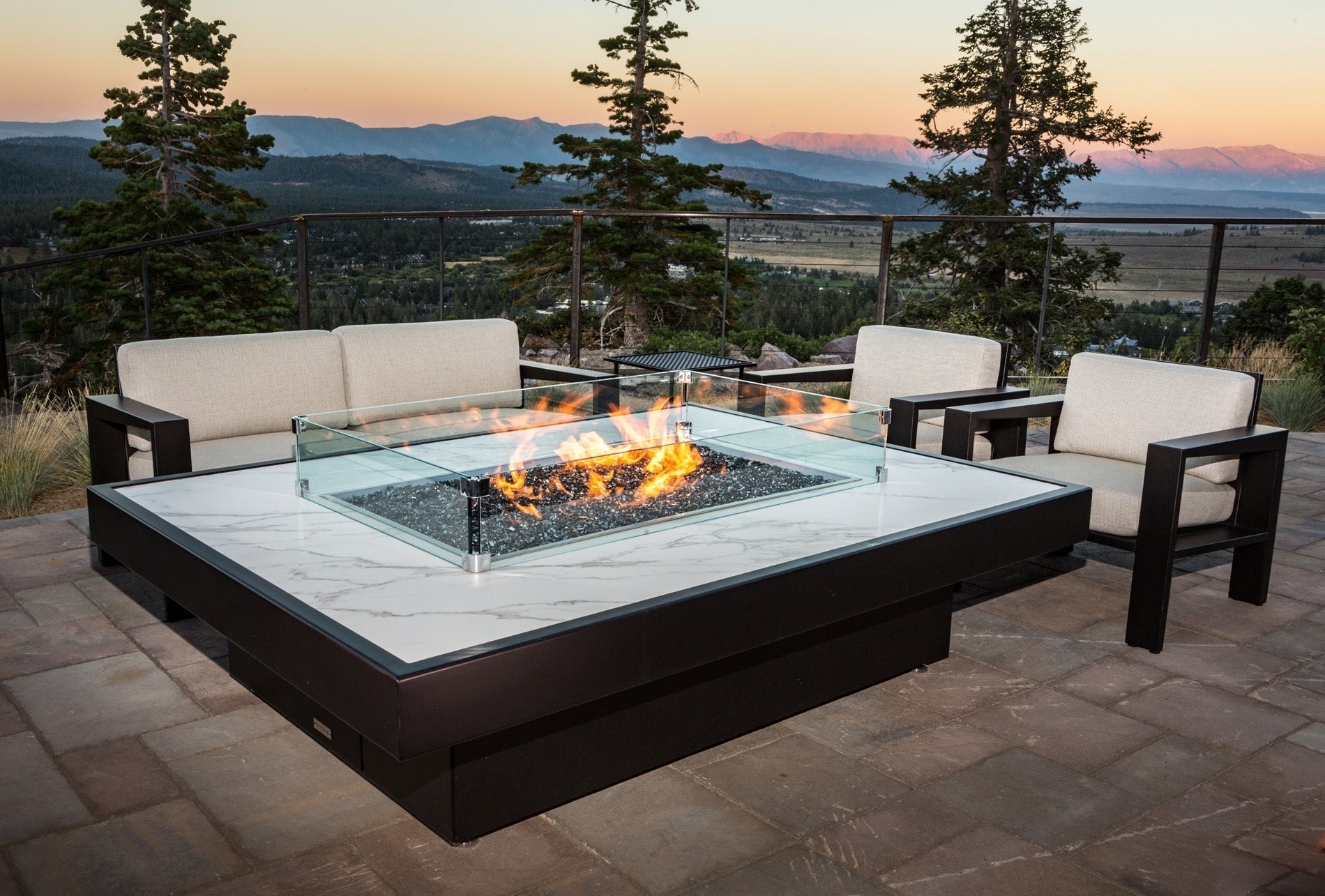
What BTUs Really Mean When Shopping for a Fire Pit
The number on the tag is just the beginning; here’s what it actually tells you.
|
You’re browsing fire pits and keep seeing “BTU” on every tag. One says 40,000. Another says 60,000. A third says 150,000. Higher must be better... right? Not always. Understanding what BTUs actually measure, and what they don’t, will save you from buying the wrong fire pit. |
What is a BTU?
BTU stands for British Thermal Unit - the standard measurement of heat energy. One BTU is the amount of energy needed to raise one pound of water by one degree Fahrenheit. For shopping purposes: more BTUs means more heat output from the burner.
Think of BTUs like horsepower in a car. A pickup truck and a sports car might both get you from A to B - but they’re built for different jobs. The right BTU rating depends on your space, your climate, and critically, how the fire pit is designed to deliver that heat.
How BTUs Are Calculated
For propane fire pits, the BTU rating comes down to how much gas the burner consumes. Propane contains roughly 21,591 BTUs per pound. So if a burner burns 2.3 pounds of propane per hour:
|
2.3 lbs/hr × 21,591 = ~49,659 BTU/hr (a “50,000 BTU” fire pit) |
The orifice - the small hole metering gas into the burner - controls flow rate. A larger orifice at standard propane pressure means more gas, more combustion, and a higher BTU rating. The BTU rating is always the input rating - total energy in the gas being burned. How much of that actually warms you is a different question entirely.
How Many BTUs Do You Need?
Space size is the biggest factor. Use this as a starting point:
|
Space size |
Example |
Recommended BTUs |
|
Small |
Balcony or tight patio (under 150 sq ft) |
30,000 – 50,000 |
|
Medium |
Standard backyard deck (150–400 sq ft) |
50,000 – 80,000 |
|
Large |
Open yard or pool deck (400+ sq ft) |
80,000 – 150,000+ |
Other factors that affect how much heat you feel:
-
Wind exposure - open, breezy spaces lose heat fast; size up if you’re in a coastal or windy area
-
Climate - colder regions need more BTUs to create the same warmth as mild climates
-
Covered vs. open - a covered patio retains heat, so you may not need as many BTUs
-
Guest count - larger gatherings benefit from higher output to keep everyone comfortable
The Bigger Question: How Does Heat Actually Reach You?
Two fire pits with the same BTU rating can feel dramatically different depending on their burner design. There are two fundamentally different types:
Direct flame fire pits
These burn propane with the burner fully exposed, flames shooting straight up into open air. All the heat comes from the flames themselves — convective heat that rises and escapes into the atmosphere. The moment you turn the burner off, the warmth vanishes almost instantly. There’s no material holding heat, no lingering warmth.
Radiant heat fire pits
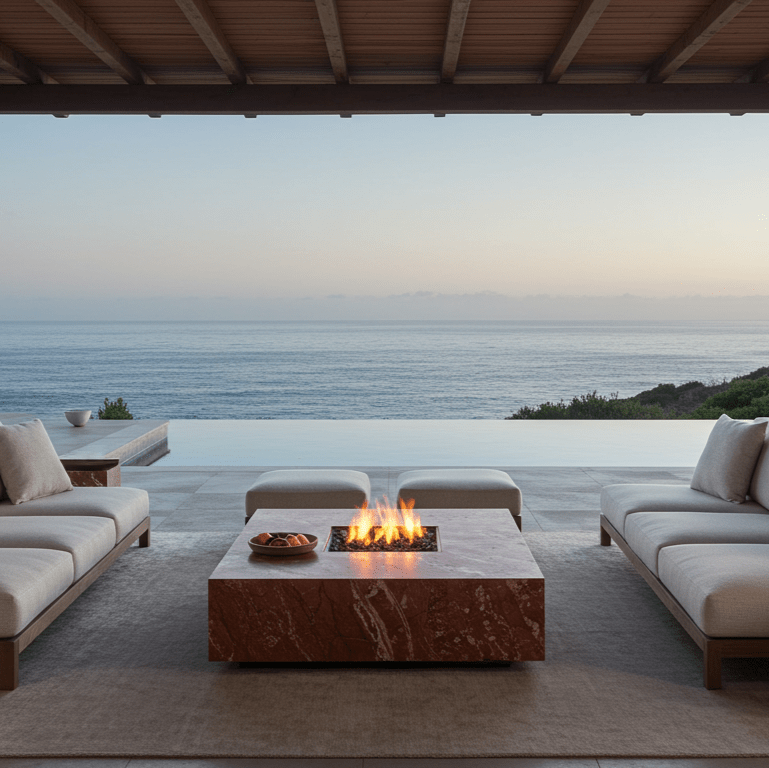
These burn gas into a bed of broken glass, lava rock, or ceramic media. The flames heat that material to high temperatures, and the glass or rock then radiates heat outward in all directions — the way campfire coals warm you long after the flames die down. When you turn off the burner, the media stays hot and continues radiating warmth for 30 minutes to an hour.
|
RADIANT HEAT DESIGN Glass or lava rock stores heat and radiates it toward guests. Warmth lingers after the burner turns off. Wind has less impact. More usable heat per BTU. |
DIRECT FLAME DESIGN Heat comes only from open flames. Dissipates upward quickly. Cools immediately when turned off. Wind scatters the flames and the warmth with them. |
|
A 40,000 BTU radiant fire pit will often feel significantly warmer than a 50,000 BTU direct flame pit. The glass or lava rock acts like a heat battery — storing energy and releasing it toward you rather than letting it escape into the sky. |
Why Cheap Fire Pits Skip the Glass Media
If you’ve shopped mass-market sites, you’ve likely seen it: an imported fire pit with the entire burner ring exposed, small candle-like flames flickering from the ports, no glass, no lava rock. This isn’t an accident - it’s a cost decision. Quality fire glass, lava rock media, and stone finishes are genuinely expensive and heavy, budget manufacturers skimp to hit a lower price point.
The result looks underwhelming and performs even worse. Without media to heat up, there’s no radiant warmth and no lingering heat. A proper glass or lava rock bed also conceals the burner hardware and creates a far more polished, finished look; fire appears to rise organically from a glowing bed of material rather than a bare metal ring. That difference in appearance reflects a real difference in quality and heating performance.
Natural Gas Fire Pits: Why Your Gas Line Matters as Much as the BTU Rating
If you’re planning a natural gas fire pit with a permanent line rather than a propane tank, the BTU rating on the fire pit is only half the equation. The other half is whether your existing gas line can actually deliver enough gas to feed it.
Natural gas lines have a maximum capacity - the volume of gas they can carry per hour - determined by three things: pipe diameter, pipe length, and the pressure coming from your meter. The longer the run from your meter to the fire pit, and the smaller the pipe diameter, the less gas capacity you have at the end of the line.
|
Here’s the issue many homeowners don’t anticipate: if your gas line is already serving your furnace, water heater, range, and dryer, it may have little remaining capacity for a high-BTU fire pit. Adding a 90,000 BTU fire pit to an already-loaded line can starve all your appliances of pressure - especially when everything runs simultaneously on a cold night. |
A general guide to natural gas pipe capacity
The table below shows approximate maximum BTU capacity for common pipe sizes. Longer runs reduce capacity significantly.
|
Pipe diameter |
50 ft run |
100 ft run |
Common use |
|
½ inch |
~75,000 BTU |
~50,000 BTU |
Small appliances, grills |
|
¾ inch |
~175,000 BTU |
~120,000 BTU |
Most residential fire pits |
|
1 inch |
~350,000 BTU |
~250,000 BTU |
High-output or multiple appliances |
|
Note: These are general estimates. Actual capacity depends on your local gas pressure and pipe condition. Always have a licensed plumber calculate your specific situation. |
|||
Plan with your plumber before you buy
This is the conversation most people skip - and the one that causes the most headaches after installation. Before you settle on a BTU rating, talk to a licensed plumber or gas fitter. Here’s what to ask:
-
What is the current available BTU capacity at my meter, and what’s already being consumed by existing appliances?
-
What diameter pipe do I currently have running to the backyard, and how long is the run from the meter?
-
If I want a 90,000 BTU fire pit, will I need to upsize the supply line or upgrade my meter?
-
Are there any permits required for adding an outdoor gas appliance in my city or county?
-
Should I install a dedicated shutoff valve at the fire pit location, and where?
|
Undersized gas lines don’t just underperform — they can be a safety issue. Low pressure at the burner can cause incomplete combustion and unpredictable flame behavior. Always have gas work done by a licensed professional and never assume your existing line has spare capacity without having it properly calculated. |
The good news: if you have the conversation with your plumber before you purchase, right-sizing the gas line is usually straightforward and not prohibitively expensive. It becomes a much bigger problem - and a much bigger cost - if you buy the fire pit first and discover the line can’t support it after installation.
The Bottom Line
When shopping for a fire pit, BTUs are your starting point, not your finish line. Ask how the heat is delivered (radiant vs. direct flame), look for quality glass or lava rock media, and if you’re going natural gas, have your plumber assess your line capacity before you fall in love with a specific model. A fire pit that’s properly matched to your space and your gas supply will outperform a higher-rated one that isn’t, every single time.
|
Need help finding the right fire pit for your setup? We’re happy to talk through BTU ratings, burner designs, media options, and natural gas requirements — so you get it right the first time. |