2026 Fire Table Design Trends: What's Hot in Commercial Outdoor Living
Key Takeaways
- Market Growth Accelerates: Gas fire table market projects 13.1% CAGR through 2030—fastest-growing segment in outdoor furniture with tabletop models at 11.9% CAGR.
- ROI Justifies Investment: Outdoor features return 1.5-3.0x installation costs, cost less than kitchen remodels, build faster, and achieve higher utilization rates for year-round revenue generation.
- Materials Drive Differentiation: Fluid concrete, hand-hammered copper, Corten steel, and granite offer distinct performance and aesthetic profiles—premium materials signal luxury positioning while delivering commercial durability.
- Smart Technology Reduces Friction: Electronic ignition, app control, and flame sense safety features ($1,500-$2,500 upgrades) eliminate manual lighting barriers, enhance safety, and encourage regular use.
- Design Trends Favor Organic Forms: Curved shapes, textural layering, biophilic integration, and indoor-outdoor continuity replace rigid geometry—creating Instagram-worthy focal points that amplify marketing reach through guest-generated content.
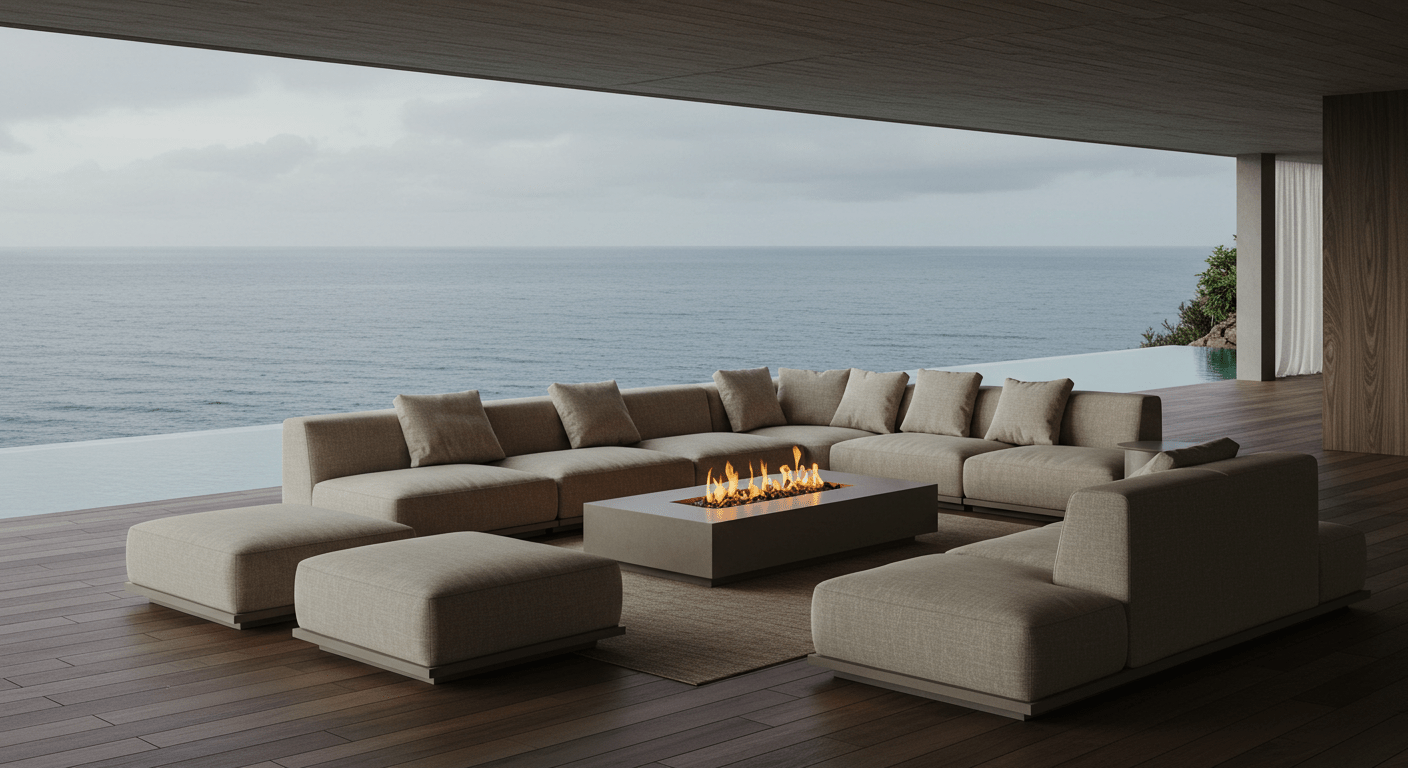
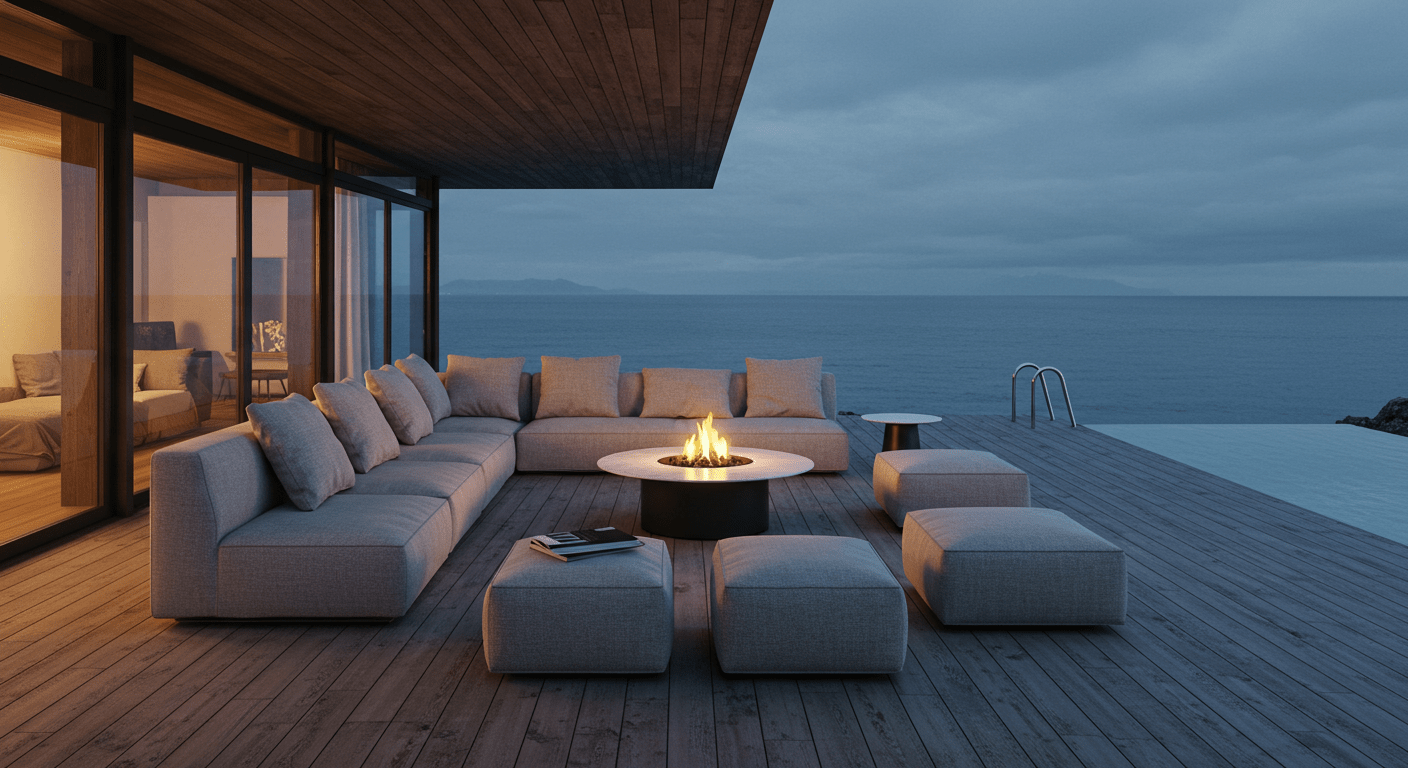
Luxury Fire tables anchor commercial outdoor spaces in 2026. Market growth exceeds 13% CAGR in premium segments as hotels, resorts, and restaurants invest in year-round outdoor amenities. 2026 fire table trends highlight material innovation—fluid concrete to hand-hammered copper—that delivers both durability and aesthetic differentiation.
Smart technology enables remote control, enhanced safety, and automation, making these fire tables integral to modern commercial outdoor living. Sustainability drives the use of eco-friendly fuels and recycled materials, aligning with growing environmental consciousness. Design trends favor curved forms, textural richness, and seamless indoor-outdoor continuity, ensuring fire tables blend beautifully with their surroundings.
ROI justifies investment: outdoor features return 1.5-3.0x the cost while extending operational seasons. American craftsmanship ensures resort-grade quality for high-traffic environments. Fire tables evolve from simple heating elements to strategic assets that enhance guest experiences, drive bookings, and create shareable moments that amplify marketing reach.
What Fire Table Designs and Materials Will Dominate Commercial Outdoor Spaces in 2026?
Material innovation, sustainability demands, and hospitality-grade durability define 2026's fire table landscape. Three forces converge: eco-friendly technologies gaining market traction, premium materials offering distinct aesthetic and performance profiles, and American craftsmanship delivering the reliability commercial properties require.
How Are Sustainability and Eco-Friendly Materials Shaping Fire Table Design Trends in 2026?
Sustainability drives both market growth and material innovation. The smokeless fire pits market projects 6.25% CAGR growth from $1.71 billion (2024) to $2.61 billion (2032), reflecting demand for cleaner-burning solutions. Fluid concrete technology leads material innovation—constructed from recycled natural materials, it delivers lightweight strength while resisting water, scratches, stains, and UV damage. This technology withstands harsh commercial use, from wine spills to weather exposure, with minimal maintenance.
Eco-friendly fuel options anchor sustainability efforts. Bioethanol and natural gas replace traditional fuels, while smokeless technologies address environmental and health concerns. Recycled materials in construction complete the sustainability triangle, meeting both regulatory requirements and guest expectations for responsible luxury.
What Innovative Materials Are Leading the Charge in Luxury Outdoor Furniture for 2026?
Four materials dominate 2026's premium fire table market, each offering distinct advantages.
Concrete delivers industrial minimalism. Sleek lines and neutral tones focus attention on flames while providing long-term durability. The unique curing process creates a resilient surface that maintains design integrity across environmental conditions.
Copper brings artisan appeal. This non-ferrous metal develops rich bronze patinas—from light, versatile finishes to deep, distressed appearances. Hand-hammered by professional coppersmiths, each piece features unique textures that highlight flames. Machine-hammered options offer uniform marks at lower price points. Corrosion resistance and metallic luster make copper ideal for high-visibility installations.
Steel offers versatility across design philosophies. 304-grade stainless steel provides rust-resistant elegance with clean lines and satin gray finishes. Corten steel ages intentionally—developing rust patinas in mahogany to amber tones that transform ordinary installations into living art. Both types deliver strength and durability for modern to rustic applications.
Granite and tile provide classic sophistication. Granite's crystalline appearance—with mottled specks and glimmering flecks—ensures each piece is unique. Tile's abundance of patterns matches any décor while composite blends resist fading, scratches, and stains. Both require minimal maintenance and offer traditional elegance for conservative design schemes.
How Is Hospitality Fire Table Design Evolving to Meet the Demands of Luxury Venues?
Hospitality chooses American-made fire tables because failure costs too much. A small group of U.S. manufacturers builds resort-grade furniture engineered for decades of use in harsh climates and high-traffic environments—from rooftops to lakefronts. Premium hardwoods, extruded aluminum, and marine-grade components ensure durability.
American brands deliver what imports cannot: complete shipments, honored warranties, reliable parts availability, and service follow-through. Import delays stretch 12-18 months with substitutions. Consistent collections let properties add matching pieces years later—critical for long-term design coherence. Brands like Berlin Gardens, Jensen, Woodard, POLYWOOD, Treasure Garden, Agora, and Napoleon exemplify this commitment. Real luxury isn't logos—it's ROI and durability.
How Are Fire Table Designs Enhancing Commercial Outdoor Living Experiences?
Fire tables transform outdoor spaces into revenue-generating assets. Custom installations deliver measurable ROI, extend seasonal operations, and create shareable moments that drive bookings. Three impacts matter most: financial returns that exceed indoor renovations, year-round functionality that maximizes space utilization, and visual appeal that amplifies marketing reach.
Why Are Custom Fire Tables Essential for High-End Resort and Restaurant Spaces?
Custom outdoor spaces multiply property value beyond their installation cost. Outdoor kitchens return 1.5-3.0x their investment at resale and often see more use than remodeled interior kitchens. Premium outdoor features don't just enhance properties—they sell them.
The design playbook centers on focal impact: one great signature area, statement landscaping, premium lighting, and zones matched to actual guest behavior. Furniture that feels custom-made completes the experience. Investment tiers reflect this approach—high-end furniture and indoor/outdoor transitional pieces range $2,000-15,000, outdoor kitchens $3,500-30,000, and premium pergolas exceed $10,000. These upgrades cost less than kitchen remodels, build faster, and generate higher utilization rates.
How Do Fire Table Design Trends Improve Guest Experiences and Drive Bookings for Hospitality Venues?
Fire tables extend operational seasons and revenue windows. Comfortable seating around fire features transforms outdoor spaces into year-round destinations, not seasonal amenities. This functionality drives current hospitality investment trends—hotels and resorts expanding outdoor amenities, restaurants growing outdoor dining capacity, and properties creating premium entertainment areas that extend indoor living spaces outdoors.
Operational advantages compound the financial benefits for hospitality operators. Commercial high end fire pit tables for hotels cost significantly less than kitchen remodels, complete faster with minimal property disruption, and achieve higher guest usage rates than most indoor amenities. Year-round functionality delivers continuous ROI rather than seasonal returns—making these installations strategic investments in guest experience and property performance for boutique hotels, luxury resorts, and upscale restaurants seeking competitive differentiation.
What Role Do Fire Tables Play in Creating Instagram-Worthy Moments for Commercial Properties?
Fire tables anchor visual narratives that extend marketing reach. Four elements create shareworthy installations: the fire table as signature feature, statement landscaping that frames the moment, premium accent lighting that enhances ambiance, and connected zones that invite exploration and photography.
Material selection amplifies visual impact. Copper's metallic luster catches light and attention. Granite's crystalline appearance with glimmering flecks creates textural interest. Corten steel evolves from ordinary installations into living art—patinas developing in real-time provide changing backdrops for guest photos. Each shared image becomes organic marketing, multiplying the property's reach beyond paid advertising.
How Do Fire Tables Contribute to the Aesthetic of Luxury Outdoor Furniture in Commercial Settings?
Aesthetic choices drive guest engagement and space utilization. 2026 fire table designs reflect broader shifts toward organic forms, tactile richness, and seamless indoor-outdoor integration. Three aesthetic strategies define luxury installations: bold design features that break from neutral traditions, biophilic principles that position fire tables as natural focal points, and artisan details that signal premium positioning.
What Aesthetic Features Are Defining Luxury Fire Table Designs for 2026?
Four design movements reshape fire table aesthetics. Bold color application abandons beige for deep, saturated tones—oxblood, deep olive, clay, and sage. High-gloss lacquers catch daylight, creating dynamic visual interest throughout the day.
Curved forms replace rigid geometry. Circular platforms pull seating toward centers, arches dominate overhead elements, and shapes follow natural movement patterns. Geometry serves motion rather than imposing boundaries—forms curve because movement does.
Textural layering builds atmosphere through touch. Surfaces gain weight with grain, loop, and pucker textures. Open-weave jute, coarse plaster, cane-wrapped edges, and ceramic with grit in glaze transform tactility into ambiance. Historical reinterpretation adds depth—Spanish Revival elements like textured stucco, arched openings, and patterned tiles blend with hand-forged iron and earthy ochre and sea green tones. These subtle references merge historic cues into contemporary installations without pastiche.
How Are Fire Tables Becoming Focal Points in Outdoor Lounge Areas and Social Spaces?
Fire tables anchor three design philosophies. Biophilic design creates soft boundaries—plantings, vine-laced trellises, and vertical gardens replace traditional siding while growth patterns define space organically.
Indoor-outdoor continuity remains the evergreen trend. Flooring carries through thresholds, light fixtures repeat across zones, furniture proportions match indoor scale, and upholstery withstands weather while maintaining living room aesthetics. Multi-slide glass doors and patio spaces that mirror interior colors, textures, and arrangements create perpetual demand for seamless transitions.
Bohemian organic arrangements embrace intentional imperfection—nothing aligns perfectly. Floor cushions, scattered rugs, low stools, and hanging lanterns surround fire tables. Hand-thrown pottery shows maker's marks, and placement follows use patterns rather than rigid plans. Design variety—rustic pits, fire pit tables, chimineas—lets properties match fire features to specific atmospheric goals.
What Design Features Make Fire Tables Stand Out in Luxury Outdoor Furniture Collections?
Three feature categories separate premium from standard installations. Extended season utility maximizes investment returns through integrated heaters behind planters or along pergola beams, insulated upholstery that maintains elegant lines, and bamboo blinds or woven panels that extend use through transitional months.
Luxury features signal premium positioning. Glass wind guards—now standard in high-end commercial settings—ensure consistent flames and enhance safety. Black poly and other commercial-grade durable materials balance aesthetics with performance demands. Artisan craftsmanship provides the ultimate differentiation: hand-hammered copper work, Corten steel aging that creates living art, and premium materials like 304 stainless steel, hand-hammered copper, and fluid concrete. Each material offers distinct character and maintenance profiles. American craftsmanship emphasizes quality over mass production—visible in details that justify premium pricing and long-term value.
What Are the Key Considerations for Specifying Fire Tables in Hospitality and Commercial Properties?
Commercial fire table specifications balance three priorities: material performance under continuous use, customization that reinforces brand identity, and operational efficiency that delivers measurable returns. Durability determines lifecycle costs, customization creates distinctive guest experiences, and efficiency metrics justify capital investment.
How Important Is Durability and Weather Resistance for Commercial Fire Table Designs?
Material durability directly impacts total cost of ownership. Concrete resists common commercial hazards—wine, vinegar, oil, and ketchup—while UV barriers prevent fading. Resilience to environmental conditions makes it a long-lasting investment across climate zones.
Steel delivers fundamental strength and longevity. Built to last through high-traffic use and weather exposure, steel's durable characteristics justify premium positioning. Granite and tile resist stains, oils, scratches, and dirt while composite blends prevent sun fading. Easy maintenance and stain resistance reduce operational overhead. Copper combines corrosion resistance with aesthetic appeal—beauty and durability make it ideal for outdoor rooms where both visual impact and performance matter. Material choice determines maintenance frequency, replacement cycles, and lifecycle costs—critical metrics for hospitality operations.
What Customization Options Are Critical for Matching Fire Tables to Specific Commercial and Hospitality Themes?
Material selection must align with climate demands, usage intensity, and design philosophy. Each material offers distinct character and maintenance profiles—premium materials like 304 stainless steel, hand-hammered copper, and fluid concrete signal luxury positioning.
Unique characteristics enable brand differentiation. No two granite pieces are identical—natural variation creates one-of-a-kind installations. Copper offers versatility: light bronze patinas suit any style while deep bronze finishes deliver distressed appeal. Corten steel develops varying reddish-orange and brown shades as it ages. Tile provides abundant patterns to match décor schemes. Color and finish options amplify customization—bold designs add flair, vibrant colors and dynamic patterns create signature looks, and complementary colors integrate with existing garden and landscaping palettes. Customization transforms fire tables from furniture into brand expressions.
How Do Hospitality Fire Table Design Trends Align with Sustainability and Operational Efficiency?
Fire tables deliver superior operational metrics. Installations cost less than kitchen remodels, build faster, and achieve higher usage rates. Real luxury is ROI and durability, not logos—a principle that drives specification decisions in hospitality settings.
Quality standards reflect operational realities. Resort-grade quality is essential for hospitality applications where failure disrupts guest experiences and revenue. American craftsmanship emphasizes quality over mass production, engineering fire tables for decades of use rather than planned obsolescence. This approach aligns sustainability with efficiency—longer product lifecycles reduce replacement frequency and environmental impact while maximizing return on capital investment. Durability becomes both an operational efficiency metric and a sustainability strategy.
What Are the Key Technology Trends in 2026 Fire Table Designs?
Technology integration transforms fire tables from passive amenities into controllable, safe, and efficient systems. Smart controls, enhanced safety features, and gas innovations address three hospitality priorities: operational simplicity, liability reduction, and guest convenience. Electronic ignition systems and automation eliminate friction points that discourage use while improving safety metrics and operational control.
How Are Smart Fire Tables Revolutionizing Commercial Outdoor Spaces?
Smart fire tables operate via electronic ignition systems integrated with control platforms. Electronic ignitions run on 110v power, low voltage, or battery operation—providing flexibility across property configurations.
Three control tiers serve different operational needs. Electronic ignition systems integrate with smart outlets, pool controllers, and home automation platforms. Staff activate fire features via button touch, voice command, wall switch, or timer—eliminating manual lighting procedures. App control enables smartphone management: turn fire tables on and off, adjust flame height, and set timers from any location. System integration connects fire tables to property-wide automation, creating seamless experiences compatible with existing smart ecosystems. This integration allows centralized control across multiple fire features, scheduled activation for events, and coordinated ambient lighting sequences.
What Technological Features Are Making Fire Tables More Efficient and User-Friendly for Hospitality Venues?
Safety features reduce liability and operational risk. Automatic shut-off, temperature monitoring, and flame sense technology form a protective triad. Systems automatically shut off gas flow if flames extinguish from wind or water contact, preventing unburned gas release. This reduces accident risk and provides operational peace of mind—critical for hospitality environments with variable staff expertise.
Convenience benefits drive adoption. Remote control capability lets staff manage fire features from indoor stations or anywhere on property, enabling seamless operation without guest-facing complexity. Cost considerations shape implementation strategies: electronic ignition upgrades range $1,500-$2,500, while middle-ground options—battery-operated spark ignitions and valves with flame sense features—add convenience and safety at lower investment levels.
The performance gap is stark. Traditional fire tables require manual lighting with matches or lighters—cumbersome, less safe, with sudden flame burst risks from unburned gas buildup. This friction discourages use. Smart systems offer electronic ignition, multiple control methods, and enhanced safety features that encourage regular activation—translating to higher utilization rates and better guest experience metrics.
How Do Gas and Propane Fire Pit Innovations Enhance the Functionality of Fire Tables in Luxury Settings?
Gas fire tables dominate luxury installations for operational reasons: push-button ignition eliminates lighting friction, no wood storage or cleanup simplifies maintenance, and convenience drives both staff efficiency and guest satisfaction. Consumer preferences confirm this trend—strong market growth reflects demand leaning toward convenience and design innovation over traditional wood-burning systems.
Gas infrastructure enables the smart technology integration that defines 2026 fire tables. Propane and natural gas systems integrate cleanly with electronic ignition and automated controls—impossible with wood-burning alternatives. This compatibility positions gas fire tables as the foundation for technology-enhanced outdoor living spaces where operational simplicity and guest experience converge.
What Will Be the Long-Term Impact of 2026 Fire Table Trends on Commercial Outdoor Living?
Fire table investments align with broader market expansion and design evolution. Market projections show sustained double-digit growth in key segments, while design trends favor versatility, multi-functionality, and technology integration. Three trajectories define long-term impact: design innovation toward compact and convertible solutions, measurable ROI across price segments, and technology-driven evolution that maintains relevance beyond current trends.
How Are Fire Tables Influencing the Future of Luxury Outdoor Furniture for Commercial Properties?
Five design evolution trends shape future development. Portability and versatility drive the rise of portable fire features that enhance multiple outdoor settings—flexibility that commercial properties value for event reconfiguration. Design innovation emphasizes aesthetics integration with outdoor décor as contemporary and minimalist styles gain traction.
Compact solutions represent the fastest-growing segment—tabletop fire pits project 11.9% CAGR through 2030, serving smaller outdoor spaces and urban properties where square footage commands premium pricing. Multi-functional designs combine heating with dining through convertible fire pit-to-dining table configurations, optimizing space utilization. Full outdoor dining integration creates dedicated al fresco entertaining areas with outdoor kitchens—a timeless trend that appeals to both homebuyers and remodeling clients, driving sustained demand across property types.
What Is the Projected ROI for Hospitality Businesses Investing in 2026 Fire Table Designs?
Market growth projections justify capital investment. The overall fire pits market expands from $3.09 billion (2023) to $5.45 billion (2032) at 6.5% CAGR. Gas fire tables—the premium segment—grow at 13.1% CAGR through 2030 from an $82.8 million base (2024). The outdoor gas fire pit table market doubles from $1.2 billion (2024) to $2.5 billion (2033). North American demand reaches $9.03 billion (2024) with continued growth through 2034, while residential outdoor gas fire pits hit $186.7 million by 2031 at 8.6% CAGR.
Segment analysis reveals opportunity stratification. Tabletop fire pits—fastest growing at 11.9% CAGR—serve properties with space constraints. Gas fire pits capture consumer preferences for convenience and design innovation. Price segmentation guides investment strategy: commercial/hospitality standard installations ($2,000-$5,000) serve volume properties, premium units ($5,000-$15,000) differentiate mid-tier venues, and luxury/custom pieces ($15,000-$50,000+) anchor flagship properties. These price tiers correlate with market segments showing the strongest growth trajectories.
How Will Fire Table Designs Evolve to Maintain Their Appeal in Commercial Outdoor Spaces Beyond 2026?
Broader market context supports sustained fire table relevance. Global outdoor furniture markets grow from $50.89 billion (2024) to $86.65 billion (2033), while U.S. outdoor furniture and grills rise 3.2% annually through 2028 to $21.3 billion. The outdoor furniture market expands from $19.70 billion (2025) to $24.08 billion (2030) at 4.10% CAGR—growth rates that create favorable conditions for premium fire table segments.
Technology integration drives future evolution. Smart controls, automation, IoT-enabled features, and home automation compatibility transform fire tables from static furniture into responsive systems that integrate with property management platforms. Regional market strength anchors growth—North America remains the largest market for fire pits and fire tables, supported by strong DIY culture, high disposable income, and year-round outdoor living traditions in multiple climate zones. These structural advantages ensure sustained demand beyond cyclical design trends, positioning fire tables as permanent fixtures in commercial outdoor living rather than temporary amenities.
Transform Your Outdoor Spaces with Premium Fire Table Solutions
Cooke Furniture delivers resort-grade fire tables engineered for commercial durability and design excellence. Our collections combine American craftsmanship with innovative materials—from fluid concrete to hand-hammered copper—tailored to your property's aesthetic and operational requirements.
Smart technology integration, bespoke design capabilities, and proven ROI make Cooke Furniture's luxury custom pit tables the definitive choice for hotels, resorts, and upscale restaurants investing in outdoor experiences that drive bookings and elevate guest satisfaction. Contact our commercial design team today to specify fire features that transform underperforming patios and terraces into year-round revenue generators.