American Craftsmanship In Fire Tables: Heritage Excellence For Prestigious Properties
Key Takeaways
- Lifecycle Savings: Premium American-made fire tables save $5,500+ over 15 years despite a higher initial cost through superior durability and lower maintenance requirements
- Safety Certification Is Non-Negotiable: The entire appliance must be certified to ANSI Z21.97 / CSA 2.41; component-only certification voids insurance and creates liability exposure
- Professional Installation Reduces Risk 93-98%: NFI-certified technicians eliminate fire hazards, code violations, and structural failures that plague non-professional installations
- Mandatory Maintenance Protects Investment: Biannual professional service extends component life 3x and is required for warranty validity; undocumented maintenance voids all coverage
- Material Selection Determines Longevity: 316 stainless steel with all-stainless fasteners is mandatory for coastal/pool environments; 304 grade corrodes under salt exposure
Commercial fire tables have evolved from simple amenities to strategic revenue-generating assets that drive measurable increases in guest satisfaction, off-season traffic, and food and beverage sales. Yet the market divide between heritage-grade American craftsmanship and mass-produced imports creates confusion for property developers, hospitality decision-makers, and facility managers evaluating long-term investments. While imported alternatives advertise lower entry costs, they systematically fail in high-traffic commercial environments within 3-5 years, requiring multiple replacements, creating unpredictable maintenance budgets, and exposing properties to safety liabilities from inadequate certification.
This guide examines what distinguishes investment-grade fire tables from disposable outdoor furniture, provides actionable specification frameworks for procurement teams, and documents the total cost of ownership data that proves premium American manufacturing delivers $5,500+ savings over 15 years.
What Makes A Fire Table "Heritage-Grade" vs. Standard?
Heritage-grade fire tables are built to commercial specifications with materials engineered for high-traffic hospitality environments. The distinguishing factors separate long-term capital investments from disposable outdoor furniture.
Materials: 304/316 stainless steel burners (not 430 grade), thick-walled aluminum frames, and glass-fiber reinforced concrete (GFRC) resist corrosion in coastal and high-moisture environments.
Certification: Entire appliance certified to ANSI Z21.97 / CSA 2.41 by recognized labs (UL, CSA, Intertek), not just individual components.
Warranty: Structural guarantees up to 50 years vs. 2-year commercial warranties typical of imports (50-90% shorter than residential coverage).
Manufacturing: Domestic production enables rigorous quality control, faster service response, and greater customization flexibility vs. standard off-the-shelf designs.
Fire Feature Comparison: Selecting The Right Format
|
Feature Type |
Primary Use |
Portability |
Typical Materials |
Installation Complexity |
Fuel Options |
Best-Fit Property Types |
|
Fire Table |
Dual-purpose: warmth + functional surface |
Semi-portable to permanent |
Stainless steel, aluminum, GFRC, powder-coated steel |
Moderate (requires gas line or propane hookup) |
Natural gas, propane |
Luxury hotels, rooftop bars, multifamily courtyards, resort dining areas |
|
Fire Pit |
Standalone warmth and ambiance |
Portable to permanent |
Steel, cast iron, copper, stone |
Low to moderate |
Wood, propane, natural gas |
Casual resorts, campgrounds, residential backyards, lower-traffic common areas |
|
Built-In Fire Feature |
Permanent architectural element |
Fixed/permanent only |
Concrete, natural stone, masonry, steel |
High (structural integration required) |
Natural gas (primarily) |
High-end custom properties, signature resort installations, branded estates |
Why Prestigious Properties Choose Fire Tables
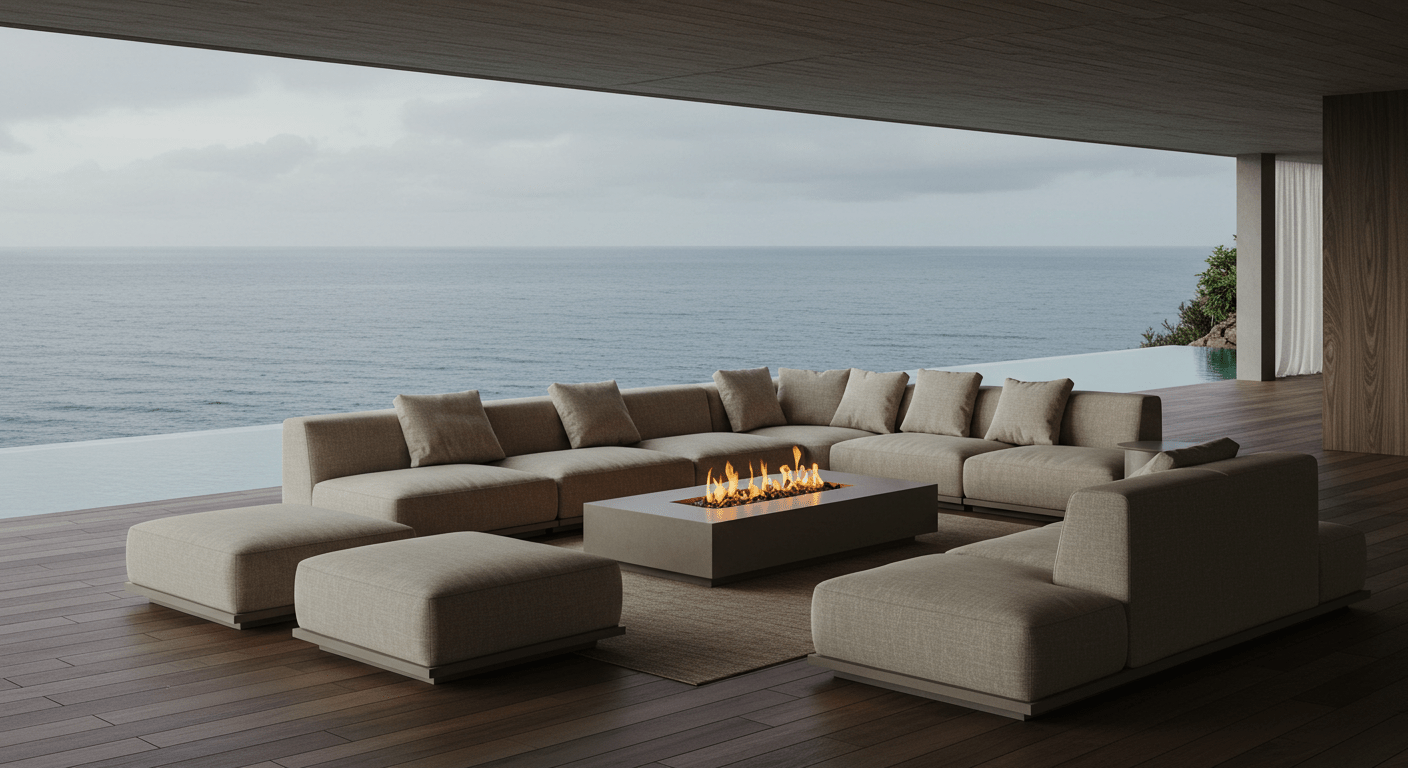
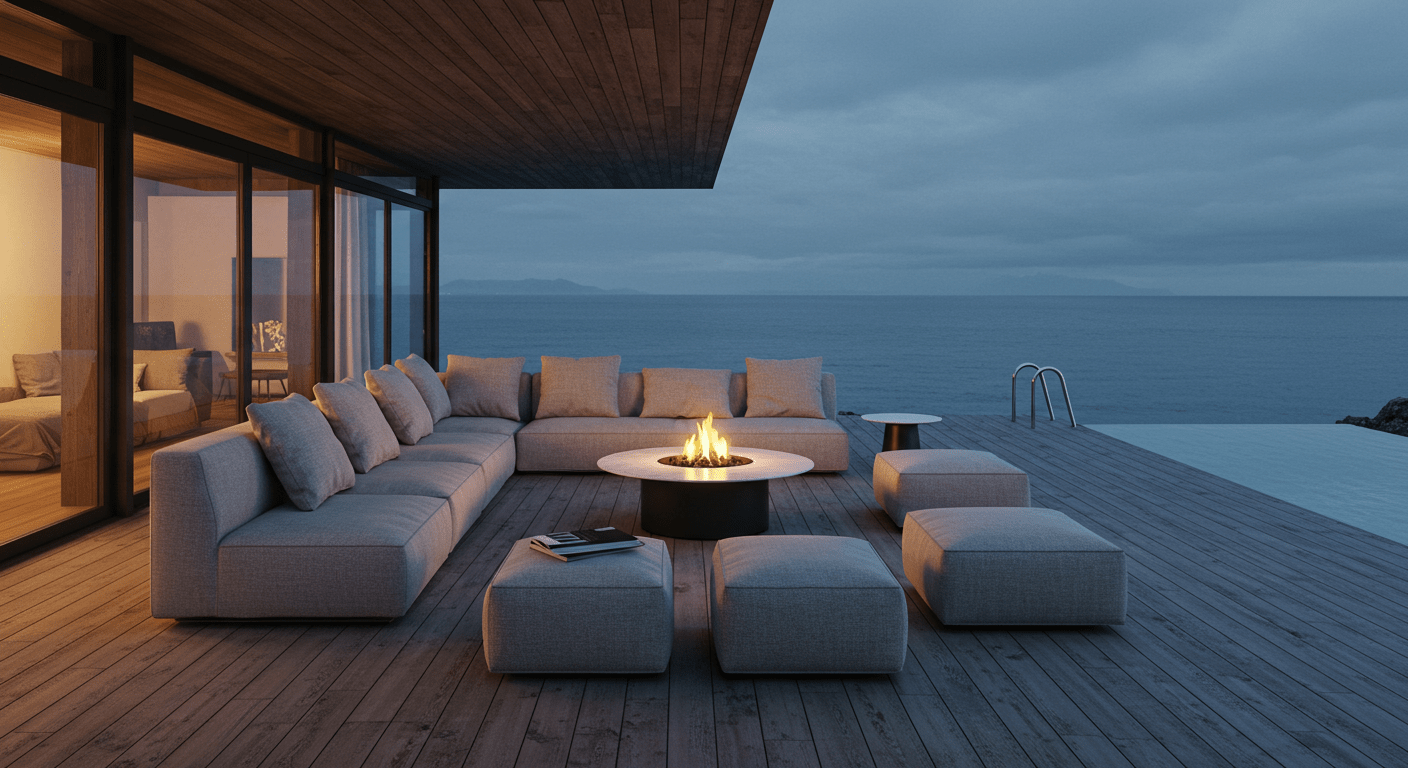
Fire tables transform underutilized outdoor spaces into revenue-generating amenities. A luxury urban hotel rooftop bar saw 40% increase in off-season traffic after installing two linear American made fire tables with custom branding, while guest surveys cited the ambiance as a primary visit driver. High-margin F&B sales rose significantly, with the features becoming signature marketing assets.
Multifamily developers report similar results. A GFRC fire table installed as a courtyard centerpiece became the community's social heart, with leasing agents identifying it as the key closing factor for premium tenants. The property maintained high occupancy rates and premium pricing, while the durable materials withstood heavy resident use with only routine maintenance.
What Does American Craftsmanship Mean In Fire Table Manufacturing?
American manufacturing delivers measurable quality advantages through tighter production oversight and accountable fabrication standards. Precision TIG welding, multi-layer powder coating, and stage-gate assembly inspections ensure structural integrity and aesthetic consistency. Heavy-gauge materials are selected specifically for commercial environments, not consumer-grade residential use.
Domestic production provides clearer warranty support, faster design iterations, and extensive customization options unavailable from mass-import suppliers. Verification requires examining weld consistency, confirming all-stainless fasteners (prevents corrosion stains), and ensuring modular components with accessible service panels. Demand material specification sheets showing actual steel grades and explicit "Made in USA" documentation, not vague "Designed in USA" marketing claims.
Which Materials & Finishes Deliver Premium Performance?
Material selection determines a fire table's commercial lifespan. Premium manufacturers use corrosion-resistant alloys engineered for high-traffic hospitality environments, while standard-grade materials fail within 2-5 years under continuous exposure.
Stainless Steel Grades: 316 stainless steel is mandatory for coastal and pool-adjacent installations due to superior chloride and salt-spray resistance. Standard 304 grade suffices for inland properties but will corrode near saltwater. All fasteners, screws, bolts, hardware must be stainless steel to prevent rust staining on premium finishes.
Stainless Steel Comparison: 304 vs 316
|
Property |
304 Stainless Steel |
316 Stainless Steel |
|
Corrosion Resistance |
Good for general outdoor use |
Excellent; superior chloride resistance |
|
Coastal/Pool Suitability |
Not recommended |
Required standard |
|
Typical Use |
Burner pans, structural frames (inland) |
Burners, hardware, all components (coastal/pool) |
|
Maintenance Notes |
Regular cleaning; monitor for spotting |
Minimal spotting; lower maintenance burden |
Top Surface Materials: GFRC (glass-fiber reinforced concrete) offers heat tolerance to 1,200°F, UV stability, and customizable aesthetics at moderate weight. Natural stone provides luxury appeal but requires sealing and stain management. Metal tops deliver maximum durability with contemporary aesthetics but need protective finishes. All commercial installations require multi-layer powder coating or robust sealants rated for UV, salt spray, and abrasion.
Fire Media Selection: Lava rock provides excellent heat retention and airflow but produces soot requiring monthly cleaning. Fire glass (tempered) offers visual clarity and minimal soot but costs 3-5x more and requires proper depth (2-3 inches) to prevent flame smothering. Ceramic stones balance aesthetics and maintenance but may crack under extreme thermal cycling. All media require annual cleaning and inspection for degradation.
How Do Design Choices Affect Performance & Safety?
Design directly impacts guest safety, operational reliability, and maintenance costs. Commercial-grade specifications prevent the three primary failure modes: ignition malfunction, gas accumulation, and wind-related flame irregularities.
Burner & Ignition Systems: Electronic ignition with flame-sensing technology and automatic gas shut-off is the commercial standard, manual match-lighting creates liability exposure. Systems require dedicated GFCI-protected circuits per NFPA 70 (NEC) with proper outdoor conduit and weatherproof enclosures. Burners must sit a minimum 4 inches from enclosure edges to prevent wind disruption, with manufacturers providing specific guidance for exposed locations. Internal ventilation prevents uncombusted gas buildup, with recommended CO dispersal maintained at ≤800ppm through cross-ventilation openings sized per manufacturer specifications.
Ignition System Comparison
|
Type |
Guest Experience |
Reliability |
Maintenance Burden |
Best For |
|
Match-Lit |
Manual; requires staff assistance |
Low (pilot can blow out) |
Moderate (pilot cleaning) |
Budget residential only |
|
Push-Button (Piezo) |
Simple; one-touch operation |
Moderate (battery-dependent) |
Low (battery replacement) |
Residential, low-traffic |
|
Electronic Ignition |
Instant; automated safety |
High (powered + sensing) |
Minimal (professional service) |
All commercial/hospitality |
Fuel Selection: Natural gas is overwhelmingly preferred for commercial installations, eliminating propane tank storage, replacement logistics, and refill downtime. Critical requirement: gas lines must be correctly sized for the fire table's BTU output based on line length and pressure. Undersized lines cause weak flames and poor guest experience; oversized connections create dangerous pressure irregularities. Licensed gas fitters calculate precise requirements using manufacturer BTU specifications and local utility pressure data.
What Safety & Compliance Standards Matter Most?
Safety certification is non-negotiable for commercial installations. Incomplete or component-only certification voids insurance coverage and creates direct liability exposure in the event of fire or injury.
Critical Certification: The entire appliance, housing, burner, and electronics, must be certified to ANSI Z21.97 / CSA 2.41 by a recognized testing laboratory (UL, CSA, Intertek). Verify the certification mark on the product rating plate before purchase. "Certified components" is not acceptable for commercial use and will fail insurance and code compliance reviews.
Code Framework: NFPA 1 (Fire Code) governs fire feature placement, with the local Authority Having Jurisdiction (AHJ) holding final approval authority. NFPA 70 (NEC) mandates all electrical work standards. Clearances start at 36 inches laterally and 84 inches overhead but always defer to manufacturer specifications and local amendments. Rooftop, balcony, and elevated deck installations require a licensed structural engineer to verify load capacity before installation begins.
Liability Reduction Essentials: Staff training on operation and emergency shutdown, keyed or controlled ignition access, weather-related shutdown procedures, mandatory daily visual inspections, and comprehensive maintenance logs. Documentation proves due diligence in audits and legal reviews, undocumented maintenance voids both warranty coverage and liability defenses.
How Do You Specify & Procure A Heritage-Grade Fire Table?
Specification begins with operational requirements, not aesthetic preferences. Undersized or improperly configured units create guest dissatisfaction and safety hazards that cannot be corrected post-installation.
Discovery Inputs: Target audience demographics, peak occupancy counts, desired dwell times, seating arrangement (radius around unit), and day vs. night usage patterns. These determine BTU output requirements, dimensions, and ignition system selection.
Site Documentation Essentials: Wind exposure assessment (prevailing direction and speed), overhead structure clearances, gas and electrical utility routing with access points, emergency shutoff valve locations, drainage pathways, and combustible material proximity mapping. Submit complete documentation to installers and AHJ during permitting.
Specification Table: Quote-Ready Configuration
|
Item |
Selected Option |
Rationale |
Notes for Installer |
|
Dimensions |
72" L × 36" W × 18" H |
Seats 12-14; fits existing patio layout |
Verify clearances to adjacent seating |
|
Materials/Finish |
316 SS burner, GFRC enclosure, charcoal powder coat |
Coastal location; matches property palette |
All fasteners must be 316 SS |
|
Fuel Type |
Natural gas |
Permanent installation; eliminates tank logistics |
Gas line sizing per BTU and distance |
|
BTU Target |
90,000 BTU |
High-traffic rooftop bar; cold-season use |
Confirm utility pressure at meter |
|
Ignition Type |
Electronic with flame sensing |
Guest safety; automatic shutoff required |
Dedicated GFCI circuit, outdoor-rated |
|
Media |
Tempered fire glass (cobalt blue) |
Brand alignment; minimal soot |
2.5" depth; annual cleaning protocol |
|
Accessories |
Wind guard, protective cover, remote control |
Wind exposure; weather protection |
Wind guard certified with unit |
|
Certifications |
ANSI Z21.97 / CSA 2.41 (UL) |
Insurance and code compliance |
Provide rating plate photo pre-delivery |
Pre-Fabrication Submittals: CAD drawings with dimensions and clearances, complete specification sheet, certification evidence (rating plate photo), full warranty terms (commercial-specific), installation manual with gas/electrical requirements, exploded-view parts list with part numbers, and maintenance instruction documentation. Review and approve all submittals before fabrication begins, changes post-production are costly or impossible. For properties seeking tailored solutions, explore custom fire table design options that align with architectural aesthetics.
How Do You Maintain Long-Term Performance?
Maintenance determines whether a fire table delivers 25+ years of service or fails within 5 years. Commercial warranties require documented professional servicing, neglect voids all coverage.
Maintenance Framework by Frequency: Daily tasks maintain aesthetics and prevent debris accumulation, wipe all surfaces with a soft cloth, visually inspect the burner area for leaves or trash, and place a weatherproof cover when not in use. Weekly checks ensure reliable operation, test ignition for quick lighting, inspect flame pattern for consistency and size, and verify safety screen integrity.
Monthly deep cleaning prevents performance degradation, use mild soap solution on all surfaces, remove and clean fire media per manufacturer protocol, inspect burner ports for blockage or corrosion, and clear drainage weep holes in the burner pan. Biannual professional service is mandatory, a certified gas technician inspects gas pressure, leak-tests all connections, tests the thermocouple and flame sensor function, and validates automatic shutoff systems.
This service is required for warranty validity and insurance compliance. Seasonal protocols protect against weather damage, winterization includes gas shutoff, propane disconnection, thorough cleaning, and heavy-duty weatherproof covering; spring start-up requires pest damage inspection, gas leak testing with soapy water, and ignition system verification.
Component Replacement Timeline
|
Component |
Typical Replacement Window |
Downtime Risk if Ignored |
|
Ignition Systems & Thermocouples |
3-7 years |
High: Unit inoperable; potential gas leak hazard |
|
Burner Assembly & Valves |
15-25 years |
Moderate: Poor flame performance; safety system failure |
|
Structural (Steel/Concrete) |
30-50+ years |
Low: Aesthetic degradation; eventual structural compromise |
Recordkeeping (Critical): Maintain a dedicated Fire Feature Log Book documenting all maintenance, inspections, repairs, and component replacements. This log is your primary evidence of due diligence during safety audits, warranty claims, and liability investigations. Records must demonstrate adherence to ANSI Z21.97 standards and manufacturer maintenance schedules. Without documented maintenance, insurance claims may be denied and product warranties are automatically voided. Professional service reports must be attached to the log after each biannual inspection.
How Do You Evaluate Manufacturers?
Manufacturer selection determines whether a fire table delivers 25+ years of service or requires replacement within 5 years. Vague marketing claims and inadequate warranties expose commercial properties to operational failures and liability risks.
Verification Criteria: Demand explicit "Made in USA" statements with component-level transparency, not "Designed in USA" marketing language that obscures foreign manufacturing. Confirm rigorous QA protocols at every production stage, including weld inspections, pressure testing, and finish quality checks. Verify modular component design allowing certified technicians to access and replace igniters, thermocouples, and gas valves without complete unit disassembly.
Reputable manufacturers of handcrafted commercial fire tables provide full transparency on material sourcing and fabrication processes.
Warranty Comparison: Commercial Coverage Standards
|
Coverage Duration |
What's Covered |
Commercial/Coastal Exclusions |
Parts Availability Commitments |
|
Premium (Benchmark) |
5+ years structural, 2-5 years components |
Minimal; coastal-rated materials included |
10+ year part availability guarantee |
|
Standard Commercial |
2-3 years structural, 1 year components |
Heavy exclusions for high-traffic and coastal |
Limited stock; discontinued models common |
|
Mass-Produced Import |
1-2 years limited, pro-rated after year 1 |
Hospitality use often voids coverage entirely |
Parts unavailable after 2-3 years |
Reality Check: Residential warranties shrink 50-90% for commercial applications. A typical 10-year residential warranty becomes 2 years for hospitality use. Premium manufacturers offer full-replacement warranties (not pro-rated) with 5+ year structural coverage and 2-5 year component protection specifically for high-traffic commercial environments.
Total Cost of Ownership: 15-year analysis shows premium fire tables save $5,500+ despite higher initial cost. Mass-produced alternatives typically fail within 3-5 years in commercial settings, requiring multiple full-unit replacements and creating unpredictable maintenance budgets. Premium units deliver predictable operational costs with scheduled component replacement on known timelines.
Common Questions About Heritage-Grade Fire Tables
Can It Be Both a Usable Tabletop and High-Performing Fire Feature?
Yes, but with thermal zones. The area within 12-18 inches of the burner reaches 150-200°F during operation, unsuitable for glassware or food service. Outer perimeter areas remain functional for drinks and small plates. Design seating and table use accordingly.
Is Higher BTU Always Better?
No. BTU output must match seating distance and wind exposure. Units above 100,000 BTU create excessive heat within 4-6 feet, forcing guests away from the feature. High BTU also increases fuel consumption 40-60% and causes flame washout in windy conditions. Match BTU to actual operational needs, not maximum specifications.
What Are the Best Materials for Salt Air or Pool Environments?
316 stainless steel for all burner components and hardware is mandatory, 304 grade will corrode. All fasteners must be stainless steel to prevent rust staining. Multi-layer powder coat rated for salt spray and UV exposure protects structural materials. Always use weatherproof covers when not in use, even with premium materials.
How Do You Troubleshoot Ignition Failure or Uneven Flame?
Check basics first: verify gas supply valve is fully open, replace ignition system batteries, and assess wind conditions (gusts above 15 mph disrupt flame). If ignition still fails, monthly burner port maintenance clears blockages from soot and debris. Persistent issues require professional service, ignition components typically last 3-7 years before replacement becomes necessary.
What Should You Do Next?
Accurate quotes require complete site and operational documentation. Incomplete specifications lead to undersized units, improper fuel connections, and costly change orders post-installation.
Request Checklist for Accurate Quotes: Provide installation site photos showing overhead structures and adjacent combustibles, exact dimensions with clearance measurements, gas utility availability (pressure and distance from meter), desired aesthetic alignment with property design, project timeline including permitting windows, property type (hotel/resort/multifamily) for warranty considerations, and climate notes with specific attention to coastal or pool-adjacent locations (critical for material selection). For fully tailored solutions, consider custom fire tables designed to exact specifications.
Finish Sample Evaluation: View samples in both daylight and night lighting conditions to assess color accuracy and reflectivity. Test surfaces when wet and dry to evaluate slip resistance and water spotting. Place samples near surrounding materials (paving, furniture, building facades) to confirm visual compatibility. Test with standard cleaning products used by your maintenance staff to verify finish durability and stain resistance.
Portfolio Standardization Benefits: Properties with multiple fire features gain operational efficiency through standardized specifications. Approved materials and finishes streamline procurement and ensure visual consistency across locations. Standardized control systems reduce staff training requirements and guest confusion. Unified maintenance SOPs with property-wide procedures simplify operations. Consolidated vendor and service contacts provide predictable parts availability and efficient service response.
Heritage Excellence In Fire Tables Delivers Measurable ROI
Premium American-made fire tables deliver $5,500+ lifecycle savings over 15 years compared to mass-produced alternatives, backed by 50-year structural guarantees versus 2-year import warranties that leave properties exposed to replacement costs. Professional installation by NFI-certified technicians reduces fire, liability, and code violation risks by 93-98% compared to non-professional work, protecting both property assets and guest safety.
Mandatory biannual professional service extends component life by 3x and preserves warranty validity. Documented maintenance is your only defense in audits and liability reviews. Documented case studies show 40% increases in off-season traffic, measurable rises in high-margin F&B revenue, and fire features becoming signature marketing assets that drive premium positioning and tenant retention.
The principles of heritage craftsmanship, precision fabrication, material integrity, and long-term accountability distinguish investment-grade luxury outdoor furniture from disposable alternatives. The initial investment premium, typically 30-50% above mass-produced alternatives, is recovered within 3-5 years through reduced maintenance, eliminated replacement cycles, and enhanced revenue performance.
Ready to specify a heritage-grade fire table for your property? Contact our commercial solutions team at Cooke Furniture Customer Support for specification assistance, finish samples, and project consultation.