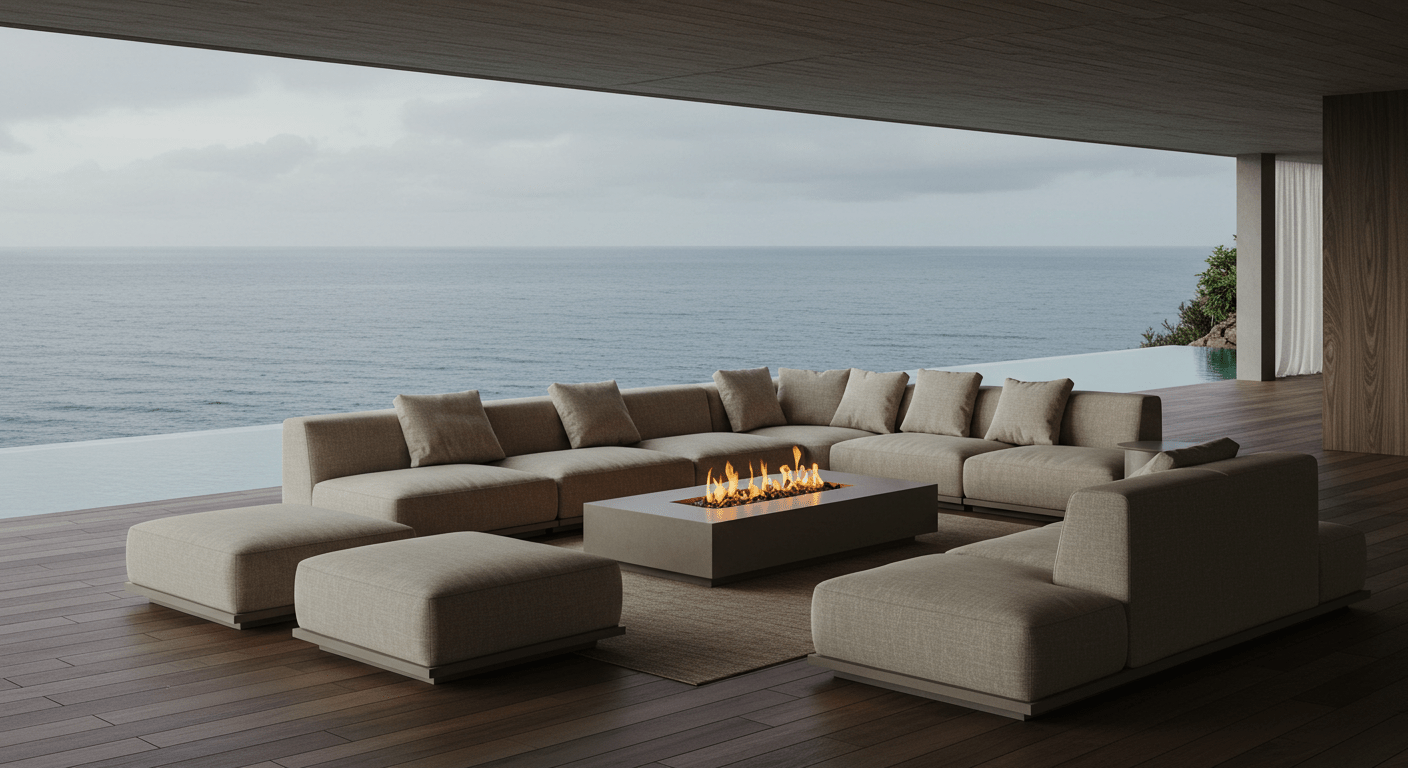
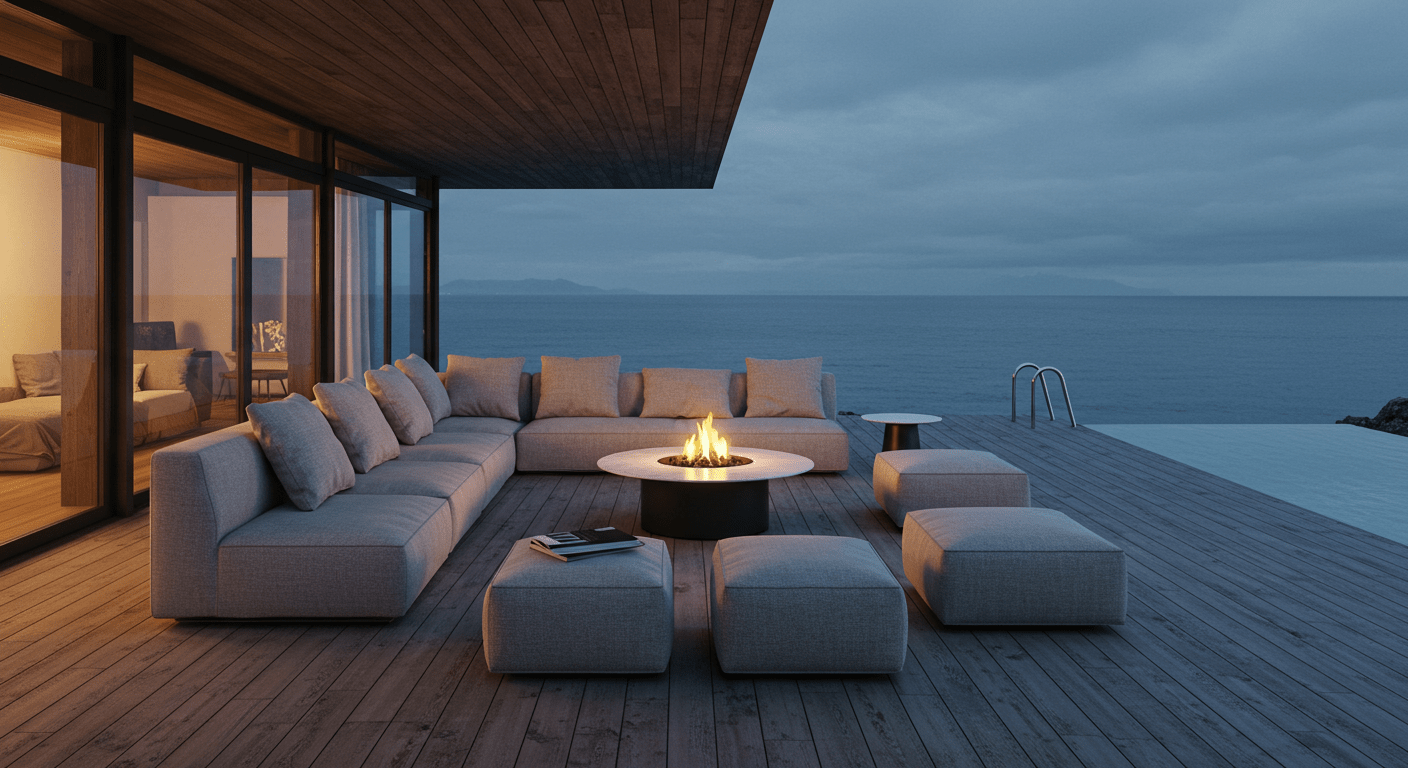
Creating Resort-Style Fire Table Areas: Vacation Luxury For Hotel And Resort Properties
Key Takeaways
- Fire tables drive measurable financial returns, 89% increase in guest dwell time, 47% F&B revenue lift, and 31% satisfaction improvement when designed strategically using commercial-grade materials and proper clearances.
- Natural gas eliminates operational burden, hands-free operation with timer controls achieves 80%+ cost savings versus propane, while supporting extended evening service without staff intervention for tank monitoring.
- Psychology governs design success; fire's evolutionary appeal as non-rhythmic sensory stimuli creates a documented relaxation response and social clustering; proper 22-24" seating distance and peripheral placement maximize this effect.
- Compliance prevents revenue loss; fire marshal shutdowns of non-compliant installations eliminate ROI entirely; listed appliances (ETL/CSA/UL), manufacturer clearances (10-25 ft structures, 72" overhead), and certified gas installation are non-negotiable.
- Maintenance preserves luxury perception, daily 15-minute cleaning, weekly burner inspection, and annual professional gas certification maintain the premium appearance that justifies 23% premium suite occupancy increases and 40% rate premiums.
Fire tables have evolved from simple patio amenities into strategic revenue drivers for hotels and resorts seeking competitive advantage in crowded hospitality markets. Properties implementing thoughtful fire table designs report dramatic improvements in guest satisfaction, dwell time, and food and beverage revenue, but these results require intentional design choices grounded in environmental psychology, commercial-grade materials, and operational excellence. The difference between underperforming installations and high-yield assets lies in understanding how fire's psychological appeal translates into measurable financial returns when supported by proper clearances, fuel selection, maintenance protocols, and service integration.
This guide provides hotel owners, resort designers, and property managers with a comprehensive framework for creating resort-style fire table areas that deliver documented ROI. From initial site planning through operational protocols, you'll gain actionable specifications, compliance requirements, and design strategies that transform outdoor spaces into destinations guests actively seek out, photograph, and return to experience again.
What Makes A Fire Table Area Feel "Resort-Luxury" Instead Of Basic Patio Seating?
Resort-style fire features combine commercial-grade materials, strategic scale, and intentional spatial design to create destinations guests seek out rather than amenities they simply encounter. The distinction matters: a basic fire pit is a standalone heat source, a fire table integrates dining functionality with flame, and a fire lounge feature anchors an entire social ecosystem with coordinated seating, lighting, and service infrastructure.
True hotel fire table outdoor lounge design signals investment in guest experience through material quality, proportional scaling, and seamless F&B integration, transforming outdoor space from functional to aspirational. Consumer demand validates this approach: 83% of landscape architects rank fire pits among the top three most requested outdoor features.
Six Luxury Signals That Define Resort-Style Fire Features:
-
Commercial-grade materials (GFRC, marine-grade stainless steel, natural stone)
-
Strategic scale (36-inch intimate tables to 10-foot statement features)
-
Layered lighting (2700-3000K warm tones coordinating with flame)
-
Integrated F&B service (drinks ring/wide edge design accommodating glassware)
-
Intentional spatial zoning (creates "illusion of private spaces" within open areas)
-
Year-round weather adaptation (wind screens, pergolas, supplemental heating)
Why Do Fire Table Areas Drive Guest Satisfaction And Revenue?
Fire's psychological pull is evolutionary, not aesthetic. Humans have an innate attraction to non-rhythmic sensory stimuli; the unpredictable flicker of flame triggers documented physiological responses, including reduced blood pressure, increased relaxation, and heightened social openness.
This biophilic effect creates natural clustering behavior where guests linger longer and engage more deeply, translating psychological comfort directly into financial performance. The mechanism is proven: hospitality fire features alter guest behavior patterns in ways that standard patio furniture cannot replicate.
|
Metric |
Improvement |
Business Impact |
|
Guest Dwell Time |
+89% (45→85 min) |
Extended F&B consumption |
|
F&B Revenue |
+47% |
Direct revenue lift |
|
Guest Satisfaction |
+31% |
Higher review scores, repeat bookings |
|
Premium Suite Occupancy |
+23% |
Justifies 40% rate premium |
|
Shoulder-Season Revenue |
+52% |
Year-round operation |
|
Social Media Engagement |
+80% |
Organic marketing value |
Real-world validation: A boutique hotel transformed its underutilized rooftop patio with three linear fire tables and saw 65% increase in evening reservations and 28% higher check sizes within one season. The Ritz-Carlton model, private terrace fire pits in premium suites, drove 34% increase in direct bookings by creating exclusive amenity value that third-party booking channels couldn't replicate.
What Layout And Furnishing Choices Create The Resort-Style Experience?
Creating an effective resort style fire table area requires precision in three dimensions: spatial planning that balances intimacy with flow, materials that withstand commercial abuse while projecting luxury, and lighting systems that amplify fire's psychological effect without overpowering it. Each decision compounds, proper seating distance enhances comfort, which extends dwell time, which increases revenue. The framework below translates research findings into operational specifications.
How Should You Position Fire Tables And Seating For Optimal Comfort And Flow?
Eight Layout Rules for Resort-Style Fire Table Areas:
-
Seating distance: 22-24 inches from fire edge (research-documented optimal comfort zone)
-
Commercial clearance: 3-foot minimum from fire edge to circulation paths
-
Structural clearance: 10-25 feet from combustible buildings, 21 feet from vegetation
-
Overhead clearance: 72-inch minimum, 7-10 feet ideal for pergolas/shade structures
-
Service aisles: 36-inch width behind seating for server passage and F&B integration
-
Accessible routes: 48-60 inch primary paths integrating wheelchair spaces within seating clusters (not isolated)
-
Wind placement: Position perpendicular to prevailing winds; use tempered glass wind screens for exposed locations
-
View alignment: Peripheral zone placement, fire visible without blocking primary sightlines
What Materials And Furnishings Survive Commercial Use While Looking Luxurious?
|
Element |
Specification |
Why It Matters |
|
Fire Table Material |
GFRC (rooftops, lightweight), natural stone, marine-grade stainless steel |
Weight restrictions, durability, luxury appearance; GFRC ideal for rooftops |
|
Furniture Frames |
Powder-coated steel, marine-grade stainless (coastal properties) |
Withstands salt air, pool chemicals, heavy use |
|
Cushions |
Solution-dyed acrylic (Sunbrella), quick-dry foam, antimicrobial treatment, 1,000+ hour UV rating |
Prevents mildew, fading; maintains appearance during 89% extended dwell time |
|
Fire Media |
Lava rock or lava glass ONLY (never river rock, explosion risk) |
Safety compliance; lava glass reflects firelight better |
|
Side Tables |
Heat-resistant surfaces (metal, stone); stable bases; one per two seats |
Reduces spills near fire; supports F&B service integration |
How Do You Layer Lighting So The Flame Stays The Focal Point?
Fire alone creates harsh shadows and uneven illumination; resort-style design requires a three-layer system where each tier serves distinct functions without competing with flame. Safety lighting (path lights, step lights) ensures code compliance and accident prevention. Ambiance lighting (uplights on architectural features, string lights in peripheral zones) creates depth and warmth without direct glare. Task lighting (discreet table lamps, under-table LED strips) enables F&B service without overwhelming fire's natural glow. All layers must use 2700-3000K warm tones to coordinate with flame's spectrum, and all circuits require dimming controls for adaptive programming from dusk through late evening.
Three Critical DON'Ts:
-
Don't aim lighting at guests' faces or directly at fire (destroys visual hierarchy, creates glare)
-
Don't use cool-tone LEDs (creates harsh contrast with fire's warm glow, feels institutional)
-
Don't rely on fire alone (research documents this creates dark corners and safety hazards)
What Fuel Type And Operational Setup Works Best For Hotels?
Natural gas delivers the lowest operating cost and minimal staffing burden for high-use hospitality environments. Properties with existing gas infrastructure gain 80%+ cost savings versus propane while eliminating the operational friction of tank monitoring, delivery schedules, and mid-service fuel depletion. For venues operating commercial fire tables nightly to support extended guest dwell time, natural gas integrates with timer controls for automated dusk ignition and scheduled shutdown, removing staff workload while ensuring consistent presentation.
Propane remains viable only where gas infrastructure doesn't exist or for seasonal-only operations where low usage frequency justifies the higher per-hour cost and labor overhead.
|
Fuel Type |
Operating Cost |
Staffing Burden |
Best For |
|
Natural Gas |
80%+ savings vs propane; flat monthly cost |
Minimal, hands-free operation; timer controls enable automation |
High-use venues (nightly service); year-round operations; properties with gas infrastructure |
|
Propane |
Medium-high; recurring tank delivery costs |
High, constant tank monitoring, replacement protocols |
Properties without gas access; seasonal use only; remote locations |
|
Ethanol |
Highest per-hour cost; limited burn time |
Medium, manual refilling; flammable storage required |
Indoor installations where gas prohibited (verify codes); decorative-only applications |
What Safety And Compliance Requirements Must You Plan For?
Fire tables must carry ETL, CSA, or UL listing, installation follows manufacturer's instructions exactly, as "listed clearances govern" fire marshal approval. The Authority Having Jurisdiction reviews installations against these specifications; violations trigger immediate shutdowns and costly rework that delays revenue generation.
Properties cannot compromise clearances for aesthetic preferences or site constraints, compliance failures eliminate the 47% F&B revenue increase by preventing operation entirely. Successful installations prioritize code adherence from initial design, not as afterthought during permitting.
Seven Compliance Checkpoints for Hospitality Fire Table Installations:
-
Purchase only listed appliances (ETL, CSA, or UL certification, non-negotiable)
-
Follow manufacturer's clearances exactly (10-25 ft from structures, 21 ft vegetation, 72" overhead minimum)
-
Use fire-safe media only, lava rock or lava glass (never river rock, trapped moisture causes explosions)
-
Install commercial-rated safety features: flame sensing, gas shut-off valves, weather-proof emergency stop button
-
Hire certified professional for gas line installation; annual inspection required for commercial operations
-
Verify ADA compliance (accessible routes, integrated wheelchair spaces within seating clusters)
-
Treat as outdoor-only equipment unless engineer confirms ventilation adequacy for enclosed spaces
Critical Compliance Considerations:
-
NFPA 1 (Fire Code) and NFPA 96 (Commercial Cooking Operations) apply to F&B areas
-
Never compromise clearances for aesthetics, fire marshal will shut down non-compliant installations
-
Properties achieving 47% F&B revenue increase require compliant, reliable installations from day one
How Do You Maintain Fire Table Areas To Keep Them "Luxury-Grade"?
Luxury perception degrades rapidly with visible neglect, maintenance protocols must match the 89% increase in guest dwell time by ensuring fire tables remain pristine throughout extended use periods. Daily 15-minute routines prevent the accumulation of debris and functional failures that undermine guest confidence. Weekly and monthly protocols catch deterioration before it becomes visible to guests. Annual professional inspection maintains commercial insurance coverage and prevents catastrophic failures during peak revenue seasons.
|
Issue |
Symptom |
Prevention |
Who Owns It |
|
Ignition failure |
No flame or clicking only |
Monthly battery check; clean electrode; annual gas inspection |
Staff (daily) / Vendor (annual) |
|
Flame instability |
Flickering, yellow flame, wind extinction |
Weekly burner port cleaning; install/maintain wind screens |
Staff (weekly) |
|
Media deterioration |
Discolored, scattered media |
Monthly inspection; annual replacement; remove debris daily with tongs |
Staff (monthly) |
|
Rust/corrosion |
Visible rust, pitting |
Use marine-grade materials in coastal areas; weekly inspection |
Staff (weekly) / Vendor (repairs) |
Daily cleaning (15 min): Wipe surfaces, remove debris from fire media with tongs, verify ignition functional.
Weekly (30 min): Clean glass wind screens, inspect gas connections, check furniture stability and cushion condition.
Monthly (1-2 hours): Replace fire media if discolored, deep clean burner ports, test all safety features including emergency stop button.
Annual: Professional gas line inspection and burner system certification required for commercial installations.
Budget 15-20% of furnishing cost annually for cushion replacement to maintain luxury appearance under the stress of 89% extended guest dwell time and year-round weather exposure.
What Mistakes Make Fire Table Areas Underperform?
Design and operational failures undermine the 89% dwell time increase and 47% revenue lift that properly executed fire table installations deliver. Most mistakes stem from residential-grade thinking applied to commercial environments, insufficient clearances, inadequate materials, or missing operational protocols. The fixes are straightforward but require intentional specification during design phase, not reactive correction after installation reveals problems.
Eight Common Mistakes and Quick Fixes:
-
Seating too close (<18" from fire edge) → Reposition to 22-24" optimal distance
-
Inadequate clearances → Maintain 3-foot commercial clearance; verify 10-25 ft from structures
-
Single oversized fire pit (overwhelming scale) → Use multiple smaller tables to create "illusion of private spaces"
-
Relying on fire alone for lighting → Implement 3-layer lighting system (2700-3000K warm tones)
-
Mismatched metal finishes → Coordinate all hardware in consistent finish family
-
Residential-grade furniture → Specify luxury outdoor furniture with commercial materials (marine-grade steel, quick-dry foam cushions)
-
Using river rock as fire media → Replace immediately, explosion risk; use only lava rock/glass
-
No staff training → Train on emergency stop, flame sensing, timer controls; document for liability
Step-By-Step: How Do You Plan And Execute A Fire Table Project?
Successful installations follow structured phases that address clearances, utilities, compliance, and staff readiness before the first guest arrives. Timeline varies by project complexity, simple patio additions complete in 12-16 weeks, while rooftop conversions requiring structural engineering extend to 20-24 weeks. Front-loading compliance verification prevents costly rework during permitting.
Six Project Phases for Fire Table Installation:
-
Concept & Feasibility (Weeks 1-3): Site analysis; clearance verification; budget estimate; confirm natural gas availability
-
Site & Utilities (Weeks 4-6): Gas line routing by certified professional; electrical for ignition; hardscape pads (36" beyond footprint)
-
Design & Selections (Weeks 7-10): Fire table model with listed clearances; GFRC for rooftops; furniture spec; lighting design
-
Approvals (Weeks 11-14): Fire marshal review; NFPA 1/96 compliance; ADA verification; building permits
-
Build (Weeks 15-20): Install fire table first to verify clearances; gas/electrical rough-in; furniture delivery; lighting installation
-
Commissioning (Weeks 21-22): Fire marshal inspection; ignition testing; staff training (emergency stop, timer controls, maintenance protocols)
Common Questions About Resort-Style Fire Tables
Can You Install Fire Tables On Rooftops Safely?
Yes, The Gant Aspen case demonstrates successful rooftop fire table revenue generation, converting unused space into a premium F&B venue with booking minimums. Three requirements enable safe rooftop installation:
-
Structural engineer confirms load capacity; specify GFRC material for lightweight construction that matches natural stone aesthetics without excessive weight.
-
Maintain code clearances: 10-25 feet from structures, 72-inch overhead minimum (critical for pergolas or shade structures).
-
Route natural gas line or plan propane tank storage with compliant access and ventilation, gas line preferred for hands-free operation supporting extended evening service.
How Do You Keep Flames Stable In Windy Locations?
Wind instability destroys the psychological comfort that drives 89% dwell time increases, guests won't linger near unpredictable flames. Priority solutions:
-
Tempered glass wind guards (most effective, 12-18 inch clear panels around fire perimeter)
-
Position perpendicular to prevailing winds to minimize direct exposure
-
Recessed burner design (2-4 inches below rim to protect flame)
-
Natural sheltering through site selection (courtyards, alcoves, pergola coverage).
Establish operational wind thresholds, typically 15-20 mph sustained winds, and train staff to shut down if exceeded for guest safety and comfort.
What's The Simplest Setup For Limited Staffing?
Natural gas with timer controls delivers automated operation that supports 47% F&B revenue increase without proportional labor increase. System auto-ignites at dusk and shuts down at designated hour, eliminating tank monitoring and achieving 80%+ cost savings versus propane. Minimum standard operating procedure:
-
Daily 5-minute visual inspection (verify ignition, check for debris)
-
Weekly 15-minute cleaning and fire media check
-
Annual professional gas inspection for commercial compliance.
This protocol maintains luxury presentation and safety standards without dedicated fire table attendant.
Your Next Steps To Create A Fire Table Area Guests Remember
Properties achieving documented results, 89% dwell time increase, 31% satisfaction improvement, 69% RevPAU growth, approach fire tables strategically, not as decorative add-ons but as revenue-generating signature experiences grounded in environmental psychology and operational excellence. The distinction between underperforming installations and high-yield assets lies in intentional design choices that compound: proper clearances enable safe extended use, natural gas eliminates operational friction, commercial-grade materials maintain luxury appearance under heavy use, and layered lighting amplifies fire's psychological effect.
For existing patio upgrades, prioritize foundational corrections:
-
Clearance verification first (10-25 ft from structures, 72" overhead minimum)
-
Natural gas evaluation for 80%+ cost savings and hands-free operation
-
Commercial-grade furniture with 22-24" seating distance from fire edge
-
Layered lighting (2700-3000K warm tones coordinating with flame)
-
Staff training and maintenance protocols documented for liability and consistent execution.
For new-build resort projects, integrate fire features from foundation stage:
-
Site planning with clearances designed into master plan before hardscape commitment;
-
Natural gas infrastructure during utilities phase to avoid costly retrofits;
-
GFRC for rooftops, marine-grade materials for coastal/pool areas specified at procurement
-
Accessible routes and wheelchair spaces in initial design, not forced adaptations
-
Service flow coordination with F&B areas, ensuring 36" server aisles and drinks ring integration.
Consumer research confirms what hospitality operators already sense: 83% of landscape architects rank luxury fire pits among the top three client-requested features, and guests actively seek properties offering these experiences when booking. Hotels and resorts that deliver thoughtfully designed fire features gain measurable competitive advantage, transforming ordinary outdoor spaces into destinations guests photograph, share across social platforms, and return to experience season after season. The framework for success is proven, the ROI is thoroughly documented, and the operational requirements are entirely achievable with strategic planning and commercial-grade specification.
Ready to specify fire tables for your property? Contact Cooke Furniture's hospitality design team for technical guidance on commercial-grade selections that deliver measurable guest experience results.