Can You Cook on a Fire Table? Outdoor Dining Possibilities for Restaurant Properties
Key Takeaways
- Fire Tables Prioritize Experience Over Cooking Cooking on fire tables restaurant outdoor dining focuses on guest interaction and ambiance rather than primary food preparation. Tableside finishing and interactive elements create memorable experiences without triggering commercial kitchen regulations.
- Gas-Fueled Systems Deliver Superior Compliance Natural gas and propane fire tables outperform wood-burning options in commercial applications. Gas systems offer easier regulatory approval, lower maintenance costs, and consistent heat output ranging from 60,000 to 380,000 BTUs for large outdoor dining areas.
- Regulatory Compliance Determines Implementation Success NFPA 96 principles, UL/CSA certification, and local fire marshal approval govern fire table dining. Minimum clearances—10 feet from food booths, 20 feet from tents—and professional installation by licensed contractors are mandatory for commercial fire tables.
- Fire Table Dining Increases Revenue Metrics Commercial fire tables extend outdoor dining seasons, increase dwell time by up to 45%, and improve guest satisfaction across all measured categories. Extended evening service and social media sharing drive repeat visits and organic marketing.
- Material Selection Impacts Long-Term ROI Specify #304 stainless steel, cast concrete, or natural stone for durability in high-traffic environments. Natural gas installations cost more upfront but deliver higher ROI through lower operating expenses compared to propane or wood-burning alternatives.
The best luxury fire tables transform restaurant outdoor dining from seasonal amenity to year-round revenue driver that justifies premium pricing. But can commercial fire features actually support cooking applications, or do they serve purely decorative purposes? The answer depends on several interconnected factors including BTU output, fuel type selection, local regulatory compliance, and your operational strategy for outdoor service.
This guide examines cooking on fire tables restaurant outdoor dining through practical lenses: safety codes, guest experience design, and long-term ROI. Whether you're evaluating fire table dining for casual concepts or fine dining properties, understanding the distinction between atmospheric furniture and functional cooking equipment determines regulatory compliance, insurance coverage, and profitability.
Commercial fire tables offer outdoor dining ideas that extend seasons, increase dwell time, and create shareable guest moments when implemented correctly.
What Does Cooking On Fire Tables Mean In A Commercial Restaurant Environment?
Cooking on fire tables in restaurant outdoor dining transforms heat into experience. Unlike traditional outdoor kitchens, fire table dining blends ambiance with interactive engagement, redefining what "cooking" means for commercial properties.
How Is Cooking On Fire Tables Different From Traditional Outdoor Kitchen Cooking?
Fire tables convert passive heat sources into active culinary stations using specialized cookware rather than built-in grills. Cast iron griddles provide even cooking surfaces for searing and warming, while heavy-duty skewers enable guests to cook their own kebabs and marshmallows directly over flame. Multi-level grill grates create distinct heat zones—lowest grates deliver high-heat searing, upper grates handle warming and resting.
This approach differs from traditional outdoor kitchen cooking because the equipment adapts to the fire table rather than the fire table functioning as a fixed cooking appliance. Cast iron's superior heat retention suits the direct, intense heat commercial fire tables produce.
Why The Term "Cooking" Often Means Experience Rather Than Food Preparation
Cooking on fire tables restaurant outdoor dining emphasizes guest participation over kitchen production. Fire tables primarily create ambiance, with cooking serving as interactive entertainment. Diners prepare small items—kebabs, s'mores, skewers—directly at their table, generating memorable, participatory experiences that encourage social interaction.
This shifts cooking from back-of-house food prep to front-of-house guest engagement. Fire table dining treats flame as theater, not just heat.
How Restaurant Outdoor Dining Redefines Fire As A Design And Engagement Element
Commercial fire tables function as visually striking focal points that drive social sharing and brand visibility. Fire features create "Instagram-worthy" moments guests photograph and post, delivering organic marketing without advertising costs. Restaurant outdoor dining ideas position fire as experiential design—suitable for casual concepts serving skewers or fine dining properties offering tableside finishing.
Fire table dining transforms commercial restaurant furniture into engagement platforms. The flame becomes the experience, not just the cooking method.
Are Fire Tables Designed For Active Cooking In Restaurant Outdoor Dining Spaces?
Most commercial fire tables serve decorative and heating functions, not active cooking. However, specific models with adequate BTU output and commercial-grade construction can safely support direct food preparation when properly certified and installed.
Can Commercial Fire Tables Safely Support Direct Food Cooking?
Gas-fueled fire tables—natural gas or propane—safely support cooking in commercial applications. Wood-burning units present regulatory and safety challenges that limit restaurant outdoor dining use. Commercial-grade construction uses cast concrete, natural stone, or heavy-gauge steel with corrosion-resistant stainless steel burners engineered for high-traffic, weather-exposed environments.
BTU output determines cooking capability. Decorative fire pits operate at 30,000-50,000 BTUs, insufficient for food preparation. Cooking on fire tables restaurant outdoor dining requires minimum 90,000 BTUs for searing and grilling. Large outdoor seating areas need 60,000-250,000 BTUs for effective heating, with high-performance systems reaching 380,000 BTUs.
What Health, Fire, And Building Codes Limit Cooking On Fire Tables?
NFPA 96 Standard for Ventilation Control and Fire Protection of Commercial Cooking Operations governs high-BTU outdoor cooking. Fire suppression systems, grease management, and ventilation requirements apply to commercial fire tables used for food preparation. Local health departments and fire marshals mandate detailed plan review and approval before installation.
Clearance requirements restrict placement: 20 feet minimum from tents or canopies, 10 feet from food booths for high-heat, grease-producing cooking. All fire table dining equipment must carry UL or CSA certification and require licensed professional installation per local codes. Safety systems—flame sensing, automatic gas shut-off, emergency stop mechanisms—are mandatory for commercial restaurant furniture used in cooking applications.
Why Most Commercial Fire Tables Are Classified As Furniture, Not Appliances
Classification depends on intended use and certification status. Commercial-grade fire tables built for decorative purposes qualify as outdoor dining furniture regardless of construction quality. Models designed for active cooking require appliance certification, triggering stricter installation codes and operational requirements.
This distinction affects permitting, insurance, and regulatory oversight. Restaurant outdoor dining ideas using fire tables for ambiance face minimal barriers. Cooking-capable commercial fire tables enter appliance territory, demanding compliance with commercial kitchen standards.
How Do Restaurants Successfully Use Fire Table Dining Without Violating Codes?
Restaurants avoid regulatory conflicts by positioning commercial fire tables as ambiance features rather than primary cooking equipment. This approach delivers guest experience benefits while minimizing code compliance burdens.
How Fire Table Dining Focuses On Atmosphere, Heat, And Guest Experience
Fire table dining outperforms traditional restaurant outdoor dining across all key metrics: overall satisfaction, ambiance rating, return likelihood, social media sharing, and average dwell time. Guests linger longer around fire features, directly increasing food and beverage sales per table. Commercial fire tables functionally extend outdoor dining seasons into cooler months by providing supplemental heat.
This performance advantage stems from atmospheric appeal, not cooking capability. Fire creates focal points that anchor outdoor dining ideas around warmth and visual engagement rather than food preparation.
Why Fire Tables Are Used Alongside — Not Instead Of — Cooking Equipment
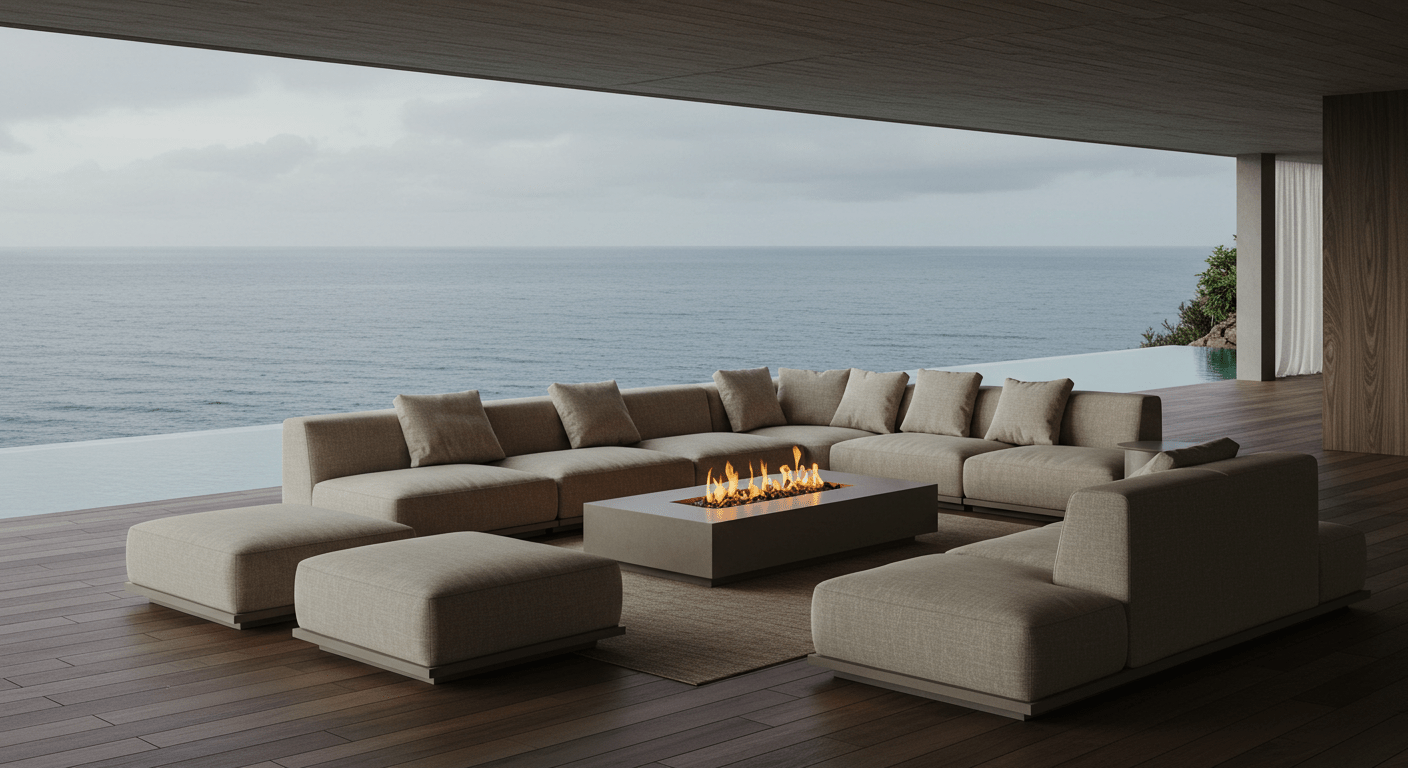
The Veranda at The Grand Oak exemplifies compliant fire table dining in fine dining environments. The restaurant installed a sleek, linear natural gas fire table as its outdoor terrace centerpiece purely for ambiance, not cooking. Integrated into a marble-topped bar, the fire table creates seamless, luxurious design while maintaining furniture classification.
Natural gas operation runs silent and odorless—ideal for refined dining experiences where cooking on fire tables restaurant outdoor dining would disrupt service. Low maintenance requirements let staff focus on guest service rather than fire management. All food preparation occurs in the certified commercial kitchen.
How Fire Tables Extend Dwell Time In Restaurant Outdoor Dining Areas
The Rustic Tap & Grill achieved 45% dwell time increase after adding wood-burning fire tables to its casual dining patio. The commercial restaurant furniture extended patio season by providing warmth while supporting interactive guest cooking—skewers and s'mores prepared tableside within decorative fire features.
This dual-purpose approach maximizes revenue without triggering appliance regulations. Guests perceive the experience as "cooking on fire tables restaurant outdoor dining" while the operation remains classified as atmospheric dining with minor tableside finishing.
How Can Restaurant Properties Incorporate Cooking Features Into Their Fire Tables To Enhance Dining Experiences?
Restaurant outdoor dining ideas incorporate cooking features through fuel selection, controlled tableside finishing, and experiential design rather than full meal preparation. This approach maximizes guest engagement while maintaining regulatory compliance.
How Restaurants Integrate Indirect Cooking Elements Near Fire Tables
Fuel type determines integration strategy for cooking on fire tables restaurant outdoor dining. Natural gas requires professional installation with dedicated gas lines but delivers the most cost-effective permanent solution—minimal maintenance, no refueling, consistent heat output. Liquid propane offers portability for flexible seating arrangements and seasonal layouts, though it requires regular tank replacement at slightly higher operational costs.
Wood-burning fire tables present significant fire safety risks and greater clearance requirements. Local codes often restrict wood-burning commercial fire tables, limiting use to rustic or resort-style concepts with robust safety protocols. Gas-fueled options provide safer, code-compliant paths for fire table dining integration.
How Controlled Tableside Finishing Creates Interactive Dining Moments
The Rustic Tap & Grill's "grill-your-own" menu—skewers and s'mores kits—demonstrates controlled tableside finishing. Heavy-duty skewers let diners cook kebabs, marshmallows, and small items directly at commercial restaurant furniture classified as decorative fire features. This participatory format encourages social interaction and extends dwell time without triggering commercial cooking regulations.
Implementation requires investment in fire suppression systems and extensive staff training to manage risks. The Rustic Tap & Grill's approach balances guest experience with safety compliance, creating interactive moments within furniture classification boundaries.
Why Experiential Fire Features Increase Perceived Value Without Full Cooking
Unique culinary experiences drive revenue through extended patio seasons and increased guest engagement without full commercial kitchen requirements. Interactive fire table dining creates memorable moments that guests perceive as premium experiences—suitable for both casual and fine dining outdoor dining ideas.
Commercial fire tables deliver versatility by functioning as atmospheric focal points with optional tableside finishing capability. This positions fire features as experiential design elements rather than cooking appliances, maximizing perceived value while minimizing regulatory complexity.
What Types Of Outdoor Dining Ideas Pair Best With Commercial Fire Tables?
Commercial fire tables pair best with social dining concepts, evening service models, and seasonal outdoor dining strategies. Fire-centered layouts maximize guest engagement and revenue across diverse restaurant formats.
How Fire Tables Support Shared Plates And Social Dining Concepts
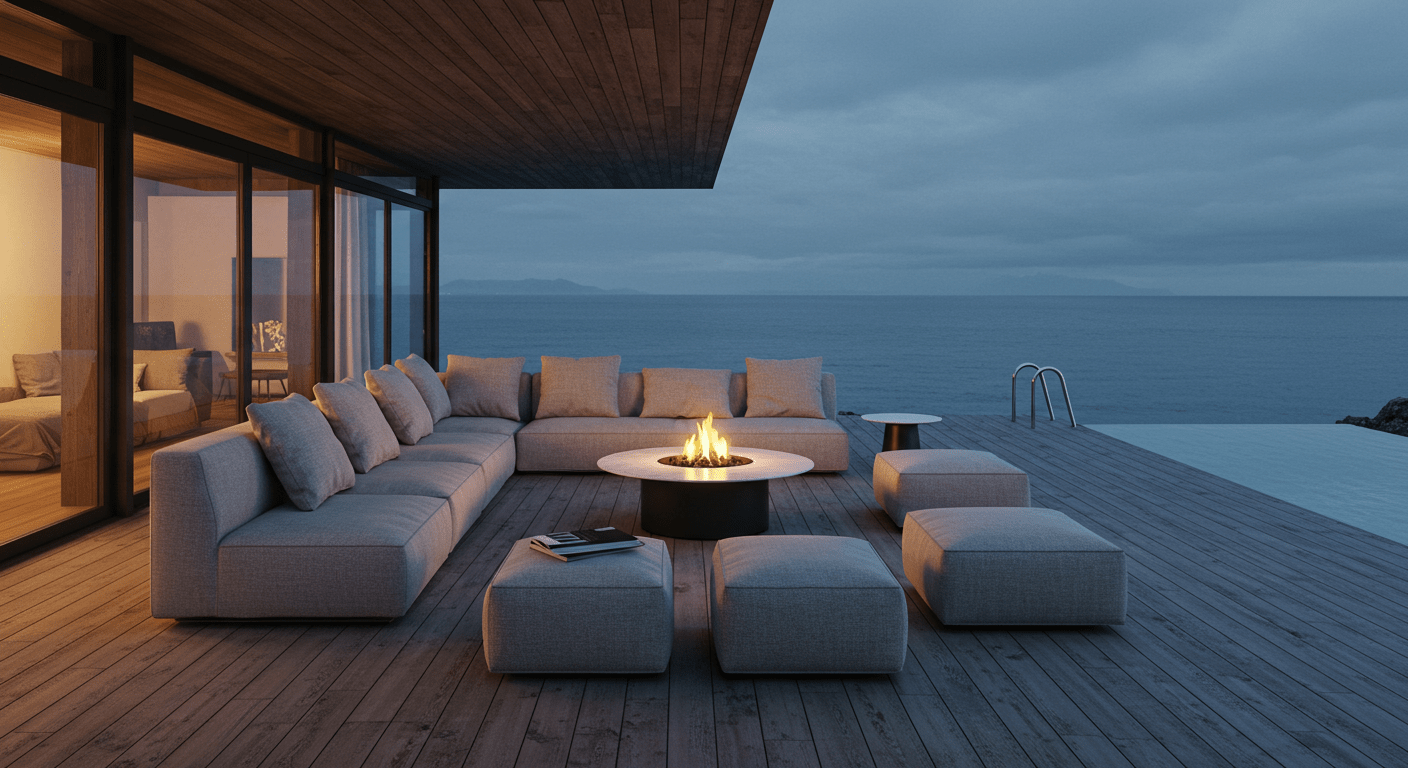
The Beachside Grill at The Coral Sands demonstrates fire table versatility through dual-fuel implementation. The resort restaurant uses a large, built-in natural gas fire pit for its main dining area while deploying smaller, portable propane fire tables for intimate beach seating. This combination creates varied outdoor dining ideas within a single property.
Propane flexibility enables the "toes-in-the-sand" private dining experience—personal fire tables paired with dedicated servers for premium occasions. The resort customizes fire table dining configurations for private events and special occasions, adapting commercial restaurant furniture placement to match guest count and service style. Shared plates and social dining concepts thrive around fire features that encourage gathering and interaction.
Why Fire-Centered Seating Layouts Encourage Longer Evening Service
Fire features function as focal points that naturally encourage guests to gather and linger. Effective restaurant outdoor dining creates distinct functional zones—cooking, dining, relaxation—with commercial fire tables anchoring lounge and dining areas. Clear pathways between zones ensure smooth guest and staff movement without disrupting fire table dining experiences.
This zoning strategy extends evening service by transforming outdoor spaces into destination seating. Guests choose fire-centered tables over standard patio seating, increasing reservation demand and table turnover value during profitable evening hours.
How Fire Tables Enhance Seasonal And Nighttime Restaurant Outdoor Dining
Commercial fire tables extend outdoor dining seasons into cooler months by providing supplemental heat that makes previously unusable patio space profitable. Fire features create warm, inviting ambiance that captivates guests during evening hours when natural light fades and temperature drops.
This seasonal extension transforms restaurant outdoor dining from fair-weather amenity to year-round revenue driver. Cooking on fire tables restaurant outdoor dining or purely atmospheric fire table dining both deliver nighttime appeal that standard patio furniture cannot match.
What Should Restaurant Owners Consider Before Adding Fire Tables To Outdoor Dining Areas?
Restaurant owners must evaluate seating ergonomics, operational safety systems, and brand alignment before installing commercial fire tables. These factors determine guest comfort, regulatory compliance, and long-term design cohesion.
How Seating Height And Table Configuration Affect Dining Comfort
Maintain 18-24 inch clearance from fire edge to seat—this distance balances warmth access, safety compliance, and guest comfort. Seating arrangements must prevent accidental contact with fire table dining surfaces while allowing easy movement through clear pathways. Shape selection should complement overall restaurant outdoor dining design without creating bottlenecks or awkward service angles.
Configuration directly impacts table turnover and guest satisfaction. Poor clearances force guests to lean away from heat or risk discomfort, reducing dwell time and repeat visits. Proper spacing transforms commercial fire tables into comfortable focal points rather than safety hazards.
Why Flame Control And Heat Output Matter During Service
Electronic ignition systems are essential for commercial fire tables—manual ignition creates operational delays and staff safety risks. Commercial applications require flame sensing, automatic shut-off, and accessible emergency stop mechanisms as baseline safety features. Prioritize models with layered safety systems rather than single-point failure designs.
Wind guards and physical barriers prevent guests from approaching flames too closely during fire table dining service. Never leave commercial restaurant furniture with active flames unattended. Post clear signage with safety warnings and operational instructions visible to both staff and guests. These controls maintain consistent service quality while managing liability exposure.
How Custom Commercial Fire Tables Align With Brand And Concept Design
Material selection defines durability and brand perception. Specify #304 stainless steel, cast concrete, or natural stone for commercial-grade construction that withstands high-traffic outdoor dining environments. Weather-resistant materials reduce replacement costs and maintenance frequency. Surround fire tables with non-combustible countertops and surfaces to meet fire codes.
Design integration requires matching fire table finishes to surrounding décor—The Veranda's silent, odorless natural gas operation suits its refined dining concept while delivering the ambiance of cooking on fire tables restaurant outdoor dining without actual food preparation. Select commercial fire tables that reinforce rather than conflict with existing outdoor dining ideas and brand positioning.
How Do Commercial Fire Tables Support Long-Term Restaurant ROI?
Commercial fire tables generate long-term ROI through increased guest retention, reduced maintenance costs, and enhanced brand differentiation. These factors compound over time to justify initial investment.
How Fire Tables Increase Guest Retention And Repeat Visits
Fire table dining delivers higher overall satisfaction than traditional restaurant outdoor dining across all measured metrics: ambiance rating, repeat visit likelihood, and social media engagement. Extended dwell time translates directly to higher revenue per table through increased food and beverage sales.
The Rustic Tap & Grill demonstrates measurable success—fire table implementation drove significant revenue gains from extended patio season and increased guest engagement. Guests return specifically for fire table dining experiences, creating predictable reservation demand that stabilizes revenue forecasting.
Why Durable Fire Tables Reduce Replacement And Maintenance Costs
Natural gas installations carry higher upfront costs but deliver superior ROI through lower operating expenses and greater revenue impact. Propane offers flexible, lower-cost entry points for restaurants testing fire table dining concepts. Wood-burning systems present lowest initial investment but highest operating costs and poorest ROI.
The Rustic Tap & Grill's wood-burning fire tables require daily cleaning and ash disposal—high maintenance demands that drain labor resources. Commercial fire tables built from durable, weather-resistant materials minimize these costs. Protective covers shield commercial restaurant furniture from weather damage between services. Regular maintenance schedules prevent leaks and blockages that cause expensive emergency repairs.
How Fire-Driven Experiences Strengthen Restaurant Brand Perception
Fire tables create memorable experiences that drive loyalty and differentiate brands in competitive hospitality markets. Strategic fire table dining investments enhance guest experience while serving as powerful marketing tools through organic social media sharing. Visual focal points encourage guests to linger and photograph their experience, generating free promotional content.
Cooking on fire tables restaurant outdoor dining—or purely atmospheric fire features—transforms seasonal patios into year-round destinations. Commercial fire tables become signature outdoor dining ideas that set properties apart, creating brand recognition that commands premium pricing and sustained competitive advantage.
Ready To Transform Your Restaurant's Outdoor Dining With Commercial Fire Tables?
Implementing fire table dining requires expertise in regulatory compliance, fuel systems, and experiential design. Cooke's design experts help restaurant owners navigate BTU requirements, clearance specifications, and brand integration strategies that maximize ROI while meeting local fire codes.
Whether you're adding cooking on fire tables restaurant outdoor dining capability or creating purely atmospheric fire features, professional guidance ensures safety, durability, and guest satisfaction.
Our team evaluates your property's specific needs—from casual patio concepts to fine dining terraces—and recommends outdoor fire tables that align with your operational model and budget. Contact Cooke's design experts today to explore outdoor dining ideas that extend seasons, increase dwell time, and differentiate your brand in competitive hospitality markets.