Fire Tables for Design Professionals: Specifications and Resources for Architects
Key Takeaways
- Commercial fire tables should be specified as regulated, performance-driven site elements rather than decorative furniture because they require code review, certifications, and cross-trade coordination.
- The most important product decisions include fuel type, BTU output, dimensions, materials, finishes, and verified ANSI Z21.97/CSA 2.41 certification, all of which affect infrastructure, durability, and compliance.
- Successful installation planning depends on early coordination of site layout, ADA circulation, gas and electrical requirements, ventilation and clearance conditions, and structural load capacity for patios, decks, and rooftops.
- Clear specification language and early AHJ consultation help reduce change orders, prevent inspection failures, and align design intent with fire code, operational needs, and long-term performance.
- Architects can work more efficiently and specify with greater confidence by using cut sheets, CAD/BIM resources, finish samples, mockups, commissioning checklists, and manufacturer support throughout design development and handoff.
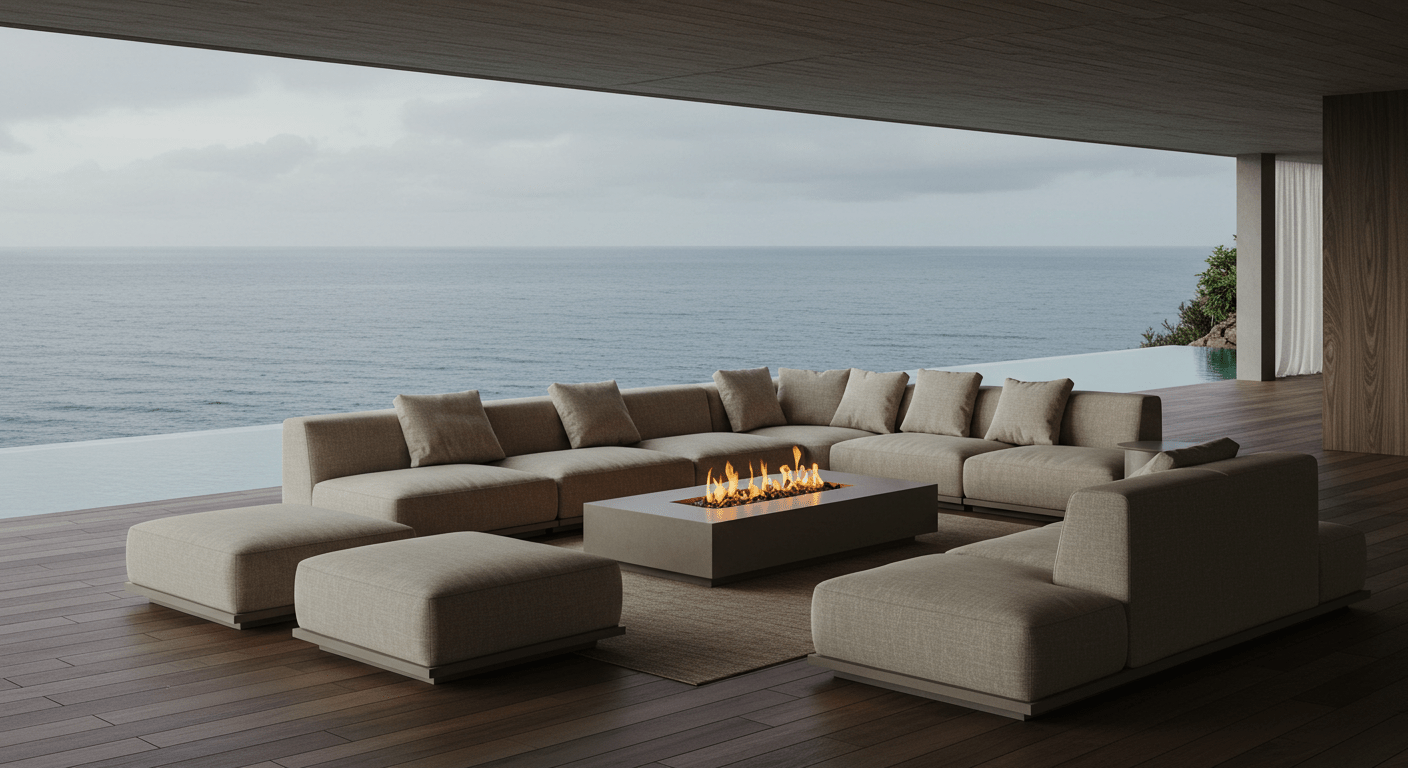
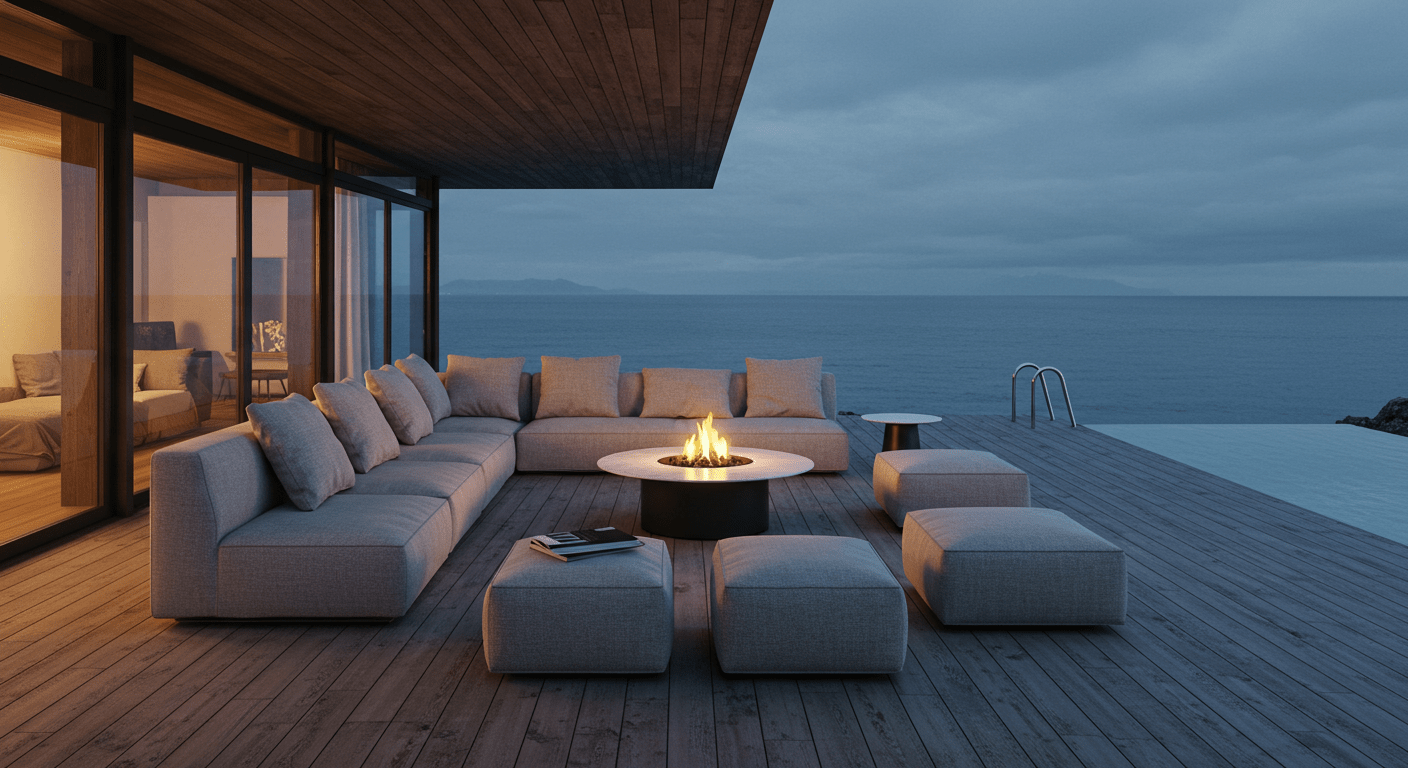
Fire tables have moved beyond decorative status in commercial design. For architects specifying luxury modern outdoor furniture, these elements now carry code implications, structural requirements, and performance standards that demand early coordination. A designer fire table in a hospitality setting isn't simply selected from a catalog—it's engineered into construction documents, verified against local fire codes, and integrated with gas and electrical systems. This guide addresses architect fire table specs from product selection through installation, helping design professionals navigate compliance, coordinate trades, and deliver fire features that perform safely across decades of commercial use.
What Should Architects Know First About Specifying Fire Tables for Commercial Outdoor Spaces?
Commercial fire table setup begins with understanding that these are regulated site elements, not furnishings. Architects must treat specification as they would any performance-critical building component—with detailed documentation, code verification, and cross-trade coordination.
What Is a Commercial Fire Table Specification in Architectural and Hospitality Projects?
A commercial fire table specification documents every parameter contractors need for procurement and installation. Spec sheets must include dimensions (e.g., 60"x60"x22" for the Newport Fire Table), top and base materials, fuel type, BTU output, and optional features. Construction documents require detailed drawings alongside product data sheets. Submittal packages include shop drawings and certifications—ANSI Z21.97/CSA 2.41 compliance is mandatory for commercial units. Choose detailed spec sheets when coordinating multi-trade installations. Choose simplified documentation only for standalone residential applications where code review is minimal.
Why Are Fire Tables Treated as Performance-Driven Site Elements Rather Than Decorative Accessories?
Fire tables carry fire code obligations that override aesthetic considerations. NFPA 1 (Section 10.11.3) and IFC (Section 307.4.3) mandate 15-foot operational clearance from structures or combustibles—often superseding manufacturer specs of 6–48 inches. Commercial units require electronic ignition with flame-sensing shut-offs for environments lacking continuous monitoring. These safety systems transform a stone outdoor table with a fire pit from furniture into regulated equipment requiring inspection and commissioning.
Which Project Types Most Often Require Architect-Specified Fire Tables?
Hospitality venues, mixed-use developments, and high-end residential communities represent primary applications. Fire tables fall under the CSI MasterFormat Division 32 39 16 – Manufactured Fire Pits. High fire-risk regions impose additional requirements: California may require seismic bracing; Arizona and Florida coastal zones mandate wind-resistance and anchoring features. Choose architect-specified fire tables when projects involve public assembly, commercial insurance requirements, or jurisdictions with active fire marshal review.
Which Fire Table Specifications Matter Most When Architects Compare Products and Systems?
Product selection requires evaluating fuel type, output capacity, materials, and certifications against project-specific requirements. These specifications directly impact fire table gas line installation, structural coordination, and long-term durability.
How Should Architects Evaluate Fuel Type Options Such as Natural Gas vs Propane for Project Requirements?
Fuel type selection affects infrastructure and operational flexibility. Natural gas offers a continuous supply through a permanent connection, eliminating tank monitoring and replacement logistics. Propane provides placement flexibility for locations where gas line routing is impractical or cost-prohibitive. BTU output directly influences required gas line sizing—a 250,000 BTU unit demands larger supply lines than an 80,000 BTU unit to ensure adequate fuel delivery. Choose natural gas when permanent infrastructure exists, and operational simplicity is prioritized. Choose propane when site constraints prevent trenching or when seasonal relocation is anticipated.
What Output, Flame Presentation, and Sizing Specs Should Be Matched to Occupancy and Use Zones?
Output and dimensions must align with the intended use. BTU ranges vary significantly across commercial products: the Montecito Fire Table delivers 80,000 BTU while the Newport Fire Table produces 250,000 BTU. Physical dimensions also differ by application—Newport measures 60"x60"x22" for larger gathering zones; Montecito measures 60"x60"x17" for intimate seating arrangements. Choose higher BTU output for open-air venues requiring heat projection across greater distances. Choose moderate output for covered or semi-enclosed spaces where heat accumulation becomes a ventilation concern.
Which Material and Finish Specifications Best Support Durability, Corrosion Resistance, and Design Intent?
Material selection determines service life and maintenance requirements. Common base materials include 304 grade stainless steel, natural stone, and porcelain—each chosen for resistance to sun, rain, snow, and temperature fluctuations. Finish options include brushed, electro-polish, copper, and various powder coat treatments for design customization. Choose stainless steel bases for coastal or high-humidity environments where corrosion resistance is critical. Choose stone or porcelain tops when matching existing hardscape materials or achieving specific aesthetic integration.
What Certifications and Code-Related Documentation Should Architects Request During Product Selection?
Certification verification prevents specification errors and inspection failures. ANSI Z21.97/CSA 2.41 certification is mandatory for commercial fire tables—request documentation during submittals. Relevant codes include IBC, IFC, NFPA 54 (National Fuel Gas Code), and NFPA 58 (Liquefied Petroleum Gas Code). Choose manufacturers providing complete compliance documentation packages. Avoid products lacking third-party certification, as fire table installation without proper certification creates liability exposure and may void commercial property insurance.
What's Involved in Installing a Fire Table for Commercial Outdoor Use?
Fire table installation extends beyond product placement. Architects must coordinate site planning, utility routing, clearance verification, and structural capacity before construction documents are finalized. Early trade coordination prevents change orders during construction.
What Site Planning Details Should Be Confirmed Before Construction Documents Are Finalized?
Site planning establishes the foundation for a compliant commercial fire table setup. ADA compliance requires 48-inch clear circulation paths around fire features—this affects furniture layouts and adjacent walkways. Authorities Having Jurisdiction (AHJ) require early consultation to identify local code amendments before design development concludes. Choose pre-application meetings with fire marshals when projects involve rooftop installations, historic districts, or high-occupancy venues. Choose standard permit pathways when projects follow established precedents in the jurisdiction.
How Should Gas, Electrical, and Ignition Requirements Be Coordinated Across Trades?
Cross-trade coordination prevents installation conflicts. Electronic ignition systems require 120v, 15-amp switched power supply—electrical drawings must show conduit routing and disconnect locations. Fire table gas line installation must be performed by licensed professionals in accordance with NFPA 54. Specifications should indicate gas line sizing based on BTU requirements and run distances. Choose early MEP coordination meetings when fire tables are integrated into larger outdoor kitchens or entertainment systems. Choose simplified coordination when fire tables operate as standalone features with dedicated utility connections.
What Clearance, Ventilation, and Overhead Conditions Should Architects Detail for Safe Installation?
Overhead conditions determine the feasibility of covered installations. Standard commercial units (≤200,000 BTU) require 7-foot (84 inches) minimum vertical clearance under pergolas. Higher-output units (>200,000 BTU) demand 10-foot (120 inches) clearance to prevent heat accumulation. Pergolas require at least 50% open overhead area and two open sides for cross-ventilation. Choose lower-output units when ceiling heights are constrained. Choose open-air placement when high-output fire tables are specified for maximum heat projection.
What Structural Load and Substrate Requirements Should Be Verified for Patios, Decks, and Rooftops?
Structural verification prevents installation failures. Typical fire tables weigh 300–800 lbs, requiring load analysis of supporting surfaces. Rooftop installations demand a structural engineer review for point loads and potential reinforcement. Elevated decks require joist spacing verification and potential blocking. Choose ground-level concrete slabs when structural capacity is uncertain. Choose engineered rooftop platforms when fire tables are specified for elevated amenity decks.
What Inspection, Commissioning, and Handoff Items Should Be Included Before Owner Turnover?
Commissioning ensures operational readiness. Installation best practices include proper media placement, such as using 1/4" fire glass as a stable base layer. Gas connections require pressure testing and leak detection before ignition system activation. Final inspection involves AHJ sign-off, insurance documentation, and operational training for facility staff. Choose comprehensive commissioning checklists when turning over to property management teams unfamiliar with fire feature maintenance. Choose an abbreviated handoff when owners have existing fire table experience.
How Can Architects Use Fire Tables as a Bridge Between Design Intent, Compliance, and Operational Performance?
Fire tables sit at the intersection of aesthetic vision and regulatory reality. Specification language, layout coordination, and cross-discipline communication determine whether projects proceed smoothly or encounter costly revisions.
How Can Specification Language Reduce Change Orders and Installation Delays?
Precise specification language prevents mid-construction conflicts. Early AHJ consultation identifies local code amendments before construction documents are finalized—preventing redesign costs that commonly reach 10-15% of outdoor amenity budgets. Manufacturer clearance specifications (6–48 inches) are often superseded by code requirements (15 feet), creating specification conflicts if not addressed during design development. Choose specification language referencing "code-required clearances" rather than manufacturer minimums. Choose early code review submissions when projects involve complex assemblies like a stone outdoor table with a fire pit integrated into built-in seating or countertops.
What Details Help Align Fire Table Layouts with Circulation, ADA Access, and Furniture Planning?
Layout coordination ensures fire tables integrate with surrounding elements. Cut sheet templates include plan views, elevation views, and critical clearances for spatial planning coordination. These drawings show exact footprints for luxury modern outdoor furniture arrangements that maintain required circulation paths. Dimensioned clearance zones prevent furniture placement that violates safety requirements post-installation. Choose manufacturer cut sheets with ADA notation when specifying for public accommodations. Choose simplified plan views when fire tables serve private residential amenity spaces with flexible furniture arrangements.
How Should Architects Coordinate with Landscape, MEP, and Hospitality Operators During Design Development?
Multi-discipline coordination aligns infrastructure with operations. Gas line sizing must be coordinated based on BTU output requirements—undersized lines create performance failures; oversized lines waste installation budget. Electrical requirements for ignition systems must be integrated into overall electrical plans, including weatherproof disconnect locations accessible for maintenance. Hospitality operators should review placement relative to service paths and seasonal programming needs. Choose integrated design charrettes when fire tables anchor major outdoor dining or lounge areas. Choose sequential coordination when fire tables serve as secondary amenities within larger landscape packages.
What Resources and Specification Tools Help Architects Design with Fire Tables More Efficiently?
Specification efficiency depends on accessible digital assets, material validation processes, and manufacturer support. These resources reduce documentation time and improve coordination accuracy.
Which Cut Sheets, CAD Files, BIM Objects, and Finish Samples Should Architects Request?
Digital resources streamline the architect's fire table specs integration into project documents. Arcat provides CAD drawings, Revit BIM files, and 3D modeling files categorized under the CSI MasterFormat Division 32 39 16. These digital assets enable precise spatial planning, clash detection, and visualization within complex architectural models. Request complete packages including plan views, elevations, and utility connection points. Choose BIM objects with embedded specification data when working in integrated project delivery environments. Choose simplified CAD blocks when projects require basic 2D documentation without model-based coordination.
What Mockups or Material Review Steps Help Validate Fit, Finish, and Flame Aesthetics?
Material validation prevents specification mismatches during installation. The finish sample review should include brushed, electro-polish, copper, and powder coat options to match specific design palettes. Request physical samples rather than relying on digital renderings—color accuracy varies significantly across screens. Flame presentation mockups help clients visualize scale and ambiance before final selection. Choose on-site mockups for high-visibility designer fire table installations where client approval is critical. Choose showroom visits when multiple finish and size options require side-by-side comparison.
How Can Architects Evaluate Manufacturer Support, Warranty Terms, and Long-Term Maintenance Guidance?
Manufacturer relationships affect long-term project success. Leading manufacturers offer direct consultation, detailed product documentation, and design assistance for custom solutions. Continuing education programs (CEUs) from industry associations keep professionals updated on products, technologies, and code requirements. Warranty terms vary significantly—commercial-grade products typically offer 5-year component coverage and 10-year structural warranties. Choose manufacturers providing dedicated commercial sales teams when specifying for hospitality or institutional clients. Choose standard distribution channels when projects involve straightforward residential applications with conventional requirements.
What Are the Best Practices for Architects Specifying Fire Tables in Commercial Outdoor Projects?
Successful specifications combine code awareness, climate adaptation, and comprehensive documentation. These practices prevent common errors and establish clear accountability across project teams.
What Common Specification Mistakes Should Architects Avoid in Hospitality and Mixed-Use Environments?
Specification errors create liability and delay occupancy. Relying solely on manufacturer clearance specs (6–48") without verifying code requirements (15 feet per NFPA 1/IFC) results in failed inspections and costly relocations. Failing to specify electronic ignition with flame-sensing shut-offs for commercial environments violates safety standards and insurance requirements. Omitting AHJ pre-consultation leads to late-stage redesigns when local amendments surface during permit review. Choose conservative clearance specifications that default to code maximums. Choose explicit safety system requirements rather than assuming commercial-grade products include necessary features.
How Can Architects Future-Proof Fire Table Selections for Climate, Use Intensity, and Brand Updates?
Future-proofing extends service life and adaptability. Regional climate considerations drive specification: seismic bracing for California installations; wind-resistance features for Arizona and Florida coastal projects. Material selections must be rated for outdoor weather conditions, including UV exposure, precipitation, and temperature extremes—304 grade stainless steel and marine-grade finishes outperform standard coatings. Choose modular fire table systems when brand refresh cycles may require aesthetic updates without infrastructure replacement. Choose integrated masonry solutions when permanence aligns with long-term property positioning.
What Should Design Professionals Include in Final Specification Notes and Coordination Checklists?
Comprehensive checklists ensure nothing is overlooked during fire table installation and commissioning. Final specification notes should address certification requirements (ANSI Z21.97/CSA 2.41), clearance dimensions (15-foot horizontal; 7–10-foot vertical), utility requirements (120v/15 amp electrical; gas line sizing per BTU), structural load verification (300–800 lbs), ADA circulation paths (48-inch minimum), and ventilation requirements for covered installations (50% open overhead, two open sides). Choose detailed specification checklists for complex commercial fire table setups involving multiple trades. Choose abbreviated checklists when projects follow established templates from previous successful installations.
Specify with Confidence—Partner with Cooke Furniture
Fire table specification demands precision across codes, materials, and installation coordination. From architect fire table specs to final commissioning, every detail affects compliance, safety, and long-term performance. The difference between successful installations and costly change orders often comes down to manufacturer support during design development.
Cooke Furniture provides complete specification resources for commercial dining fire tables, including CAD files, BIM objects, detailed cut sheets, and direct consultation with our technical team. Every hospitality-grade unit is engineered for 24/7 commercial operation and backed by 50-year structural warranties that demonstrate our manufacturing confidence. Whether specifying for a boutique hotel, destination resort, or mixed-use development, we simplify the process from initial product selection through professional installation and ongoing support.
Contact us to request spec sheets and start your next project.