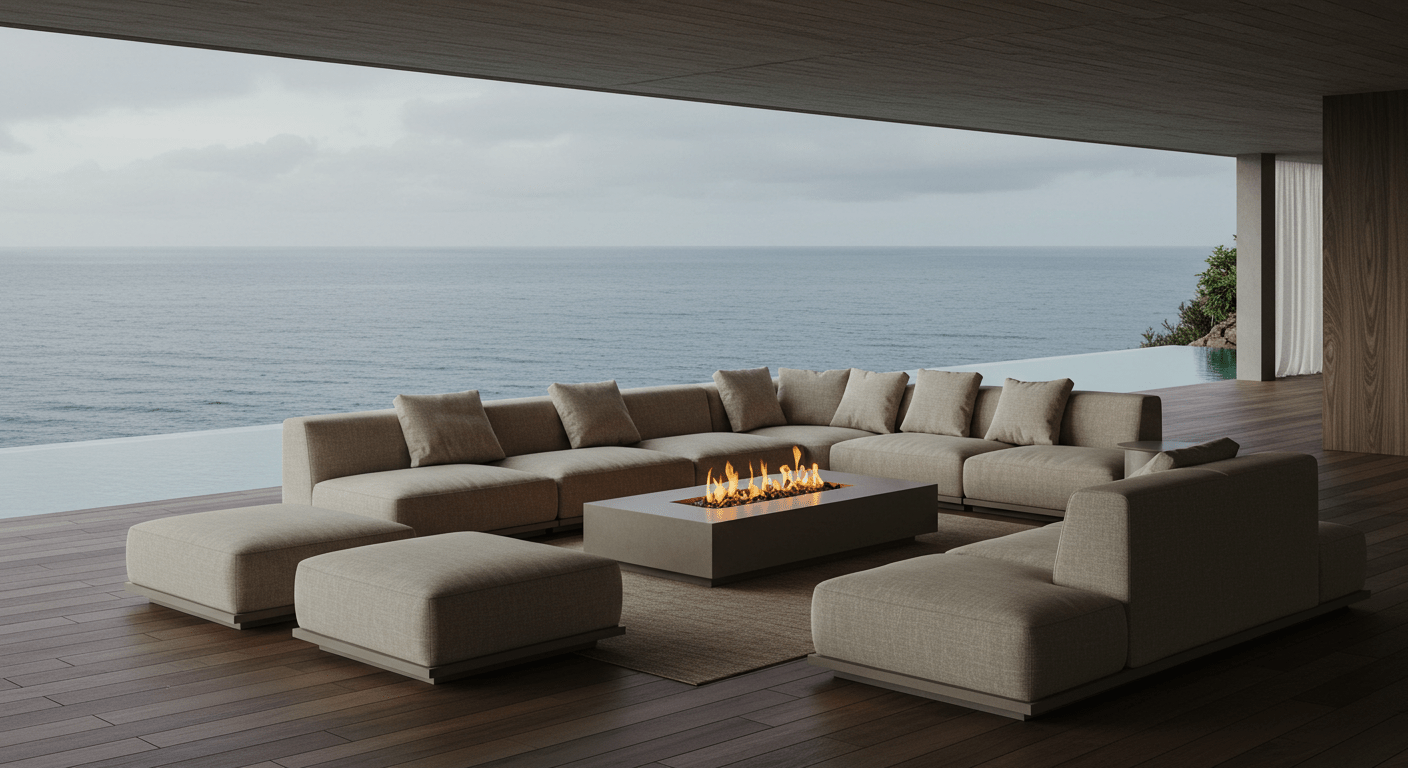
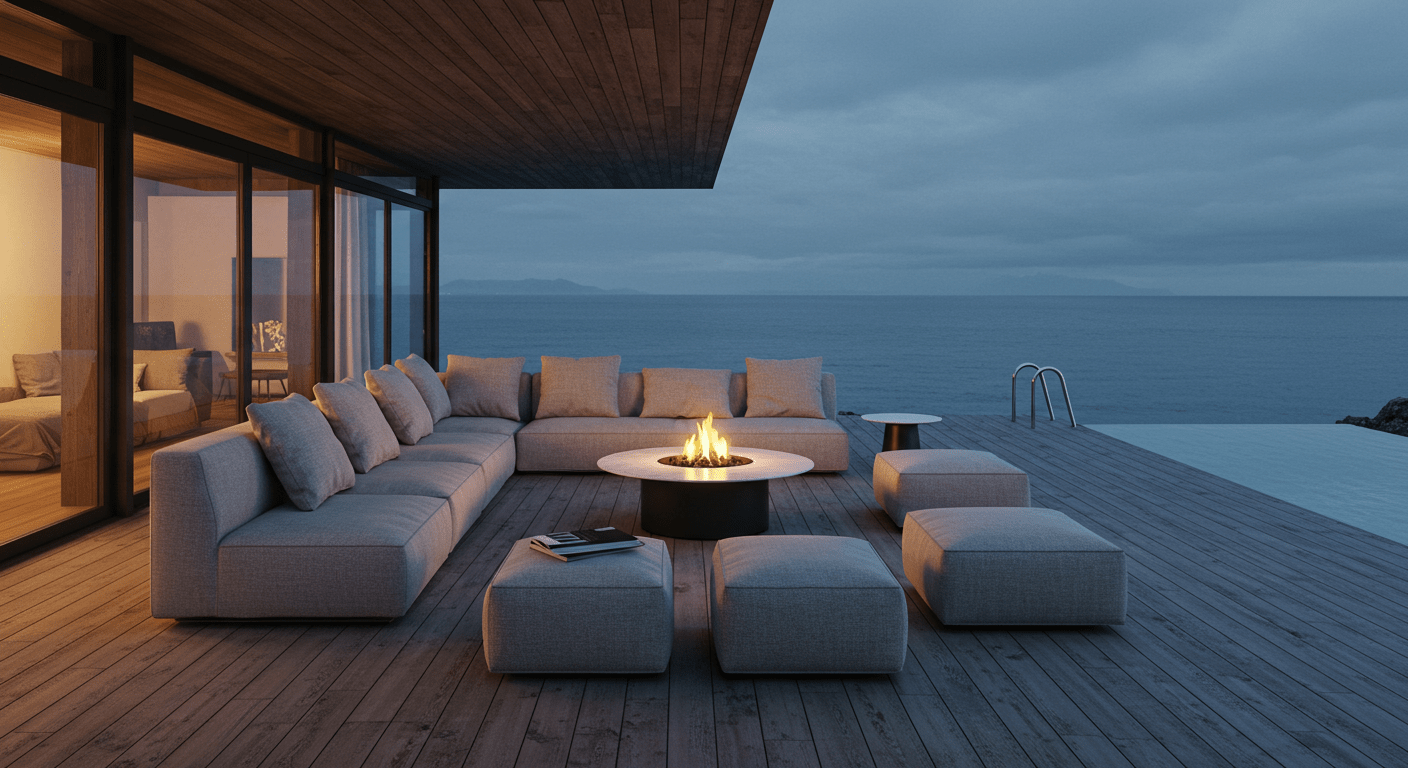
Coastal Fire Table Installation: Thriving in Salt Air Environments for Waterfront Properties
Key Takeaways
- Coastal fire table installations fail early without marine-specific planning because salt air, humidity, wind, and sand accelerate corrosion far faster than standard inland outdoor conditions.
- Choosing 316 stainless steel, marine-grade fittings, and durable surface materials such as GFRC or sintered stone significantly improves lifespan and lowers long-term replacement costs in waterfront settings.
- Pre-installation planning should prioritize site exposure, drainage, wind patterns, clearances, fuel type, and local code compliance so the system is safe, insurable, and suited to the actual shoreline conditions.
- A proper coastal commercial installation includes corrosion-resistant site prep, protected gas and electrical connections, wind-aware spacing and ventilation, and documented commissioning checks before public use.
- Routine cleaning, inspections, protective covers, and annual professional service are essential to prevent corrosion, ignition failure, and uneven flames, especially in high-exposure beachfront locations.
A coastal luxury fire table installation demands more than standard outdoor practices. Salt air, humidity, and wind exposure create conditions that corrode metal components at rates 400–600 times faster than inland environments. Property owners investing in a waterfront fire table or beach house fire pit need materials and installation methods engineered specifically for marine conditions. This guide covers site assessment, material selection, gas system protection, and maintenance protocols for commercial fire table setup projects along the shoreline. Whether you're specifying luxury modern outdoor furniture for a resort or planning a residential installation, understanding coastal-specific requirements protects your investment and ensures long-term performance.
Why Is Coastal Fire Table Installation Different From Standard Outdoor Installation?
Coastal environments attack fire table components through multiple simultaneous mechanisms. Salt spray, persistent humidity, temperature swings, and wind-driven sand combine to degrade materials far faster than typical outdoor conditions. A fire table installation that performs reliably for 15–20 years inland may fail within 3–5 years at a beachfront property without proper material specification and protection protocols.
How Does Salt Air Affect Burners, Fasteners, and Ignition Components?
Salt air destroys standard fire table components through accelerated electrochemical corrosion. Chloride ions from ocean spray act as an electrolyte on metal surfaces, dramatically speeding oxidation. Corrosion rates in coastal environments run 400–600 times faster than in inland locations. This means a burner assembly rated for 15 years of inland service may fail in under two years near the ocean.
Standard electronic ignition systems typically last only 3–5 years in coastal conditions before salt deposits compromise function. Burner material makes a critical difference. 316 stainless steel burners provide a lifespan of 10–25 years in salt air—approximately 2.5 times longer than 304 stainless steel burners, which last only 4–10 years in the same environment. The upfront cost premium for 316 SS runs 40–60% higher, but lifecycle economics strongly favor the marine-grade specification.
Choose 316 stainless steel if your property sits within five miles of the ocean. Choose 304 stainless steel with protective coatings only if budget constraints are severe and you accept more frequent component replacement.
Why Does Waterfront Wind Exposure and Moisture Change Installation Planning?
Wind and moisture compound salt damage through mechanical and chemical pathways. High humidity introduces persistent moisture to metal surfaces, providing the aqueous medium necessary for electrochemical corrosion reactions. Even when salt spray isn't directly hitting the fire table, humid air keeps surfaces wet enough to sustain ongoing oxidation.
Temperature cycling creates additional vulnerabilities. Repeated expansion and contraction through daily and seasonal temperature swings produce micro-fractures in coatings and sealers. These hairline cracks provide pathways for moisture and salt to penetrate protective barriers and attack underlying materials. Wind-driven sand adds mechanical abrasion, wearing down surface finishes and exposing bare metal to the elements.
Installation planning must account for prevailing wind direction, splash zone proximity, and seasonal storm exposure. A fire table gas line installation positioned in a wind tunnel between buildings faces accelerated wear compared to a sheltered courtyard placement.
Which Fire Table Materials Perform Best in Coastal Environments?
Marine-grade metals and dense, non-porous surfaces outperform standard outdoor materials in salt air. For metal components, 316 stainless steel is the baseline specification. It contains 2–3% molybdenum, which stabilizes the passive chromium oxide layer and prevents chloride ions from initiating corrosion. For frames and structural elements, powder coatings meeting AAMA 2605 specification—70% PVDF resin-based finishes—have been tested for over 4,000 hours of accelerated salt spray exposure.
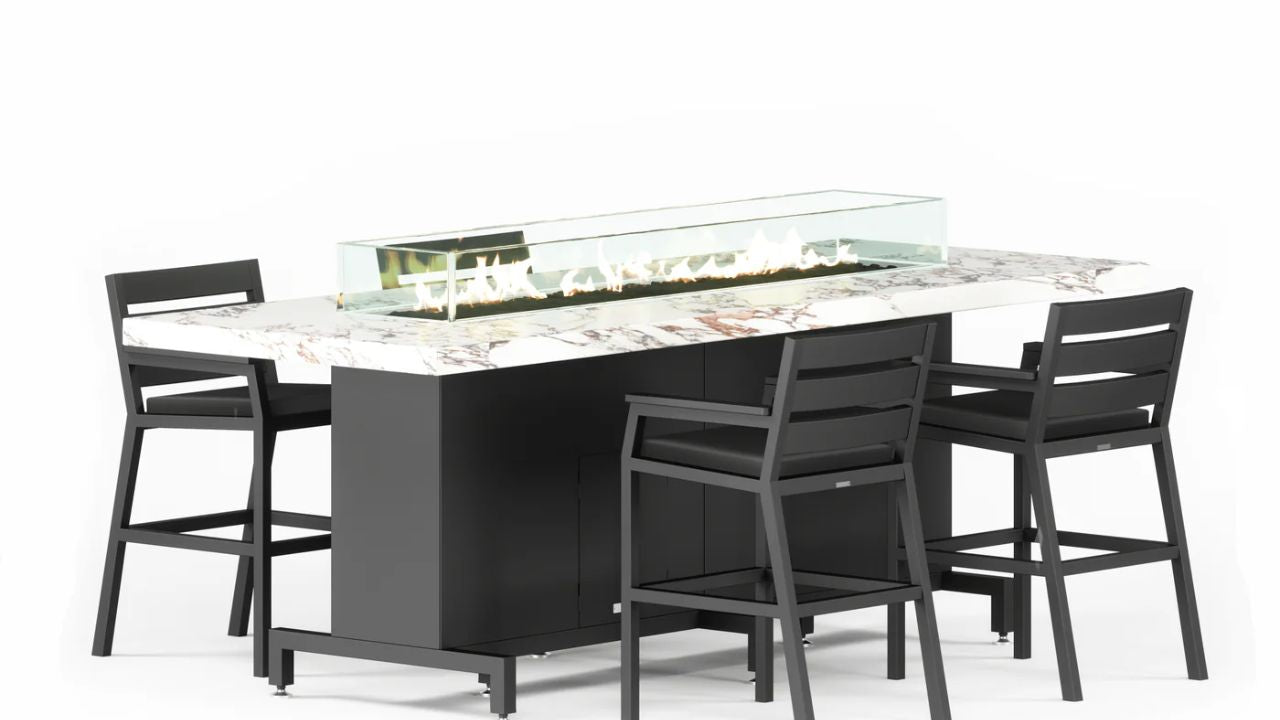
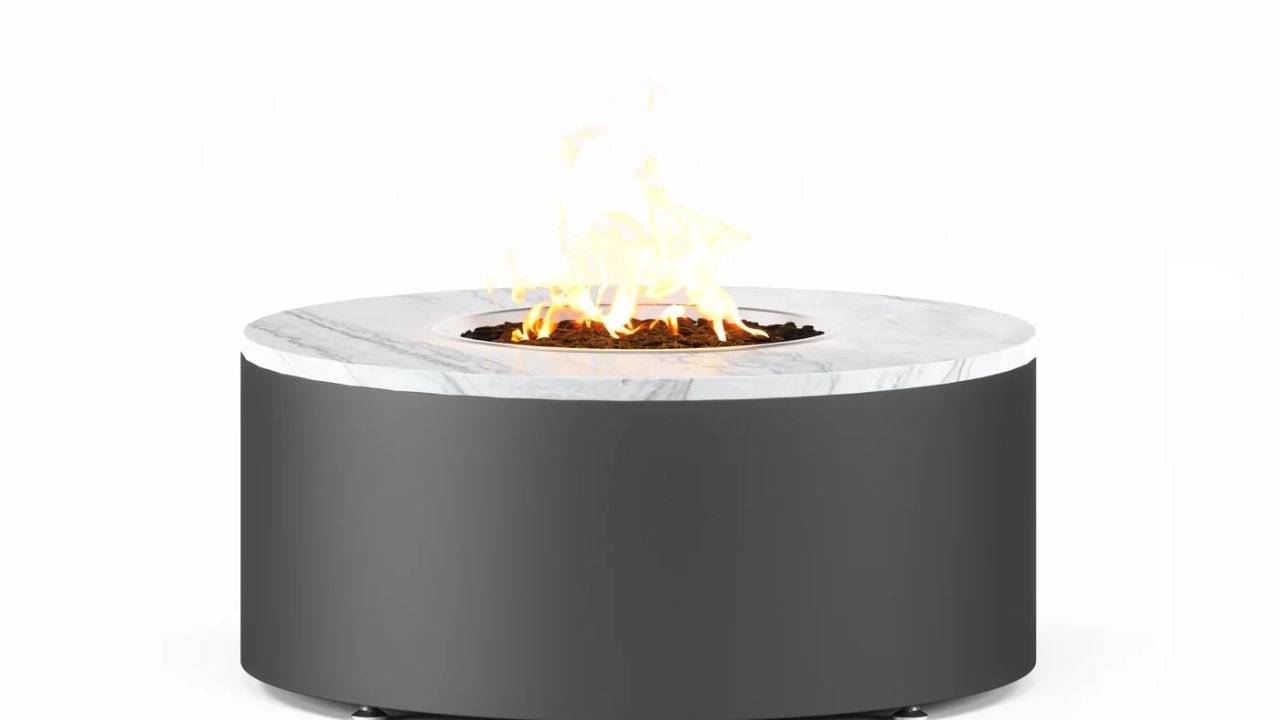
For tabletop and surround materials, several options deliver long-term coastal performance. Glass fiber reinforced concrete (GFRC) has a documented structural lifespan of 50+ years. A stone outdoor table with a fire pit using natural granite lasts 20–30+ years with periodic sealing. Sintered stone products like Dekton and Neolith offer 25–50+ year lifespans with minimal maintenance.
Choose GFRC or sintered stone if you want the lowest long-term maintenance burden. Choose natural granite if aesthetic warmth and traditional appearance are priorities—but budget for annual sealing. Avoid marble entirely; it fails within 5–10 years in coastal conditions.
What Should Property Owners Plan Before Installing a Fire Table on a Waterfront Commercial Site?
Proper planning prevents costly mistakes in commercial fire table setup projects. Site assessment, fuel source selection, and code compliance form the foundation of any successful waterfront installation. Addressing these factors before purchasing equipment ensures the specified materials match actual exposure conditions and that the installation meets insurance and regulatory requirements.
What Site Conditions Should Be Assessed First (Surface, Drainage, Wind, Clearances)?
Distance from the ocean determines material requirements. Exposure classification breaks down by proximity: properties within 0–1 mile face severe exposure and require marine-grade 316 stainless steel throughout. Properties 1–5 miles from the shoreline experience moderate exposure—316 SS is preferred, though 304 SS with protective coatings is acceptable. Sites 5–50 miles inland see reduced but persistent salt air effects. Significant airborne chloride depositions have been detected more than 50 miles from the coast.
Beyond distance, assess surface stability, drainage patterns, prevailing wind direction, and clearance requirements. Wind tunnels between buildings accelerate corrosion and affect flame performance. Poor drainage allows standing water that accelerates base corrosion. Minimum clearances—3 feet for foot traffic, 5–6 feet from structures, and 7+ feet overhead under pergolas—must be confirmed before finalizing placement.
Choose sheltered courtyard locations when possible. Choose exposed oceanfront placements only with fully marine-rated components and increased maintenance schedules.
Which Fuel Type Is Better for Coastal Commercial Use: Natural Gas or Propane?
Both fuel types work in coastal environments, but operational requirements differ significantly. Natural gas delivers a consistent fuel supply without tank management but requires permanent infrastructure. A fire table gas line installation adds $1,500–$3,000 to the project budget and requires licensed plumbing contractors, gas fitters, and local permits. For luxury modern outdoor furniture installations at resorts and restaurants with existing gas service, natural gas offers lower long-term operating costs.
Propane provides placement flexibility and simpler installation. Units can be repositioned seasonally or relocated during storm events. Market trends reflect these trade-offs: propane-fueled units are growing at 9.4% annually, while natural gas grows at 7.2%. Wood-burning fire pits are declining at 4.5% annually as commercial properties prioritize convenience, air quality compliance, and reduced maintenance.
Choose natural gas if your property has existing gas infrastructure and the fire table location is permanent. Choose propane if you need placement flexibility, operate seasonally, or want to avoid trenching and permit delays.
What Local Code, Permitting, and HOA/Property Rules May Apply Near the Shoreline?
Commercial installations require documented compliance with safety standards. All gas fire appliances must meet ANSI Z21.97/CSA 2.41—the North American standard for outdoor gas appliances. Electrical components in ignition systems require UL or ETL listings. Without these certifications, insurance coverage may be denied or claims rejected.
Proper compliance delivers financial benefits beyond risk mitigation. Documented adherence to safety standards can reduce commercial insurance premiums by 10–15%. Coastal jurisdictions often impose additional setback requirements, fuel storage limits, and wind-rating specifications. HOA and property management rules may restrict flame heights, operating hours, or aesthetic specifications.
Before purchasing equipment, confirm local fire marshal requirements, obtain necessary permits, and verify any HOA or coastal commission restrictions. For commercial properties, 90% of fire table projects involve multiple stakeholders in final approval. Early engagement with all parties prevents expensive redesigns after equipment arrives.
Choose certified, code-compliant equipment from the start. Choose to engage permitting authorities early rather than discovering restrictions after installation begins.
What's Involved in Installing a Fire Table for Commercial Outdoor Use?
Coastal fire table installation requires specialized preparation, protected components, and rigorous safety protocols. Each phase—from site prep through final commissioning—must account for salt exposure, wind loads, and humidity. Cutting corners during installation leads to premature failures and costly repairs.
How Is the Installation Site Prepared for Corrosion Resistance and Long-Term Stability?
Surface treatment before installation extends component life significantly. Electropolishing removes microscopic surface imperfections from stainless steel components and creates an enriched chromium oxide layer that resists corrosion far better than untreated surfaces. This process is particularly valuable for burner assemblies where pitting could initiate accelerated degradation.
Physical Vapor Deposition (PVD) coatings offer superior resistance to scratches, abrasion, and corrosion. Providers, including VaporTech, Ionbond, and Phygen, supply architectural-grade PVD finishes suitable for coastal applications. These coatings also deliver decorative options—brushed gold, matte black, bronze—without sacrificing durability.
Epoxy coatings protect gas components and burner assemblies but require a UV-stable topcoat to prevent chalking and adhesion loss in coastal sunlight. Without UV protection, epoxy barriers degrade within 2–3 years, exposing underlying metal to salt attack.
Choose electropolished stainless steel for maximum corrosion resistance on critical components. Choose PVD coatings when both aesthetics and durability matter. Choose epoxy with UV topcoat only for concealed components not exposed to direct sunlight.
How Are Gas/Electrical Connections Protected From Salt, Humidity, and Spray Exposure?
Gas system protection starts with material specification. All gas lines and fittings should be specified in 316 stainless steel throughout—not just the visible components. Marine-grade brass is acceptable for valve bodies and fittings, offering good resistance to moisture and salt corrosion at a lower cost than stainless alternatives.
Electronic ignition systems represent a common failure point in coastal installations. All-Weather Electronic Ignition Systems (AWEIS) solve this problem with control boxes fabricated from 316 marine-grade stainless steel, designed to withstand sustained winds up to 50 MPH and sealed against moisture intrusion. AWEIS systems cost $2,283–$2,541 and extend the ignition component's lifespan from 3–5 years to 7–15 years in salt-air conditions.
A complete fire table gas line installation for coastal commercial use should include 316 SS flex lines, marine-grade brass valves, AWEIS ignition, and weatherproof junction boxes for all electrical connections. Specify these components during initial purchasing—retrofitting protected systems after installation costs significantly more.
Choose AWEIS ignition systems for any waterfront fire table within five miles of the ocean. Choose standard electronic ignition only for sheltered inland installations where salt exposure is minimal.
How Should Technicians Handle Spacing, Ventilation, and Guest Safety in Windy Waterfront Layouts?
Clearance requirements protect guests and property while ensuring proper combustion. Minimum spacing standards apply to all commercial fire table setup projects: maintain 3 feet around the fire pit for foot traffic circulation, 5–6 feet from any structure for gas fire pits, and 7+ feet of overhead clearance under pergolas or covered areas.
Windy waterfront locations require additional consideration. Wind can redirect flames, disperse heat unevenly, and create hazardous conditions for guests. Position fire tables in naturally sheltered areas when possible—courtyards, L-shaped building configurations, or behind windbreak walls. For exposed locations, specify wind guards rated for local conditions. Wind guard costs run $100–$300 but prevent flame blowout and improve heat distribution.
Ventilation matters for covered installations. Gas combustion produces carbon monoxide; ensure adequate airflow in any partially enclosed space. Local fire codes specify ventilation requirements for covered outdoor areas with gas appliances.
What Commissioning Checks Should Be Completed Before Opening the Area to the Public?
Final commissioning verifies safe operation before guests access the space. A qualified technician should complete a full gas pressure test and inspection of all internal gas components, checking for leaks at every connection point. Even minor leaks that pass initial inspection can worsen rapidly in corrosive coastal air.
Ignition system function testing confirms reliable startup across multiple cycles. Test in various wind conditions if possible—systems that work in calm conditions may fail during typical afternoon breezes. Document all test results for warranty and insurance purposes.
Complete a comprehensive corrosion assessment of all visible components before sign-off. Photograph baseline conditions for comparison during future maintenance inspections. Any existing corrosion, coating damage, or surface irregularities should be addressed before the installation is considered complete.
For commercial properties, obtain written certification from the installing contractor confirming code compliance, proper clearances, and successful pressure testing. This documentation supports insurance coverage and provides recourse if problems emerge.
How Can You Protect and Maintain a Coastal Fire Table After Installation?
Maintenance determines whether a coastal fire table lasts 8 years or 20+ years. Salt air never stops attacking metal surfaces—only consistent cleaning and inspection prevent cumulative damage. Commercial properties that implement structured maintenance programs spend far less over the equipment lifecycle than those relying on reactive repairs.
How Often Should Commercial Teams Clean Burners, Inspect Fittings, and Rinse Salt Residue?
A tiered cleaning schedule addresses different degradation rates across components. Post-use maintenance is essential: clear ash and debris from the burner area after each use session. Salt-laden ash sitting on metal surfaces initiates corrosion between uses, even overnight.
Monthly maintenance covers exterior surfaces. Wipe down all visible surfaces with a marine-safe cleaner—avoid harsh chemicals that strip protective coatings. Inspect fire media (glass, lava rock) for salt buildup and rinse if crystalline deposits appear. Salt accumulation in the fire media causes uneven heating and can damage burner ports.
Quarterly maintenance for commercial fire pit dining tables requires deeper attention than weekly visual checks. Clean all accessible components thoroughly, inspect visible gas connections for early corrosion indicators, and clear burner ports with a soft brush to remove deposits that affect flame quality and efficiency. Document your findings with dated photographs to establish degradation baselines and track component wear rates over time, providing valuable data for replacement scheduling and warranty claims.
Choose daily post-use cleaning for high-traffic commercial installations. Choose weekly cleaning minimums for residential beach house fire pit installations with lighter use patterns.
What Maintenance Schedule Helps Prevent Corrosion, Ignition Failure, and Uneven Flame Patterns?
Annual professional inspection is non-negotiable for coastal installations. Schedule service with an NFI-certified technician who can perform gas pressure testing, internal component inspection, and protective coating reapplication. Annual maintenance costs for coastal installations run $300–$800, significantly higher than the $100–$300 typical for inland fire table installation projects.
The economics strongly favor preventive maintenance. Burner replacement costs $800–$1,500. Full unit replacement runs $12,000–$15,000 for commercial-grade equipment. Scheduled component service is 6–10 times more economical than reactive replacement after failures occur.
Track ignition system performance carefully. Increasing startup failures, delayed ignition, or inconsistent flame patterns signal developing problems. Addressing these early—before complete failure—prevents emergency service calls and guest disappointment.
Choose annual professional service contracts for commercial properties. Choose semi-annual inspections for installations within one mile of the ocean where corrosion accelerates fastest.
Which Covers, Storage Practices, and Shutdown Procedures Extend Service Life in Salt Air?
Protective covers are the single most cost-effective maintenance investment. Fire pit covers cost $75–$250 and dramatically reduce salt exposure between uses. Covers block direct salt spray, reduces moisture accumulation, and protects ignition components from wind-driven debris. Premium warranties often require documented coverage use—without it, claims may be denied.
Wind guards ($100–$300) serve dual purposes: improving flame performance during use and protecting burner assemblies when installed with covers. Annual reapplication of protective coatings on metal surfaces maintains barrier integrity against salt penetration.
Component upgrades deliver long-term savings. All-Weather Electronic Ignition Systems extend ignition component lifespan to 7–15 years compared to 3–5 years for standard systems. For a waterfront fire table expected to operate for decades, AWEIS systems pay for themselves through avoided replacements.
Seasonal shutdown procedures matter for properties with winter closures. Drain condensation from gas lines, apply corrosion inhibitor to exposed metal, secure weatherproof covers, and document component condition before extended dormancy.
Choose fitted, weatherproof covers rated for your local wind conditions. Choose AWEIS upgrades during initial installation rather than retrofitting after ignition failures.
What Mistakes Should Waterfront Property Managers Avoid When Installing a Commercial Fire Table?
Common mistakes during coastal fire table installation lead to premature failures, voided warranties, and replacement costs that dwarf initial savings. Understanding these pitfalls helps property managers make informed decisions during specification and installation planning.
Why Is Choosing Non-Marine-Grade Components a Costly Mistake?
Upfront savings on standard materials evaporate quickly in salt air. 316 stainless steel carries a 40–60% upfront cost premium over 304 SS—a difference that causes many buyers to specify the cheaper option. This decision backfired within a few years.
304 SS burners last 4–10 years in coastal environments. 316 SS burners last 10–25 years under identical conditions. Budget fire table options made from lower-grade materials often fail within 3–5 years, requiring complete replacement, while marine-grade alternatives continue to operate.
The math favors marine-grade specification. A $15,000 fire table with 316 SS components lasting 20 years costs $750 per year. A $10,000 unit with 304 SS requiring replacement at year 7 costs $1,428 per year—nearly double. For commercial properties managing multiple units, this difference compounds significantly.
Choose 316 SS and marine-grade components for any coastal fire table install, regardless of upfront cost pressure. Choose to view material specification as a lifecycle investment rather than a purchase price.
How Can Poor Placement Near Wind Tunnels or Splash Zones Reduce Performance and Safety?
Location determines exposure severity more than any other factor. The most rapid material decay occurs within a few hundred meters of the shoreline, where direct salt spray contacts surfaces daily. However, measurable accelerated corrosion rates have been documented as far as 5–10 miles inland—distance alone doesn't guarantee protection.
Wind tunnels between buildings concentrate salt-laden air and accelerate surface degradation. Splash zones near pools, fountains, or wave-exposed areas compound salt exposure beyond ambient conditions. Poor placement in these areas can reduce component lifespan by 50% or more compared to sheltered locations on the same property.
Performance suffers alongside durability. Salt buildup in burner ports is a leading cause of uneven flame patterns and reduced BTU output. Guests notice degraded flame quality, diminishing the aesthetic value that justified the investment.
Choose sheltered placements away from direct ocean exposure when site options exist. Choose enhanced maintenance frequency if operational requirements demand exposed placement.
What Happens When Maintenance Access Is Ignored During Installation Design?
Fire tables require regular service access for inspection, cleaning, and component replacement. Installations that prioritize aesthetics over serviceability create ongoing operational problems. Built-in stone outdoor table with fire pit designs that lack access panels force technicians to perform partial disassembly for routine maintenance—dramatically increasing service costs and time.
Stakeholder coordination complicates this further. 90% of commercial fire table projects involve multiple stakeholders for final approval—architects, landscape designers, property managers, and fire safety officials. Each party may have competing priorities. Service access often loses out to visual considerations unless explicitly protected during design review.
Premium warranties are typically contingent on documented maintenance logs and professional installation. Designs that prevent proper maintenance access may void warranty coverage when claims arise. Ensure installation plans include clearly specified access points, removable panels, and adequate working clearance for technicians before construction begins.
Choose installation designs that balance aesthetics with practical service access. Choose to involve maintenance staff in design review before finalizing built-in configurations.
Partner With Experts Who Understand Coastal Challenges
Coastal fire table installation demands specialized knowledge, marine-grade materials, and meticulous attention to detail. The difference between a fire table that fails in 3 years and one that performs for 20+ years comes down to proper specification, installation, and maintenance planning from day one.
Restructured paragraph integrating keyword while eliminating dashes strategicallyCooke Furniture designs and builds the best fire pit tables for hotels operating in harsh coastal environments where salt air and humidity destroy lesser equipment. Our engineering team understands the unique challenges waterfront properties face, from corrosive marine atmospheres to unpredictable wind exposure that tests every component. We specify marine-grade materials and precision-engineered hardware that deliver lasting performance season after season, protecting your capital investment against the elements.
Contact us today to discuss your waterfront project. We'll help you select the right configuration, materials, and protection systems for your specific site conditions and budget.