Creating Romance: Fire Table Ideas for Resort and Hotel Intimate Dining Areas
Key Takeaways
- Fire tables deliver 69% higher Revenue Per Available Unit and 42% ADR premiums—transforming outdoor dining areas into year-round profit centers with documented 4-8 month break-even periods.
- Optimal spacing drives intimacy and operations—position fire edge to seat at 22-24 inches, maintain 60-inch service corridors, and stagger tables rather than clustering for perceived privacy.
- Commercial-grade materials matter—304 stainless steel and GFRC withstand 50,000+ guest interactions while maintaining luxury aesthetics that justify premium positioning.
- Fire tables outperform fire pits in dining contexts—integrated surfaces support service operations while maintaining ambiance, unlike standalone pits that separate heat from functionality.
- Custom installations become signature marketing assets—unique fire table designs generate Instagram moments and social sharing, providing free marketing exposure that drives bookings and repeat visits.
Luxury fire tables for hotels transform ordinary dining terraces into revenue-generating destinations that command premium rates and attract discerning guests. Strategic placement and thoughtful design create intimate atmospheres where visitors linger longer, order additional courses, and capture moments worth sharing on social media. The financial impact is substantial: properties with professionally designed fire amenities report 69% higher Revenue Per Available Unit and 42% Average Daily Rate premiums compared to competitors lacking these outdoor focal points.
This guide addresses critical decisions facing hospitality designers and operators: romantic fire table design principles, luxury outdoor furniture coordination, operational efficiency, and differentiation strategies. From two-top intimate zones to large-scale rooftop installations, commercial fire tables deliver measurable returns when design aligns with service model, brand positioning, and guest expectations.
Understanding fire pit vs. fire tables tradeoffs enables informed investments in outdoor fire features that enhance both ambiance and profitability.
How Can Resorts and Hotels Use Fire Tables to Create Intimate, Romantic Dining Experiences?
Fire tables transform ordinary outdoor spaces into revenue-generating destinations. The controlled flame creates psychological intimacy while delivering measurable financial returns. Strategic placement and design turn commercial fire tables into focal points that encourage guest engagement and extended stays.
How Does Fire Influence Guest Emotion, Perceived Privacy, and Dining Duration?
Controlled flames trigger measurable behavioral changes. Guests linger longer, order additional rounds, and return specifically for the outdoor experience. Properties with fire amenities see a 69% increase in Revenue Per Available Unit (RevPAU) and 30% higher guest check sales. Vacation rentals command a 42% premium on Average Daily Rate with fire features.
Fire's interplay of sight, warmth, and sound creates primal yet sophisticated ambiance central to luxury positioning. The dancing flame signals commitment to guest comfort and elevates perceived exclusivity. This sensory combination drives both immediate revenue and long-term brand differentiation in hotel intimate dining environments.
Why Do Fire Tables Encourage Deeper Connection Compared to Standard Outdoor Lighting?
Fire tables combine warmth, ambiance, and functional surface—creating natural focal points for conversation unlike traditional fire pits or patio heaters. The flame becomes the primary light source while supplementary lighting remains warm, soft, and non-intrusive to maintain intimacy.
This romantic fire table design approach eliminates the sterile feel of standard outdoor lighting. Couples naturally orient toward the fire, fostering connection while staff can serve discreetly. The functional table surface supports dining operations without compromising atmosphere.
How Does Hotel Intimate Dining Benefit From Fire-Centered Spatial Planning?
Staggering fire tables rather than clustering ensures each dining area feels private and exclusive. Deliberate spacing makes guests feel relaxed and "at home"—the core goal of luxury hospitality.
Critical spacing standards optimize both intimacy and operations. Position fire edge to seat at 22-24 inches for optimal warmth without discomfort. Maintain 60-inch service corridors for discreet staff flow. Allow 5-foot minimum pathways between fire tables and seating clusters in high-traffic areas. These measurements transform outdoor fire features into functional revenue centers while preserving the romantic ambiance guests expect from luxury outdoor furniture installations.
Why Is Romantic Fire Table Design Essential for Luxury Hospitality Brands?
Romantic fire table design separates premium properties from commodity competitors. Scale, restraint, and layered ambiance create memorable experiences that justify higher rates and drive repeat bookings. Design decisions directly impact guest satisfaction scores and revenue performance.
How Does Flame Height, Symmetry, and Scale Affect Romantic Ambiance?
Commercial properties require fire tables ranging from 48 to 72 inches to create necessary visual presence and withstand high-volume use. Undersized units fail to command attention in large outdoor spaces while compromising durability under guest traffic.
Properties combining proper fire table placement with layered lighting schemes report significantly higher Average Daily Rates. Scale establishes visual hierarchy—the fire table for resorts becomes the anchor that organizes the entire dining zone and guides guest movement naturally.
Why Do Subtle Fire Elements Outperform Oversized Fire Features in Dining Settings?
Dim table lighting allows the fire's glow to become the central focus. Oversized flames compete with dining rather than enhancing it. Warm, soft ambient lighting—string lights, lanterns, candles—creates magical, layered effects that support rather than overwhelm intimate conversations.
Glass wind guards enhance the flame's visual appeal while providing safety and wind protection. The mesmerizing glow becomes focal point without excessive heat or brightness. This restrained approach to outdoor fire features distinguishes luxury outdoor furniture installations from aggressive, entertainment-focused designs inappropriate for hotel intimate dining.
How Do Fire Tables Reinforce Luxury Positioning Through Restraint and Balance?
Luxury properties report commercial fire tables as essential differentiators, not optional upgrades. Sensei Lānaʻi Four Seasons documented this strategic positioning—fire features define brand identity rather than supplement it.
Guest satisfaction increases 30% following proper fire pit installation. This measurable impact stems from design restraint—balancing flame presence with functional dining surfaces. Fire pit vs. fire tables debates resolve clearly in dining contexts: tables provide warmth and ambiance without sacrificing usability or forcing guests to choose between heat and service.
How Should Luxury Outdoor Furniture Be Coordinated With Fire Tables in Dining Areas?
Luxury outdoor furniture coordination determines whether fire tables enhance or undermine dining experiences. Material continuity, seating ergonomics, and visual cohesion separate professional installations from amateur attempts. Mismatched elements signal cost-cutting rather than design intent.
How Do Seating Height and Posture Influence Intimacy at the Table?
Optimal fire edge to seat distance measures 22-24 inches for warmth and intimacy without discomfort. This spacing allows guests to feel the fire's presence while maintaining conversation proximity across the table.
Deep-seated lounge furniture paired with commercial fire tables encourages extended stays. The Cliffside Terrace case study documented guests lingering through multiple courses when seating supported relaxed postures. Upright dining chairs contradict the leisurely atmosphere fire tables create—furniture must reinforce rather than fight romantic fire table design intent.
Why Does Material Continuity Between Furniture and Fire Tables Matter?
Commercial-grade materials withstand the demands of hotel intimate dining. 304 stainless steel and Glass Fiber Reinforced Concrete (GFRC) endure over 50,000 guest interactions before requiring replacement.
Material longevity varies significantly: Stainless Steel (15+ years), GFRC (18+ years), Poured Concrete (20+ years), Corten Steel (25+ years), Granite (30+ years). Visual continuity matters equally—mismatched materials break the luxury illusion. Fire tables for resorts demand material palettes that harmonize with surrounding luxury outdoor furniture rather than creating jarring contrasts.
How Do Coordinated Collections Improve Visual Calm and Guest Comfort?
Fire table lighting must complement the property's existing outdoor features and architecture. Isolated installations feel retrofitted rather than intentional. Uplighting should accentuate stone walls or outdoor kitchens, integrating outdoor fire features into the overall landscape narrative.
Coordinated collections create visual calm that supports relaxation. When fire tables, seating, and architectural lighting share material language and scale, guests perceive cohesive luxury rather than assembled components. This integration distinguishes fire pit vs. fire tables decisions—tables become furniture systems while pits remain standalone features disconnected from dining operations.
What Outdoor Fire Features Work Best for Different Resort Dining Formats?
Dining format dictates fire table configuration. Two-tops demand different spatial logic than communal tables. Shape, scale, and placement must align with service model and guest expectations. Commercial fire tables succeed when they support rather than complicate operational flow.
How Do Two-Top and Four-Top Dining Zones Differ From Communal Layouts?
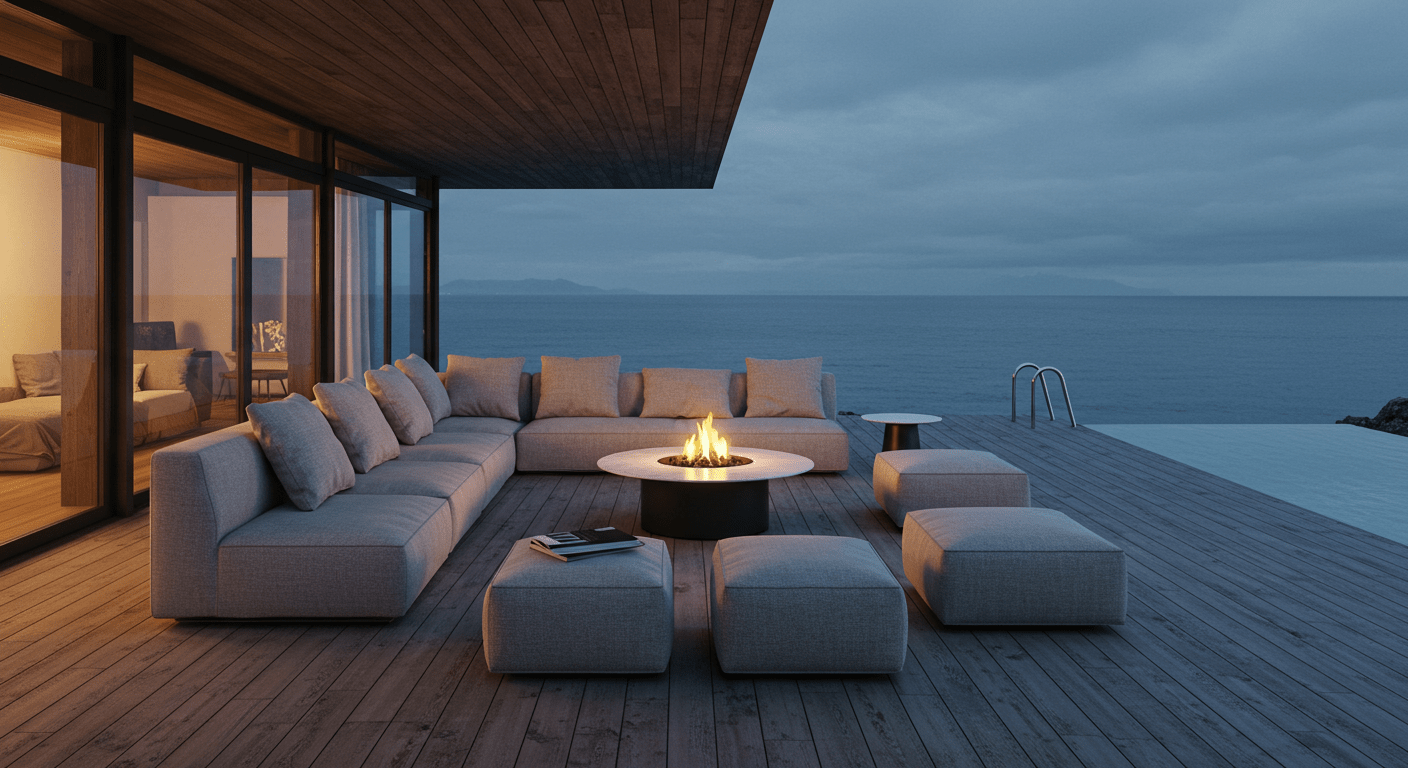
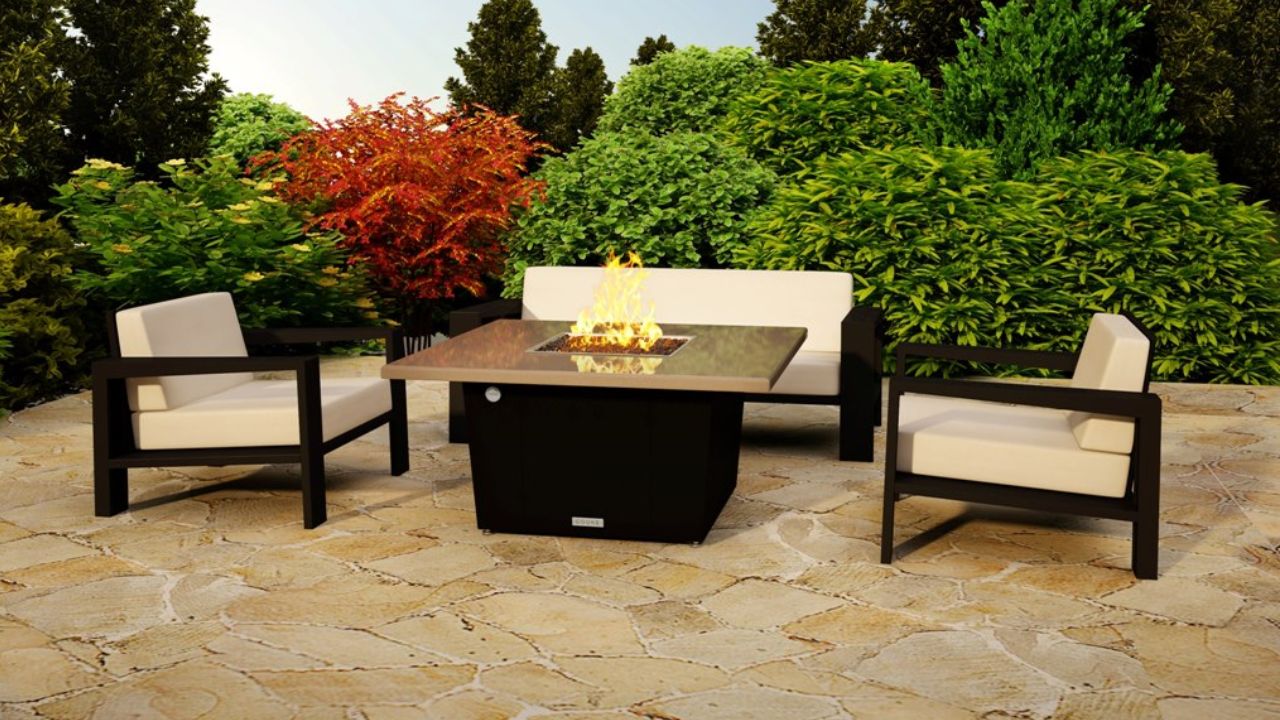
Square or round fire tables strategically delineate smaller, private seating areas for couples and small parties. Square tables create the illusion of separate, cozy spaces—transforming generic sitting areas into distinct focal points.
Communal layouts require different fire table geometry. Multiple small fire tables scattered across shared zones maintain intimacy while accommodating larger groups. This approach preserves romantic fire table design principles even in high-density configurations typical of hotel intimate dining operations.
When Do Linear Fire Tables Outperform Round Fire Tables for Restaurants?
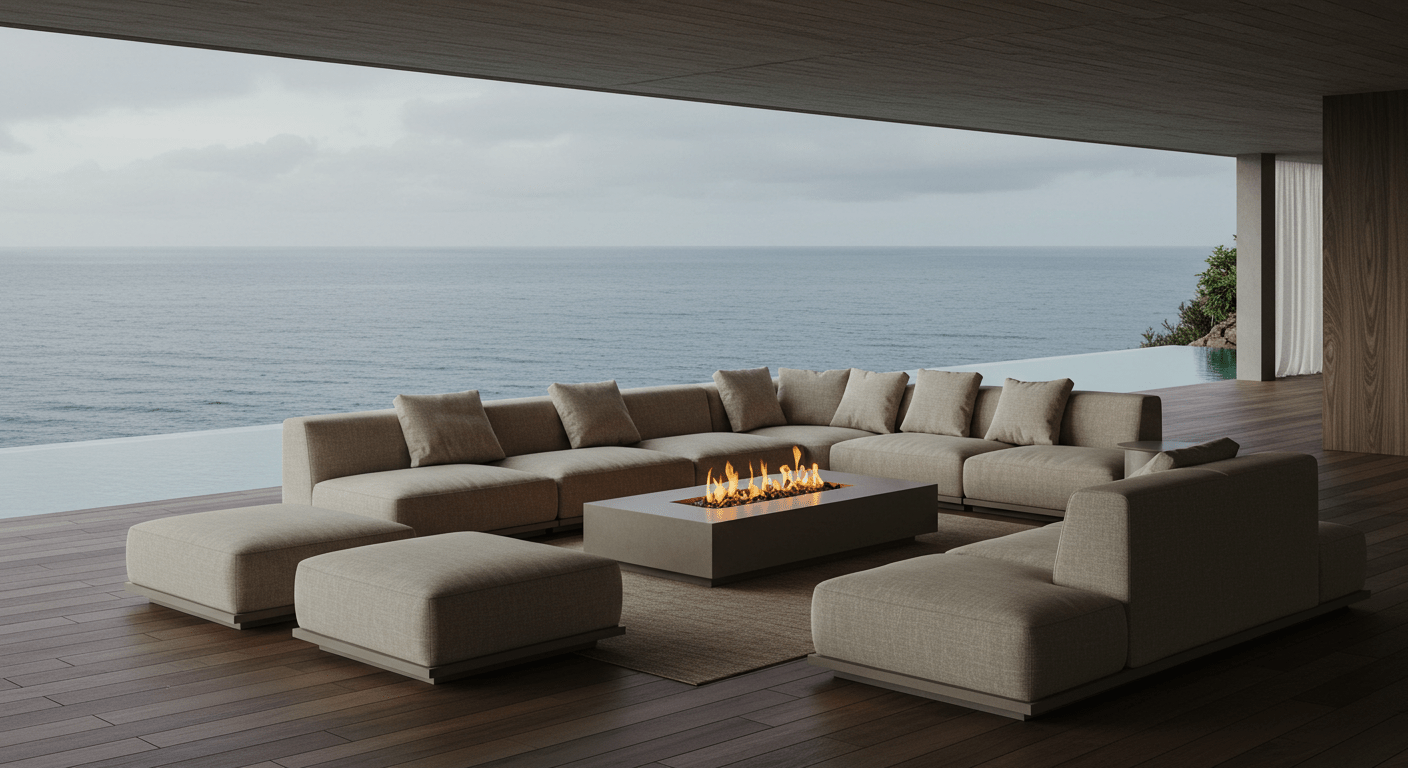
Linear tables excel at creating intimate zones within large spaces like rooftops. The Sensei Lānaʻi model demonstrates this strategy—long fire features divide expansive areas without physical barriers.
Rectangular dimensions of 60" x 24" to 96" x 30" seat 6-10 guests with high space efficiency. Linear commercial fire tables work best for rooftop lounges and large patios where maximizing seating density matters. Round tables suit smaller courtyards where 360-degree access and compact footprints take priority in luxury outdoor furniture layouts.
How Do Outdoor Fire Features Adapt to Beachfront, Rooftop, and Courtyard Settings?
Strategically placed fire features demarcate pathways and frame architectural elements like pools, adding spatial dimension. Context determines material selection and wind protection requirements—coastal installations demand corrosion resistance while rooftops need wind guards.
Performance data validates adaptation strategies. Cliffside Terrace coastal resort achieved 40% increased terrace food and beverage revenue during fall/winter with fire tables for resorts. A rooftop lounge extended operations two additional months, yielding 25% increased off-season revenue. Fire pit vs. fire tables comparisons favor tables in all three settings—functional surfaces support service while maintaining ambiance across diverse environments.
How Do Commercial Fire Tables Support Operational Efficiency for Hotels and Resorts?
Operational complexity determines whether fire tables enhance or burden hotel intimate dining programs. Fuel systems, ignition controls, and maintenance protocols directly impact labor costs and service quality. Commercial fire tables succeed when they integrate seamlessly into existing food-and-beverage workflows.
Why Are Hidden Propane Systems Important in Guest-Facing Dining Spaces?
LP cylinders require secured, ventilated outdoor cages with proper spacing from ignition sources and code-compliant signage. Visible fuel storage undermines romantic fire table design by exposing infrastructure guests expect hidden.
Natural gas delivers superior convenience despite high installation costs. Low operating expenses and elimination of tank exchanges reduce ongoing labor. Fire tables for resorts favor natural gas in permanent installations while propane suits flexible or seasonal configurations. Hidden systems preserve the luxury illusion critical to outdoor fire features in guest-facing areas.
How Do Ignition Systems and Controls Affect Staff Workflow?
Smart technology allows staff to ignite, extinguish, and monitor fire via user-friendly apps. This eliminates manual lighting procedures that delay table turns and expose staff to safety risks during high-volume service.
Dusk-to-dawn sensors automatically switch exterior lights on at dusk and off at dawn. Timers and scheduling enable 24/7 load control for operational efficiency. Automated systems reduce labor requirements while ensuring consistent ambiance—staff focus on service rather than fire management. This integration distinguishes commercial fire tables from residential units lacking hospitality-grade controls.
What Maintenance Factors Matter Most for Food-and-Beverage Teams?
Six-step winter maintenance protocols protect investment and prevent mid-season failures: Shutdown and LOTO, Clean/Dry/Service, Protect Valves, Covers and Wind Guards, LP Cylinder Security, Winter O&M Cadence. Documented procedures prevent equipment damage and liability exposure.
Weekly or bi-weekly visual inspections check for cover displacement, ice accumulation, and moisture in control boxes. Annual operating costs per table range from $1,500 to $3,200, including fuel, maintenance, and inspection. This predictable expense structure supports budgeting while preventing costly emergency repairs. Fire pit vs. fire tables comparisons favor tables for maintenance efficiency—integrated designs simplify service access compared to standalone pits requiring specialized tools and procedures.
How Should Designers Evaluate Fire Pit vs. Fire Tables for Dining Environments?
Fire pit vs. fire tables decisions hinge on functionality and service requirements. Dining operations demand surfaces, clearances, and safety standards that traditional fire pits cannot deliver. The choice becomes clear when operational needs outweigh aesthetic preferences.
Why Are Fire Tables Better Suited Than Fire Pits for Seated Dining?
Fire tables combine warmth, ambiance, and functional surface for service—advantages traditional fire pits and patio heaters cannot match. The integrated table supports dining operations while maintaining intimate atmosphere.
Outdoor luxury fire tables serve dual purposes as striking design centerpieces and efficient heat sources that extend patio usability into cooler evenings and profitable shoulder seasons. This functionality generates meaningful revenue during periods when unheated outdoor spaces would otherwise sit vacant. Properties that invest in commercial-grade fire features transform weather limitations into competitive advantages, enabling year-round intimate dining programs that keep guests on property and spending rather than retreating indoors or seeking alternatives elsewhere.
How Does Table-Integrated Fire Improve Usability and Safety?
Required clearances protect guests and property: 10-25 feet from combustible structures, 21 feet from vegetation. Minimum 3 feet between fire table edges and seating in commercial settings prevents accidents while maintaining warmth perception.
Gas tables require minimum 72-inch overhead clearance, with 7-10 feet ideal for proper ventilation and code compliance. These standards favor fire tables for resorts over fire pits—tables provide defined perimeters and predictable heat zones that simplify safety planning. Integrated designs also reduce trip hazards compared to standalone pits with separate seating arrangements in luxury outdoor furniture layouts.
When Might a Fire Pit Still Be Appropriate Outside Dining Zones?
Fire pits suit gathering spaces where dining service isn't required. Lobby entries, pool decks, and landscaped pathways benefit from standalone fire features that create ambiance without functional surface needs.
Fire tables can still demarcate pathways and frame architectural elements in non-dining contexts, but cost-effectiveness favors simpler fire pits where table surfaces add expense without operational value. Romantic fire table design principles apply primarily where service, intimate seating, and revenue generation intersect—traditional fire pits retain value as wayfinding and atmospheric elements in transitional outdoor fire features throughout resort properties.
How Can Fire Tables Help Resorts Differentiate Their Dining Experiences?
Differentiation requires elements guests cannot find elsewhere. Custom commercial fire tables create signature moments that drive social sharing and repeat visits. Mass-produced solutions signal commodity positioning—custom installations communicate intentional luxury and brand identity.
Why Mass-Produced Furniture Undermines Perceived Luxury?
Commercial-grade materials—304 stainless steel and GFRC—separate professional installations from consumer-grade attempts. Standard furniture catalog selections communicate cost-cutting rather than design vision.
Commercial-grade fire tables feature rugged construction ensuring strength and reliable performance under high-volume use. Generic outdoor fire features fail visibly under hospitality demands—compromised finishes and structural weakness expose false economy. Luxury outdoor furniture investments require materials that maintain appearance and function through thousands of guest interactions, validating premium positioning in hotel intimate dining contexts.
How Do Custom Fire Tables Become Signature Design Elements?
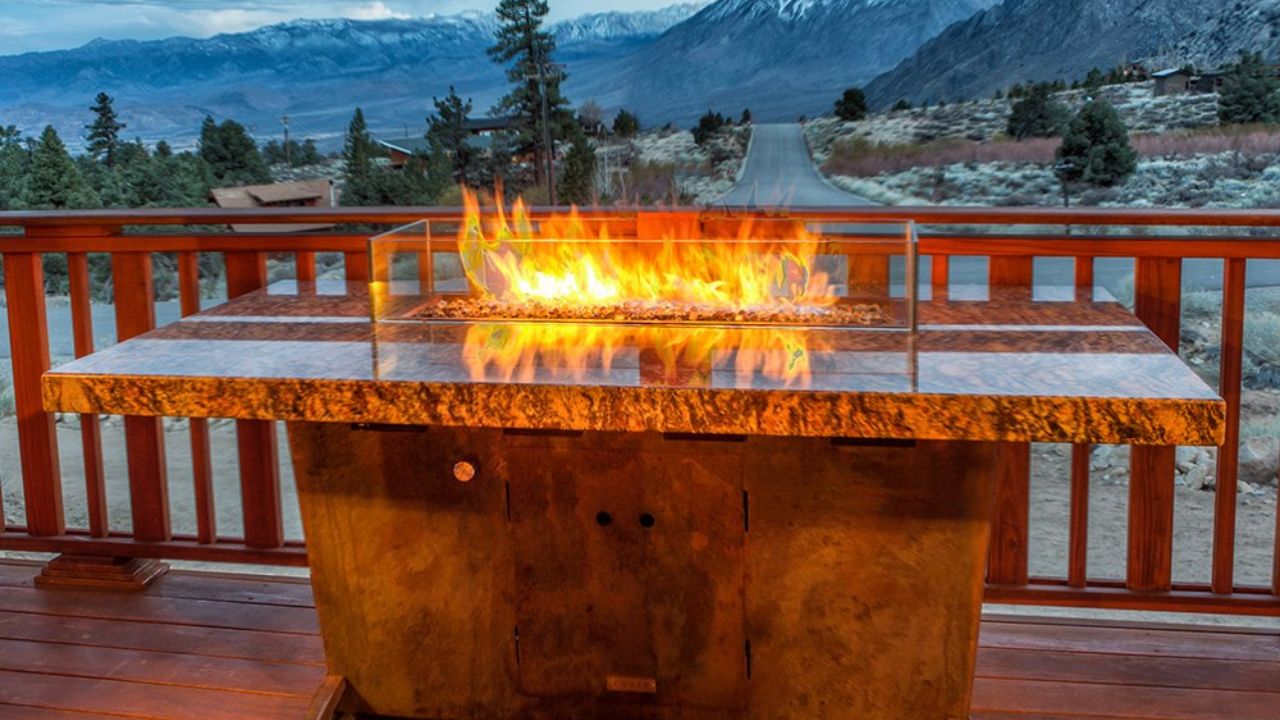
A boutique hotel's circular concrete fire table became the property's signature feature—guests specifically requested courtyard seating. A restaurant's Corten steel fire tables provided industrial-chic aesthetic that patinated beautifully over time, creating evolving visual interest.
Fire tables generate "Instagram moments" serving as free, high-quality social media marketing. Custom romantic fire table design becomes content guests actively share, multiplying marketing reach beyond paid channels. Fire tables for resorts function as both amenity and marketing asset—signature installations drive bookings while standard fire pit vs. fire tables comparisons favor memorable, shareable designs.
How Does Exclusivity Influence Guest Memory and Social Sharing?
The boutique hotel documented significant increases in guest engagement and social media mentions after fire table installation. The courtyard became signature feature driving repeat visits and referrals.
Instagram moments provide valuable free marketing exposure that compounds over time. Guests become brand ambassadors when commercial fire tables create experiences worth documenting and sharing. This social proof influences booking decisions—prospective guests see authentic enthusiasm rather than paid advertising. Exclusivity drives sharing behavior—guests photograph unique installations while ignoring generic outdoor fire features common across commodity properties.
Transform Your Resort Dining Experience With Custom Fire Table Solutions
Differentiation requires design elements guests cannot replicate at home. Cooke Furniture specializes in commercial-grade fire tables engineered for hospitality environments—combining romantic ambiance with operational efficiency.
Our design experts help resort and hotel designers navigate material selection, placement strategies, and code compliance to create signature outdoor dining experiences. Custom fire tables deliver measurable ROI through increased guest satisfaction, extended season operations, and social media exposure.
Whether planning intimate two-top zones or large-scale rooftop installations, Cooke provides commercial fire tables built to withstand over 50,000 guest interactions while maintaining luxury aesthetics. Contact Cooke's design experts to evaluate custom fire table solutions aligned with your brand positioning and operational requirements.