Finding Fire Table Showrooms: Experiencing Luxury Before Your Commercial Purchase
Key Takeaways
- Fire table showrooms eliminate costly specification errors by allowing property managers to verify scale, materials, and safety clearances that catalogs misrepresent—preventing $65,000+ liability incidents from furniture failures.
- Commercial fire tables deliver measurable ROI with 69% higher Revenue Per Available Unit, 30% increased guest check sales, and $15,000-$30,000 property value increases over five years when properly specified.
- Physical evaluation reveals critical durability differences between residential and commercial models, including 316 marine-grade stainless steel components and construction quality that supports 20-30 years of operational use.
- Showroom visits accelerate stakeholder approval by providing tangible proof that aligns design, operations, and ownership teams—with 67% of properties achieving immediate ROI upon installation.
- Lead time planning starts in showrooms where buyers balance customization desires (6-12 weeks) against quick-ship options (1-5 days) while confirming $500-$1,000 annual maintenance budgets for lifecycle planning.
Luxury fire tables for hotels represent significant capital investments that require validation beyond digital catalogs and architectural renderings. Showroom visits provide property managers, procurement directors, and design professionals with essential hands-on evaluation opportunities before committing six-figure budgets to installations expected to perform for decades.
This commercial purchase guide explains how showroom visits for property managers reduce specification risk, align stakeholder expectations, and verify that fire table designs meet operational demands. Buyers who skip physical evaluation face costly errors in scale assessment, material durability, and safety compliance.
This article details what to evaluate during fire table showroom visits, which questions expose hidden risks, and how the fire table experience transforms abstract specifications into confident commercial purchases that deliver decades of reliable performance.
What Are Fire Table Showrooms, And How Do They Support Commercial Decision-Making?
Fire table showrooms are physical retail spaces where commercial buyers evaluate luxury outdoor furniture before purchase. Unlike catalogs or online galleries, showrooms allow property managers to assess scale, materials, flame performance, and construction quality through direct interaction. This hands-on validation reduces specification errors and aligns stakeholder expectations before committing to five-figure investments.
What Defines A Fire Table Showroom Compared To Catalogs Or Online Galleries?
Fire table showrooms offer tactile evaluation that digital channels cannot replicate. Buyers physically inspect welds, test ignition systems, measure proportions, and assess material finishes under controlled lighting. Major showrooms operate in Los Angeles, Miami, New York, and Dallas through authorized dealers and design centers. Leading brands—Cooke Furniture, Pyromania Fire, The Outdoor GreatRoom Company, Brown Jordan, and Tropitone—maintain dedicated commercial divisions with showroom access. This physical presence allows property managers to validate vendor claims and compare competitive models side-by-side before specifying fire table designs for deployment.
How Do Fire Table Showrooms Present Real-World Commercial Fire Tables In Use?
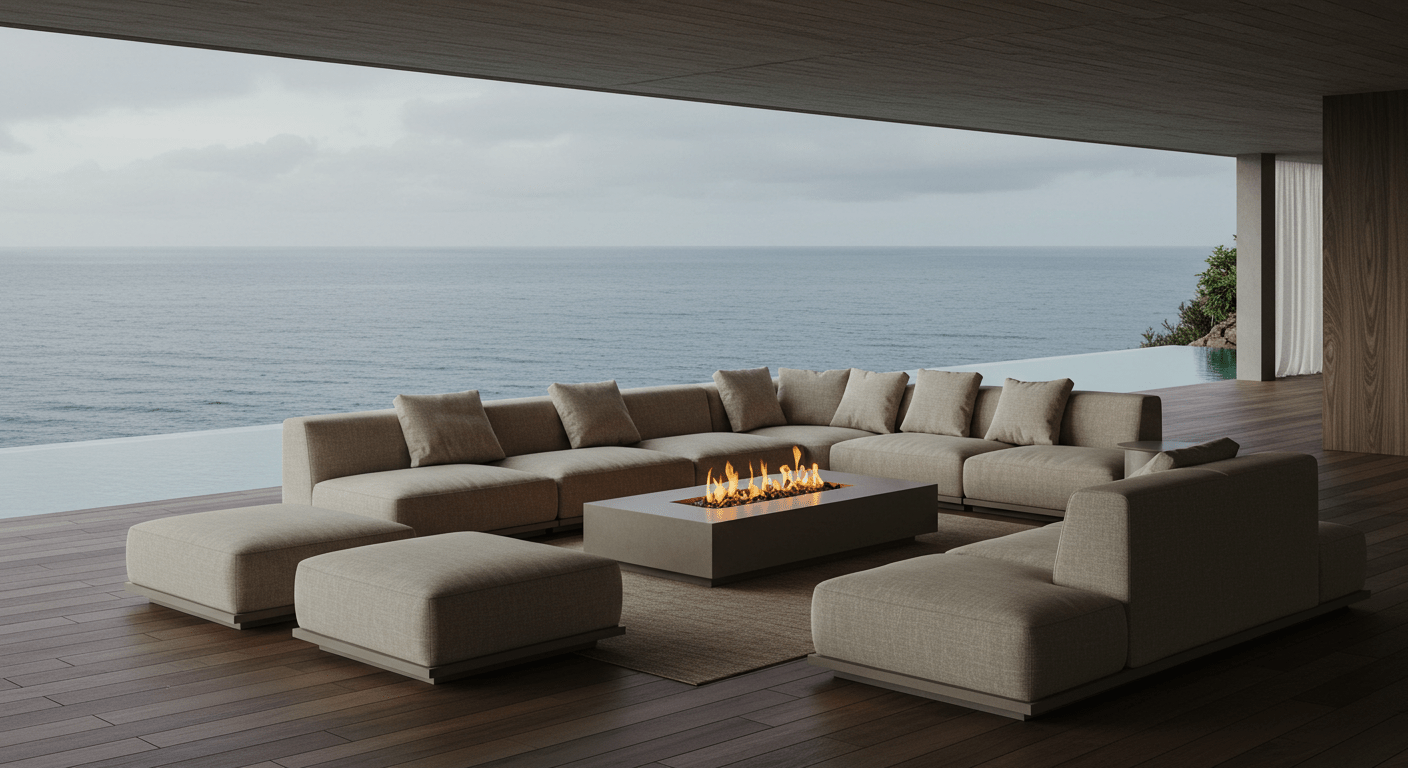
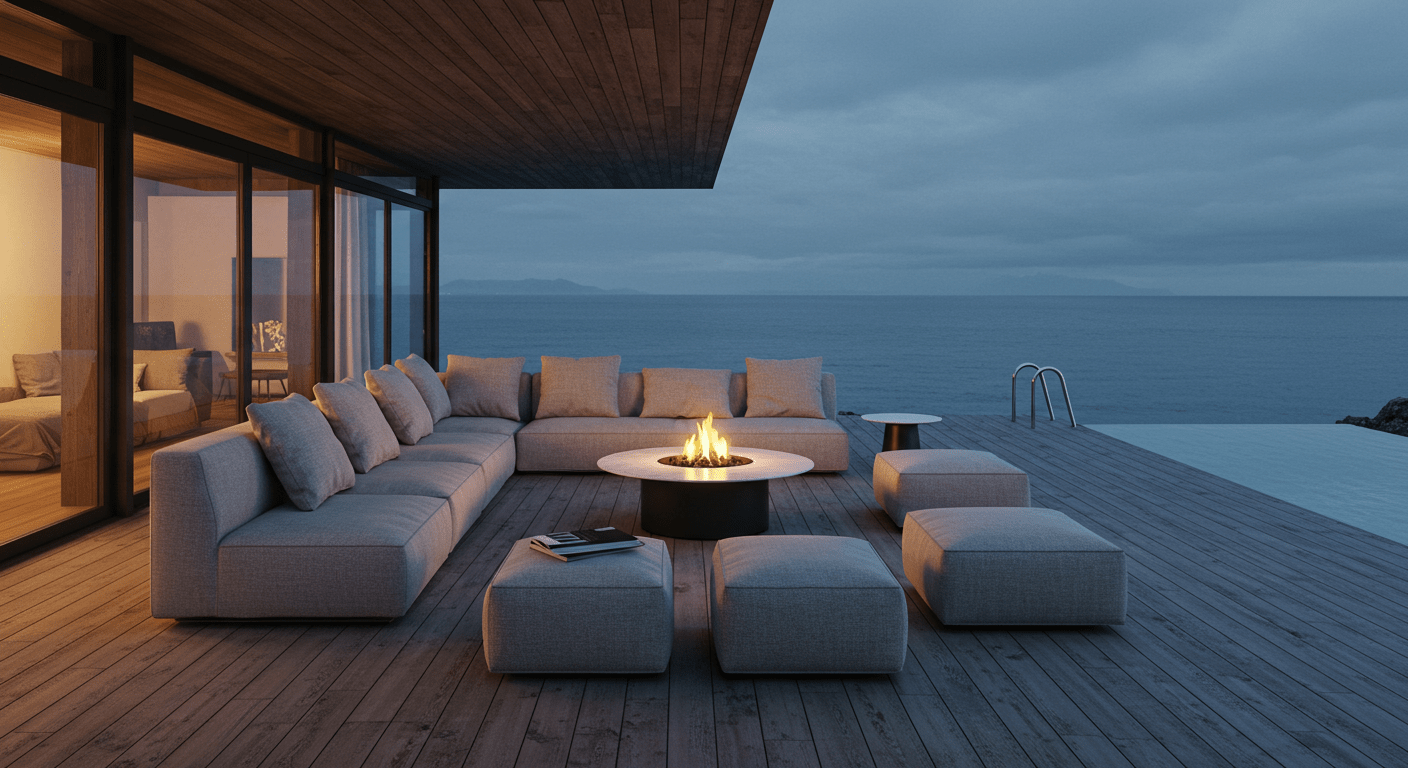
Showrooms stage fire tables within realistic commercial contexts—complete with seating arrangements, overhead structures, and ambient lighting. This contextualization helps buyers visualize how units function in operational environments rather than isolated product shots. The fire table experience includes observing flame height adjustments, hearing ignition mechanisms, and feeling heat distribution at typical seating distances. With 83% of landscape architects ranking fire pits among their top three requested features, showroom visits for property managers have become essential due diligence steps in the commercial purchase guide process. Buyers leave with operational clarity that catalogs cannot provide.
Why Do Commercial Buyers Seek A Fire Table Experience Before Committing To A Purchase?
Commercial fire tables represent significant capital investments with long operational lifespans. Buyers need to validate safety clearances, heat output, and spatial integration before specifying units for properties. Showroom visits for property managers eliminate guesswork by demonstrating how fire table designs perform under realistic conditions—preventing costly specification errors and ensuring regulatory compliance.
What Aspects Of Fire Table Performance Can Only Be Evaluated In Person?
Critical safety dimensions require physical verification that photographs cannot convey. Buyers must confirm 22-24 inches optimal seating distance from the fire edge to balance guest comfort with heat exposure. Overhead clearance of 72 inches minimum prevents structural damage and meets fire codes. Lateral separation of 10-25 feet from combustible structures protects buildings while maintaining functional layouts. The fire table experience allows property managers to walk these clearances, measure sightlines, and assess how units fit within existing architectural constraints. Digital renderings misrepresent scale—showrooms provide spatial truth.
How Does Physical Interaction Influence Confidence In Fire Table Designs?
Hands-on evaluation builds stakeholder confidence through tangible proof. Buyers operate ignition systems, adjust flame height, and assess material durability firsthand. This validation matters because proper installations deliver measurable returns: the Grand View Hotel recorded a 30% increase in guest satisfaction scores after fire pit installation, while properties with correctly specified luxury outdoor furniture achieve 69% higher Revenue Per Available Unit (RevPAU). Physical interaction at fire table showrooms transforms abstract specifications into operational certainty—reducing implementation risk and accelerating executive approval for commercial purchase decisions.
Why Is It Important For Property Managers To Visit Fire Table Showrooms Before Making A Commercial Purchase?
Property managers operate under strict liability frameworks where furniture failures trigger legal exposure and brand damage. Fire table showrooms provide pre-purchase validation that protects properties from specification errors, safety violations, and premature equipment failure. Direct evaluation ensures commercial fire tables meet operational demands across decades—not just initial aesthetics.
How Do Showroom Visits For Property Managers Reduce Operational And Reputational Risk?
Single furniture failures generate cascading financial consequences that extend far beyond replacement costs. Properties face $65,000 or more in potential liability from incidents involving defective or improperly specified outdoor fire features. One documented case involved a $15,000 fire table that malfunctioned during a wedding reception, resulting in $50,000 in guest compensation and lasting reputation damage that affected bookings for seasons afterward. Showroom evaluations allow property managers to inspect premium custom fire pits firsthand, test safety mechanisms under realistic conditions, and verify certifications before deployment in guest-facing environments. This validation process identifies substandard units that could trigger injuries, insurance claims, or regulatory violations. The principle guiding smart commercial purchases is straightforward: invest hours in thorough showroom evaluation to avoid years of litigation exposure and operational headaches.
Why Does Firsthand Evaluation Matter For Long-Term Property Planning?
Commercial fire tables require 9-24 months of strategic planning from initial specification to operational deployment. These installations deliver 20-30 years of useful life when properly specified—making upfront evaluation critical to multi-decade ROI. Fire table showrooms let property managers assess how fire table designs will age, how materials withstand environmental stress, and whether components support long-term serviceability. Buyers evaluate warranty terms, replacement part availability, and manufacturer stability during showroom consultations. The fire table experience provides clarity on whether units will endure coastal salt air, freeze-thaw cycles, or high-traffic hospitality environments. Showroom visits transform commercial purchases from short-term procurement into generational infrastructure decisions.
Who Benefits Most From Visiting Fire Table Showrooms During The Buying Process?
Multiple stakeholders require showroom validation before approving commercial fire tables. Hospitality operators verify revenue-generating potential, while architects confirm structural compatibility and load-bearing constraints. Fire table showrooms serve as neutral evaluation grounds where operational teams, designers, and ownership groups align on specifications that satisfy aesthetic, financial, and engineering requirements simultaneously.
Why Do Hospitality Groups And Resort Operators Rely On In-Person Showroom Validation?
Hospitality buyers evaluate fire table designs through revenue impact metrics that showrooms demonstrate clearly. Properties with properly specified commercial fire tables record 30% increased guest check sales in restaurants and hospitality venues, driven by 25-40% increases in customer dwell time. Short-term rental operators achieve 20% higher nightly rates and 25% increases in booking rates when marketing fire table amenities. Fire table showrooms allow operators to assess whether units justify these performance claims by evaluating flame appeal, seating capacity, and spatial presence. The fire table experience reveals how luxury outdoor furniture transforms outdoor spaces from underutilized square footage into profit centers. Showroom visits for property managers provide the operational proof needed to secure capital approval for six-figure installations.
How Do Architects And Designers Use Showrooms When Specifying Luxury Outdoor Furniture?
Architects require structural data that catalogs omit—particularly weight and load-bearing specifications. Natural stone fire tables weighing 300-500 pounds exceed balcony load limits in high-rise applications, forcing specifications toward GFRC alternatives. Fire table showrooms let design professionals physically assess material density, evaluate anchoring requirements, and verify dimensional tolerances before submitting construction documents. This hands-on validation prevents change orders when units arrive on site. Designers also use showroom visits to photograph material samples under natural lighting, test finish compatibility with existing palettes, and confirm that commercial fire tables integrate with broader landscape architecture. The commercial purchase guide for specification professionals starts with showroom verification—not vendor claims.
What Should Buyers Expect To Evaluate Inside Luxury Fire Table Showrooms?
Fire table showrooms display units in fully staged environments that reveal operational realities. Buyers assess physical scale against human proportions, inspect construction quality under direct lighting, and compare material finishes side-by-side. This comprehensive evaluation identifies specification gaps that two-dimensional marketing materials cannot expose—ensuring commercial fire tables meet both aesthetic vision and performance standards.
How Are Scale, Proportion, And Seating Context Demonstrated In Showrooms?
Fire table showrooms stage units with actual seating arrangements, overhead structures, and traffic flow patterns. Buyers walk around installations to assess visual weight, measure sightlines from multiple angles, and sit at typical guest distances to evaluate comfort zones. This spatial context reveals whether fire table designs dominate or complement surrounding architecture. Property managers observe how flame visibility changes with seating height, how table surfaces function for beverage placement, and whether proportions suit intimate conversation versus large group gatherings. The fire table experience eliminates the scale distortion inherent in photography—buyers see exactly how luxury outdoor furniture occupies three-dimensional space within realistic commercial settings.
What Material Finishes And Construction Details Are Assessed In Person?
Showroom visits for property managers focus on durability indicators invisible in catalogs. Buyers inspect whether burners and internal components use 316 marine-grade stainless steel—the only grade that resists corrosion in coastal and high-moisture environments. Body materials require tactile evaluation: GFRC offers lightweight versatility, pre-cast concrete delivers thermal mass and stability, while natural stone provides premium aesthetics with weight constraints. Fire table showrooms let buyers run hands across finishes to detect texture consistency, examine weld quality on metal components, and assess edge treatments for safety compliance. This hands-on commercial purchase guide approach identifies construction shortcuts before purchase orders—protecting properties from premature failure of commercial fire tables that must withstand decades of intensive use.
How Do Fire Table Showrooms Help Compare Residential And Commercial Fire Tables?
Residential and commercial fire tables appear similar in marketing photography but differ fundamentally in construction standards and lifecycle expectations. Fire table showrooms display both categories side-by-side, revealing engineering disparities that justify commercial pricing premiums. Property managers learn why commercial-grade specifications matter for high-traffic hospitality environments—and why residential units fail under operational stress.
What Durability Indicators Separate Commercial Fire Tables From Residential Models?
Commercial warranties run 50-90% shorter than residential warranties—not because commercial fire tables fail faster, but because they endure exponentially higher usage intensity. Residential units operate intermittently; commercial installations run nightly across seasons. Fire table showrooms explain this warranty paradox while demonstrating construction differences that support continuous operation. Ignition systems face 5-7 year typical lifespans before requiring maintenance or replacement in commercial applications—property managers budget for this serviceability during showroom consultations. The fire table experience clarifies that commercial fire tables cost more upfront because components tolerate abuse residential units never encounter. Showroom visits for property managers reveal why specifying residential luxury outdoor furniture for commercial deployment guarantees premature failure.
How Does Engineering Quality Become More Visible During Showroom Evaluation?
Fire table showrooms allow buyers to inspect construction details that separate commercial-grade from consumer-grade manufacturing. Property managers examine weld penetration depth, assess frame reinforcement patterns, and test component fitment tolerances. Commercial fire tables feature thicker gauge metals, reinforced stress points, and serviceable assemblies where residential models use permanent bonds. Buyers physically manipulate ignition controls to evaluate mechanical precision—loose tolerances indicate cost-cutting that accelerates wear. The commercial purchase guide principle: components that feel substantial in showrooms perform reliably under operational loads. Fire table designs with visible quality shortcuts fail inspection—buyers redirect specifications toward manufacturers demonstrating engineering integrity through transparent construction access during showroom demonstrations.
How Do Showroom Visits Support Customization And Design Alignment?
Customization decisions require physical material validation that digital samples cannot provide. Fire table showrooms maintain extensive libraries of finishes, dimensions, and configuration options that buyers evaluate in controlled environments. Property managers coordinate with designers and manufacturers during showroom consultations—aligning aesthetic vision with engineering constraints before finalizing specifications that trigger production.
How Can Buyers Explore Custom Fire Table Designs During Showroom Consultations?
Fire table showrooms facilitate custom specification by presenting base models that accept modification. Buyers discuss dimensional adjustments, fuel type conversions, and finish customizations with commercial sales specialists who clarify feasibility and cost implications immediately. Understanding lead time trade-offs is critical: custom fire table designs require 6-12 weeks typical manufacturing lead time, while quick-ship in-stock models deliver in 1-5 business days. Showroom visits for property managers establish whether project timelines accommodate full customization or require selecting pre-configured luxury outdoor furniture. Sales teams reference past custom projects, show material samples for proposed finishes, and explain how modifications affect structural integrity. The fire table experience transforms abstract customization concepts into actionable specifications with defined delivery dates.
Why Is Material Matching Easier When Reviewing Options In Person?
Digital color representation fails under varying light conditions and screen calibrations. Fire table showrooms display material samples under natural daylight, artificial evening lighting, and flame illumination—revealing how finishes appear across operational contexts. Property managers bring existing material samples to compare against commercial fire tables options directly. Texture, sheen, and undertones become apparent through tactile evaluation that photography obscures. Buyers assess whether GFRC finishes complement adjacent stonework, whether metal patinas coordinate with railings, and whether glass fire media harmonizes with landscape palettes. This physical material matching during the commercial purchase guide process eliminates the costly rework that occurs when units arrive with finishes that clash with installed environments. Fire table designs succeed when material specifications emerge from in-person coordination rather than catalog guesswork.
What Questions Should Buyers Ask During A Fire Table Showroom Visit?
Strategic questioning during fire table showrooms visits extracts critical information that marketing materials omit. Property managers must probe lifecycle costs, maintenance requirements, installation logistics, and post-purchase support before committing to specifications. The commercial purchase guide approach treats showroom consultations as due diligence sessions—not sales presentations—where buyers control the information agenda.
What Questions Help Evaluate Longevity, Maintenance, And Lifecycle Value?
Showroom visits for property managers should clarify total cost of ownership beyond initial acquisition. Buyers ask: "What annual maintenance budget should we allocate?" Commercial fire tables require $500-$1,000 annual maintenance budgets covering burner servicing, media replacement, and component inspections. Follow-up questions address: "Which components wear first? Are replacement parts stocked? What's the labor cost for annual servicing?" Property managers also verify ROI projections by asking: "What property value increase do similar installations generate?" Fire table showrooms cite industry data showing $15,000-$30,000 property value increases over five years for properly specified luxury outdoor furniture. The fire table experience must include candid discussions about failure modes, warranty claim processes, and expected lifespan under specific usage intensity—information that determines whether fire table designs deliver lifecycle value or become financial liabilities.
What Questions Clarify Installation, Delivery, And Post-Purchase Support?
Implementation logistics determine project feasibility regardless of product quality. Buyers ask: "What's the total installed cost?" Premium commercial-grade units cost $12,000-$25,000—but installation, permits, and utility connections add significantly. Fire table showrooms should provide: "Do you coordinate installation or recommend certified contractors? What's your installer network coverage?" Property managers clarify delivery logistics: "What's the lead time? How is the unit shipped? Who handles site inspection before delivery?" Post-purchase support questions include: "What warranty applies to commercial applications? Is technical support available 24/7? Do you stock emergency replacement parts?" The commercial purchase guide principle: units without robust installation support and responsive service networks create operational disruptions. Showroom consultations that avoid these questions leave buyers exposed to hidden costs and support gaps.
How Do Fire Table Showrooms Function As A Commercial Purchase Guide For Stakeholders?
Commercial fire tables require approval from multiple decision-makers with competing priorities. Fire table showrooms serve as neutral validation grounds where design teams, operations managers, and ownership groups evaluate specifications simultaneously. This centralized evaluation process accelerates consensus by providing tangible proof that satisfies aesthetic, operational, and financial criteria in a single visit.
How Do Showroom Visits Help Align Design, Operations, And Ownership Teams?
Fire table showrooms resolve stakeholder conflicts through shared physical experience. Designers evaluate how fire table designs integrate with architectural vision. Operations teams assess maintenance accessibility, fuel logistics, and safety compliance. Ownership groups verify that luxury outdoor furniture justifies capital allocation through visible quality and brand alignment. The fire table experience allows each stakeholder to ask questions specific to their domain while observing others' concerns. Property managers coordinate these multi-party showroom visits for property managers to eliminate the revision cycles that occur when stakeholders review specifications in isolation. Showrooms transform abstract proposals into concrete decisions by giving all parties simultaneous access to the same physical evidence—preventing the miscommunication that derails projects during design development phases.
Why Do Decision-Makers Rely On Showroom Proof Before Final Approval?
Executive approval for commercial fire tables requires financial justification beyond aesthetic merit. Fire table showrooms provide the tangible proof that converts proposals into approved capital expenditures. Decision-makers see physical evidence supporting claims of 67% immediate ROI upon installation and 10-15% property value increases with rooftop fire tables. The commercial purchase guide principle: ownership groups approve six-figure investments when they personally experience the quality, scale, and operational credibility that showrooms demonstrate. Showroom visits eliminate the risk of approving specifications based on renderings that misrepresent reality. Executives leave fire table showrooms with confidence that commercial fire tables will deliver the guest experience and financial returns that justify their cost—accelerating approvals that stall when based solely on vendor presentations.
How Should Buyers Move Forward After Visiting Fire Table Showrooms?
Showroom evaluations generate decisions that require structured implementation. Property managers must convert showroom insights into actionable specifications, coordinate stakeholder sign-offs, and initiate procurement workflows. The commercial purchase guide framework ensures that the fire table experience translates into successful commercial deployment—not just informed browsing.
What Steps Follow A Successful Showroom Evaluation?
Property managers exit fire table showrooms with documented specifications: selected models, material finishes, customization requirements, and pricing confirmations. Immediate next steps include requesting formal quotes with itemized costs covering units, delivery, installation, and permits. Buyers schedule internal review meetings where stakeholders evaluate showroom findings against project budgets and timelines. Design teams incorporate verified dimensions and clearances into site plans. Operations groups assess maintenance requirements against staffing capabilities. Showroom visits for property managers produce decision matrices comparing multiple fire table designs across cost, lead time, and operational suitability. This structured evaluation prevents impulse purchases while maintaining procurement momentum. Buyers also confirm installer networks, warranty terms, and replacement part availability before issuing purchase orders.
How Do Buyers Transition From Showroom Selection To Commercial Deployment?
Successful transitions require coordinated project management after selecting commercial fire tables. Property managers initiate permit applications using specifications validated during showroom consultations. Procurement teams finalize vendor contracts with delivery schedules aligned to construction timelines. Installation coordinators engage certified contractors for gas line routing, electrical connections, and unit placement. The fire table experience informs realistic project timelines—buyers avoid aggressive deadlines that compromise quality. Properties establish maintenance protocols based on manufacturer recommendations gathered during showroom visits. Final deployment includes commissioning tests, staff training on operation and safety procedures, and guest communication about new luxury outdoor furniture amenities. The commercial purchase guide concludes when fire table showrooms validation results in operational installations that deliver the guest experience and financial returns that justified initial capital approval.
Schedule Your Fire Table Showroom Visit With Cooke's Commercial Team
Property managers require expert guidance when specifying commercial fire tables for luxury hospitality environments. Cooke Furniture's commercial division provides dedicated showroom consultations where buyers evaluate premium fire table designs alongside experienced specialists.
Their team clarifies customization options, material specifications, installation logistics, and lifecycle costs—ensuring your commercial purchase aligns with operational requirements and brand standards.
Cooke's commercial team invites property managers and hospitality designers to schedule private showroom appointments for hands-on evaluation of high end fire pit tables engineered for demanding commercial environments. Assess scale against your space requirements, examine construction quality up close, and witness performance capabilities that photographs simply cannot convey. Our decades of fire feature expertise help you transform outdoor spaces into revenue-generating amenities through confident, informed specification. Contact us today to arrange your visit and begin the evaluation process.