Working with Designers: Professional Fire Table Selection Guide for Property Managers
Key Takeaways
- Commercial fire tables generate measurable ROI with 69% higher RevPAU, 30% increased F&B sales, and $15,000-$30,000 property value gains over 5 years—positioning fire features as revenue assets, not decorative expenses.
- Residential-grade products fail in commercial environments due to inadequate durability, with commercial warranties running 50-90% shorter than residential coverage, reflecting realistic high-intensity use demands.
- Safety clearances are non-negotiable: 10-25 feet from combustible structures, 72 inches overhead clearance, and 22-24 inches seating distance must be communicated to designers before finalizing concepts.
- Lead times require strategic planning with 6-12 weeks for custom manufacturing and 9-24 months total project timelines—early coordination prevents costly delays and missed revenue opportunities.
- Liability exposure from single furniture failures exceeds $65,000—specifying commercial-grade products with ANSI/CSA certification and 316 marine-grade stainless steel components protects budgets, reputations, and guest safety.
Selecting commercial fire tables for hospitality and high-traffic properties requires balancing design vision with operational reality. Property managers collaborate with designers on outdoor fire design that creates memorable guest experiences—but must ensure fire tables as center features deliver long-term performance, not just aesthetic impact.
This fire table selection guide working with designers provides frameworks for evaluating custom fire tables against safety codes, maintenance requirements, and revenue potential. Understanding material specifications, lead times, and durability standards protects budgets and reputations.
Property manager resources that clarify technical requirements improve collaboration outcomes, prevent costly failures, and position fire features as strategic investments generating measurable returns throughout their 20-30 year lifecycles.
What Is The Purpose Of This Fire Table Selection Guide For Property Managers Working With Designers?
This fire table selection guide working with designers bridges design vision and operational reality. Property managers need practical frameworks for evaluating commercial fire tables while collaborating with design professionals on outdoor fire design projects.
Why Does Selecting The Right Fire Table Require Coordination Between Design Vision And Operational Responsibility?
Selecting the right fire table requires coordination because projects span 9-24 months from planning to installation. Designers focus on aesthetics and spatial impact. Property managers manage budgets, timelines, maintenance protocols, and regulatory compliance. When fire tables as center features drive design concepts, both parties must align early on material durability, safety clearances, fuel infrastructure, and lifecycle costs. Misalignment creates delays, budget overruns, and operational failures after installation.
How Does This Guide Help Property Managers Navigate Commercial Fire Table Decisions With Confidence?
This guide provides property manager resources for risk mitigation and informed decision-making. Single furniture failures generate $65,000+ in liability exposure from guest injuries, property damage, and reputation costs. Understanding commercial-grade specifications, warranty limitations, and maintenance requirements protects against costly mistakes. The framework helps property managers ask the right questions during designer consultations, evaluate proposals against operational needs, and approve custom fire tables that deliver long-term performance without sacrificing design intent.
Why Are Fire Tables Used As Center Features In Professionally Designed Commercial Outdoor Spaces?
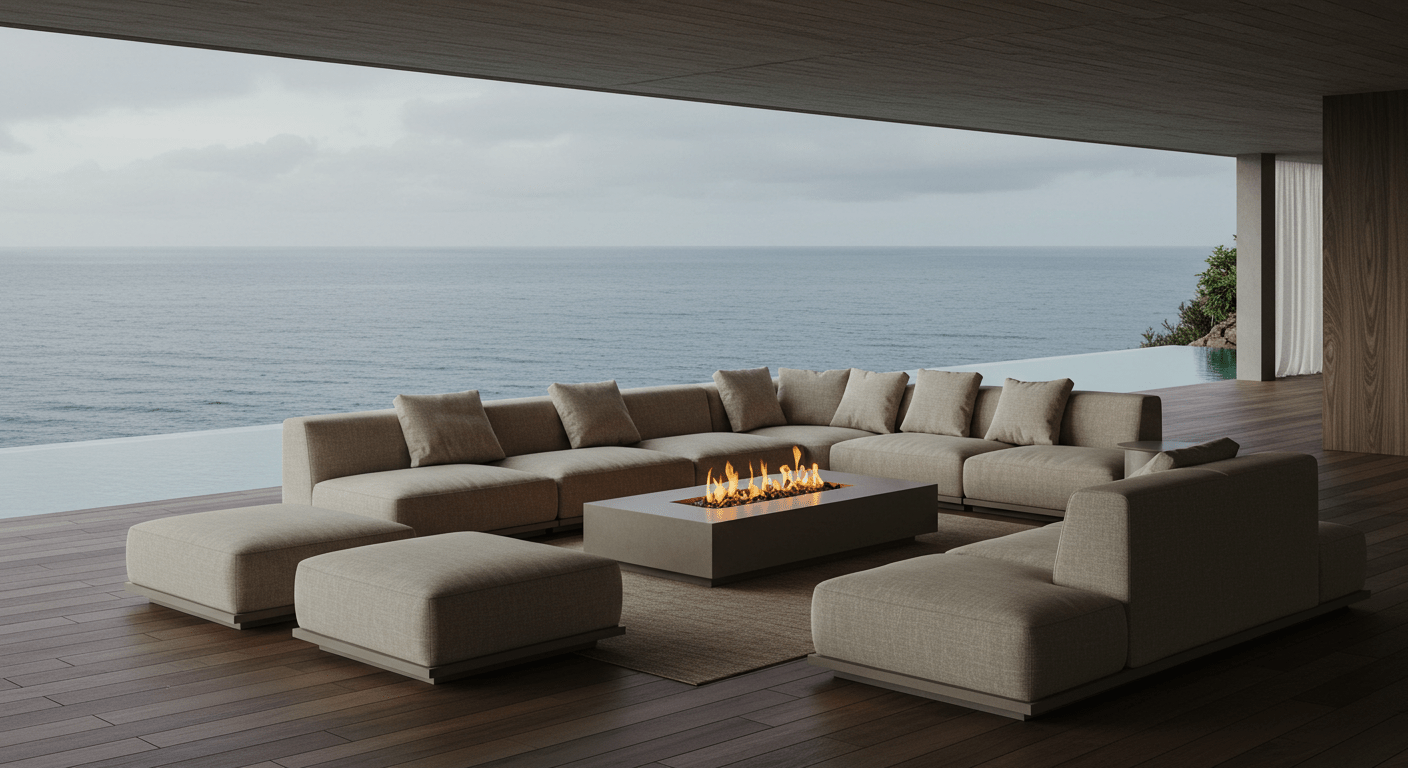
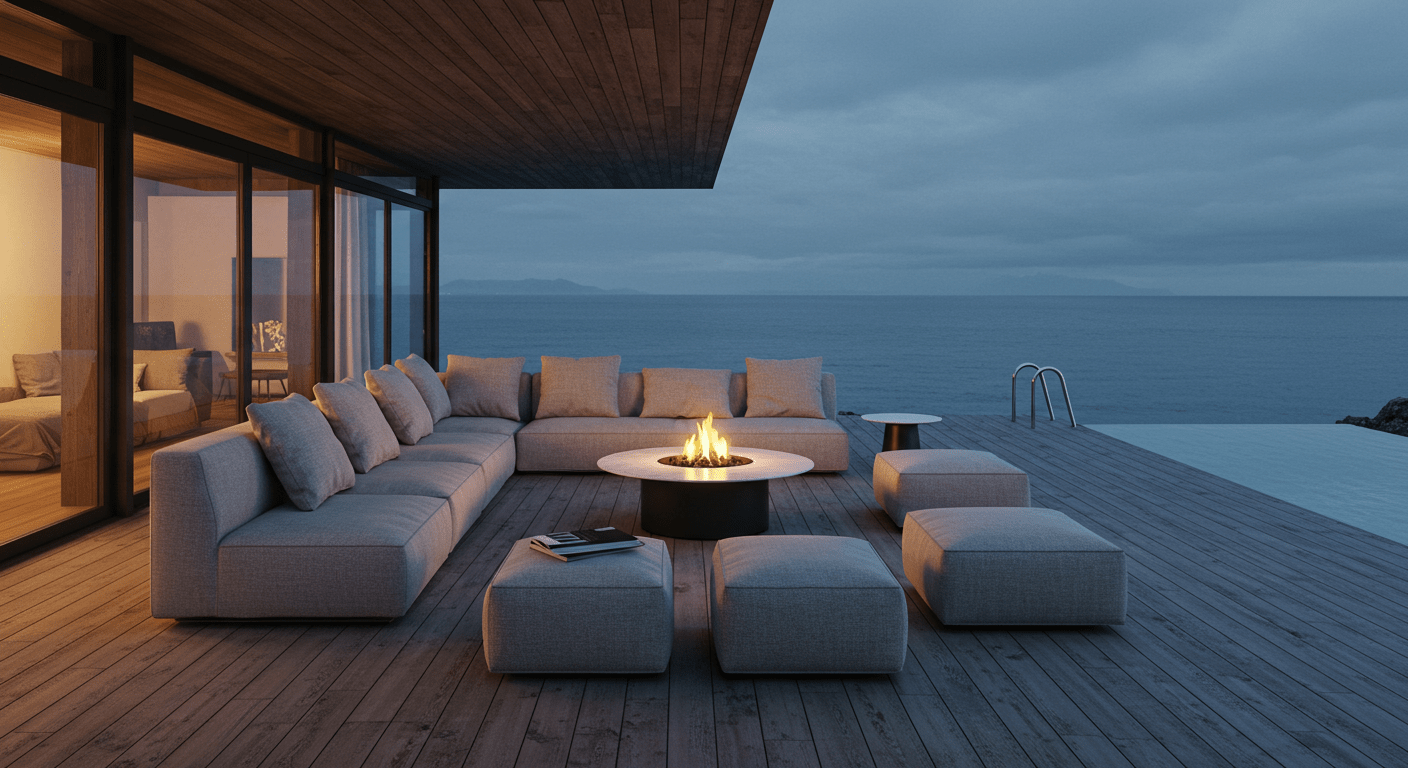
Fire tables as center features dominate high-end outdoor fire design because they combine functional warmth with architectural presence. Commercial fire tables create natural gathering points that organize space, extend usability, and enhance guest experience across hospitality, multi-family, and corporate environments.
How Do Fire Tables Function As Visual Anchors And Gathering Points In Outdoor Fire Design?
Fire tables function as visual anchors by establishing focal points around which all other elements orient. Flames draw attention, define circulation patterns, and create intimacy within large outdoor areas. Designers use commercial fire tables to zone spaces, frame views, and control guest movement. The demand reflects market reality: 83% of landscape architects rank fire pits in their top 3 requested features. Fire tables as center features solve spatial design challenges while meeting client expectations for memorable outdoor environments.
Why Do Designers And Hospitality Teams Prioritize Fire Tables As Center Features For Guest Engagement?
Designers and hospitality teams prioritize fire tables because they directly impact revenue and satisfaction metrics. Guests linger 25-40% longer around fire features, increasing food and beverage sales, repeat visits, and property differentiation. The Grand View Hotel documented a 30% increase in guest satisfaction scores after fire pit installation. Commercial fire tables transform underutilized outdoor areas into profit centers. When selecting custom fire tables, property managers balance design ambition with operational performance—knowing that well-executed fire features deliver measurable returns beyond aesthetic appeal.
What Should Property Managers Know When Selecting Fire Tables For Their Commercial Outdoor Spaces In Collaboration With Designers?
Property managers must communicate operational constraints before designers finalize outdoor fire design concepts. Early dialogue about safety codes, maintenance realities, and use intensity prevents costly redesigns and ensures custom fire tables function as intended throughout their lifecycle.
What Operational Requirements Must Be Clearly Communicated To Designers Early In The Process?
Operational requirements include three critical clearances that govern commercial fire tables placement. Fire features require 10-25 feet from combustible structures, 72 inches minimum overhead clearance, and 22-24 inches optimal distance from fire edge to seating. These dimensions affect furniture layouts, canopy heights, and architectural relationships. Property managers using this fire table selection guide working with designers should provide site constraints, existing utility locations, and local code requirements during initial meetings. Designers need this information to create compliant concepts—not discover limitations during permitting.
How Do Durability, Maintenance, And Lifecycle Expectations Affect Design Feasibility?
Durability and maintenance expectations determine material selection and budget allocation. Commercial-grade units deliver 20-30 years useful life, but ignition systems require maintenance or replacement every 5-7 years. Property managers should budget $500-$1,000 annually for cleaning, inspections, and component replacement. When evaluating custom fire tables, ask designers how material choices affect maintenance access, parts availability, and staff training requirements. Fire tables as center features demand reliable performance—specifying residential-grade products or exotic materials creates operational burdens that undermine design intent.
Why Is Aligning On Use Intensity Critical For Commercial Fire Tables?
Aligning on use intensity prevents performance failures in high-traffic environments. Hotel rooftops endure hundreds of guests weekly. Restaurant patios operate nightly year-round. Multi-family amenity decks face constant use by residents and guests. Designers may propose features suited for occasional residential use. Property managers must clarify operational demands: hours per day, guests per week, weather exposure, and staff capabilities. This fire table selection guide working with designers emphasizes matching commercial fire tables specifications to actual use patterns—ensuring installations withstand real-world intensity without premature wear or safety incidents.
How Do Designers Evaluate Fire Tables As Part Of An Overall Outdoor Fire Design Strategy?
Designers evaluate commercial fire tables through spatial composition, material relationships, and experiential impact. Fire tables as center features must balance visual dominance with functional integration across the entire outdoor fire design scheme.
How Does Scale, Proportion, And Layout Influence Fire Table Selection?
Scale, proportion, and layout determine whether fire tables enhance or overwhelm a space. Designers assess sightlines, seating capacity, and circulation patterns to specify appropriate dimensions. Weight drives feasibility—natural stone tables range 300-500 lbs, exceeding structural limits for high-rise balconies and rooftop installations. Property managers should question load capacity early when reviewing custom fire tables proposals. GFRC alternatives deliver visual impact at reduced weight, enabling installations where natural stone fails code. This fire table selection guide working with designers emphasizes verifying structural engineering before approving material specifications that compromise safety or require costly reinforcement.
Why Do Material Continuity And Finish Matching Matter In Custom Fire Tables?
Material continuity creates cohesive outdoor fire design by linking fire features to surrounding hardscapes, furniture, and architecture. Designers specify GFRC, natural stone, or pre-cast concrete for commercial fire tables bodies to match existing palettes and withstand weathering. Finish matching extends brand identity—coastal properties require different textures than urban rooftops. Internal components demand 316 marine-grade stainless steel for burners and metal parts regardless of aesthetic choices. Property managers using property manager resources should verify material grades during specification review. Visual continuity attracts guests; durable internals ensure long-term performance.
How Does Flame Presentation Affect Ambiance And Spatial Flow?
Flame presentation shapes how guests experience and navigate outdoor spaces. Designers manipulate flame height, pattern, and media to create intimacy or drama. Linear burners guide sightlines along pathways. Centered flames draw groups into circular seating arrangements. Adjustable flames adapt ambiance from subtle background warmth to prominent visual features. When selecting commercial fire tables, property managers should ask designers how flame characteristics support intended guest behaviors—romantic dining requires different presentations than social gathering spaces. Fire tables as center features succeed when flame design aligns with spatial programming and operational flexibility.
What Types Of Commercial Fire Tables Are Commonly Specified In Hospitality And High-Traffic Environments?
Commercial fire tables configurations vary by spatial function, guest programming, and operational context. Understanding type distinctions helps property managers evaluate designer proposals against actual use requirements in this fire table selection guide working with designers.
How Do Round, Rectangular, And Linear Fire Tables Serve Different Spatial Goals?
Round fire tables create democratic seating where all guests face each other equally—ideal for social lounges and conversation areas. Rectangular configurations suit dining applications and structured seating arrangements. Linear fire tables define edges, borders, and sightlines in larger outdoor fire design schemes. Designers select shapes based on traffic patterns, furniture layouts, and experiential intent. Property managers should question how proposed configurations accommodate peak occupancy, serve multiple guest groups simultaneously, and integrate with existing architectural geometry. Custom fire tables shapes affect fabrication costs and lead times—standard proportions ship faster than unusual dimensions.
When Are Dining-Height Or Bar-Height Fire Tables Preferred Over Lounge-Height Options?
Dining-height fire tables (28-30 inches) suit restaurants, cafes, and food-service environments where guests eat meals at the table. Bar-height options (40-42 inches) work for standing social areas, rooftop bars, and high-traffic zones encouraging shorter visits. Lounge-height tables (16-18 inches) pair with deep seating for extended relaxation in hotel courtyards and resort pool decks. Height selection affects furniture coordination, ADA compliance, and guest comfort. This fire table selection guide working with designers recommends matching table height to primary activity—mixing heights creates operational complexity without improving experience.
How Do Integrated Fire Features Differ From Standalone Fire Tables?
Integrated fire features embed into hardscapes, built-in benches, or continuous site furnishings as permanent installations. Standalone commercial fire tables function as movable furniture elements—though commercial units typically remain stationary due to utility connections and weight. Integrated designs offer seamless aesthetics and maximize space efficiency in compact areas. Standalone tables provide operational flexibility for seasonal programming and layout changes. Property managers should clarify maintenance access, utility routing, and future adaptability when reviewing proposals. Fire tables as center features succeed when installation type matches long-term property strategy rather than temporary design trends.
What Safety, Compliance, And Performance Factors Must Be Addressed Before Specifying Fire Tables?
Safety, compliance, and performance standards govern commercial fire tables installations. Property managers must verify certifications, understand approval processes, and ensure operational reliability before approving outdoor fire design specifications.
What Codes, Certifications, And Site Conditions Influence Fire Table Approval?
Codes and certifications determine whether custom fire tables receive installation permits. Commercial units require ANSI/CSA certification, local fire marshal approval, and compliance with building codes governing open flames. HOA and local authority reviews take 30-60 days under normal conditions. Rejected permits create 4-8 weeks additional delays while designers revise plans. Property managers using this fire table selection guide working with designers should initiate permitting during design development—not after finalizing specifications. Site conditions including wind exposure, proximity to combustibles, and utility access affect approval outcomes. Submit detailed drawings showing clearances, fuel sources, and safety systems to avoid revision cycles.
How Do Burner Systems, Ignition Reliability, And Ventilation Affect Daily Operations?
Burner systems and ignition reliability determine whether fire tables as center features function consistently or frustrate staff and guests. Commercial-grade units specify 316 marine-grade stainless steel burners resistant to corrosion and thermal stress. Electronic ignition systems with flame-sensing thermocouples provide reliable starts and automatic shutoffs when flames extinguish. Poor ventilation causes incomplete combustion, smoke, and odor complaints. Property managers should question designers about burner BTU output, ignition type, and how wind patterns affect flame stability. Reliable operation depends on quality components—not just attractive enclosures.
Why Does Service Access Matter For Maintenance And Staff Workflows?
Service access determines maintenance costs and operational uptime. Commercial fire tables require periodic burner cleaning, ignition system inspection, and gas line servicing. Designs that embed units into hardscapes without removable panels force expensive demolition for routine maintenance. Property managers should verify access hatches, control valve locations, and whether staff can service units without specialized tools. This fire table selection guide working with designers emphasizes planning maintenance workflows during design—not discovering access limitations after installation. Fire features that staff cannot maintain reliably become liabilities regardless of aesthetic success.
How Do Commercial Fire Tables Differ From Residential Fire Tables In Real-World Use?
Commercial fire tables endure exponentially higher use intensity than residential products. Understanding performance differences protects property managers from costly failures when selecting fire tables as center features for hospitality and high-traffic environments.
Why Do Residential-Grade Fire Tables Fail In Hospitality Environments?
Residential-grade fire tables fail because they're engineered for occasional family use—not continuous commercial operation. Warranties reflect this reality: commercial warranties run 50-90% shorter than residential coverage, acknowledging that hotel rooftops, restaurant patios, and multi-family amenity decks generate extreme wear. Residential units use thinner gauge materials, lower-grade ignition systems, and finishes unsuitable for daily exposure to hundreds of guests. When designers specify residential products to reduce costs, property managers inherit maintenance crises within months. This fire table selection guide working with designers emphasizes verifying commercial-grade specifications—not accepting residential alternatives that compromise durability.
How Do Commercial Fire Tables Address Wear, Reliability, And Warranty Expectations?
Commercial fire pit tables outdoors address heavy hospitality wear through reinforced construction, marine-grade stainless steel components, and weather-resistant body materials including GFRC and architectural pre-cast concrete. Leading manufacturers engineer these units for 20 to 30 year lifespans under high-intensity daily use. Ignition systems feature all-weather electronic starters paired with flame-sensing safety shutoffs that protect guests and property. Commercial warranties reflect realistic use patterns rather than overpromising coverage that fails under actual conditions. Property managers evaluating options should compare warranty terms across manufacturers carefully. Shorter coverage periods often represent honest assessments of commercial demands rather than product shortcomings. Quality fire features justified by long-term performance consistently outperform inexpensive residential units requiring frequent and costly replacement cycles.
Why Is Specifying Commercial-Grade Products A Risk Management Decision For Property Managers?
Specifying commercial-grade products mitigates catastrophic liability exposure. A $15,000 residential fire table failed during a wedding event, generating $50,000 in guest compensation and reputation damage—total $65,000 incident cost. Residential products lack safety certifications required for commercial installations. Insurance claims face denial when property managers knowingly specify non-compliant equipment. Beyond financial risk, failures damage brand perception and guest trust in outdoor fire design quality. This fire table selection guide working with designers positions commercial-grade specifications as non-negotiable—protecting budgets, reputations, and careers from preventable disasters caused by underspecified fire tables as center features.
What Questions Should Property Managers Ask Before Approving Final Fire Table Specifications?
Property managers must validate design proposals against operational reality before approving commercial fire tables specifications. Strategic questioning protects budgets, reputations, and guest safety throughout the lifecycle of fire tables as center features.
How Will These Fire Tables Perform After Years Of Continuous Guest Use?
Ask designers and manufacturers to document expected performance under actual use conditions. Request case studies from similar properties showing 5-10 year outcomes. Question material degradation rates, finish durability, and component replacement schedules. Commercial fire tables in hotel rooftops face different stresses than resort pool decks—verify specifications match your environment. This fire table selection guide working with designers recommends requesting warranties in writing, not verbal assurances. Ask what failures occur most frequently and how manufacturers address them. Custom fire tables justified by longevity claims need evidence beyond marketing materials.
What Operational Or Maintenance Risks Could Emerge After Installation?
Identify maintenance dependencies that strain staff capabilities or budgets. Ask who services ignition systems, sources replacement parts, and performs annual inspections. Question whether local contractors have expertise with specified models or if factory technicians must travel for repairs. Assess risks from seasonal weather, guest tampering, and emergency shutdowns. Property managers using property manager resources should request maintenance protocols in writing during specification review—not discover requirements after installation. Outdoor fire design that demands specialized skills or proprietary parts creates operational vulnerabilities. Ask how quickly units return to service after failures during peak revenue periods.
How Does This Selection Support Brand Perception And Guest Experience Goals?
Challenge designers to articulate how fire tables as center features advance specific brand objectives beyond generic "ambiance" claims. Question whether proposed aesthetics align with property positioning—ultra-modern linear units contradict traditional resort branding. Ask how flame characteristics, seating arrangements, and operational hours support intended guest behaviors. Commercial fire tables should enhance experiences that drive revenue, satisfaction scores, and repeat visits. Request mockups showing fire features within complete outdoor fire design context—not isolated product renderings. This fire table selection guide working with designers positions specifications as strategic investments requiring measurable alignment with business goals, not discretionary design indulgences.
How Do Well-Selected Fire Tables Contribute To Long-Term Asset Value And Brand Positioning?
Well-selected commercial fire tables generate measurable financial returns while differentiating properties in competitive markets. This fire table selection guide working with designers positions fire features as revenue-generating assets—not decorative expenses.
Why Do Distinctive Fire Tables Create Memorable Outdoor Environments?
Distinctive fire tables drive direct revenue through enhanced guest spending and occupancy. Properties with proper installations achieve 69% higher Revenue Per Available Unit (RevPAU) compared to those without fire features. Restaurants and hospitality venues document 30% increased guest check sales around fire tables as center features. Short-term rentals command 20% higher nightly rates when outdoor fire design includes quality fire features, while booking rates increase 25%. These metrics validate investment in custom fire tables that create Instagram-worthy moments guests remember and share. Property managers justify premium specifications by calculating revenue lift against installation costs—distinctive features pay for themselves through sustained occupancy and spending increases.
How Does Durability Protect Budgets And Reduce Replacement Cycles?
Durability eliminates replacement costs that erode budgets over decades. Premium commercial fire tables range $12,000-$25,000 but deliver 67% immediate ROI upon installation through revenue increases. Properties gain $15,000-$30,000 in property value over 5 years from quality outdoor amenities. Commercial-grade units last 20-30 years versus 3-5 years for residential products—avoiding repeated capital expenditures and disruption. This fire table selection guide working with designers emphasizes total cost of ownership, not initial price. Cheap installations require replacement every few years. Quality specifications protect budgets through longevity, lower maintenance costs, and sustained performance that preserves revenue generation.
Why Do Custom Fire Tables Become Signature Elements Of Successful Properties?
Custom fire tables become signature elements by creating unique identity that competitors cannot replicate. Multi-family properties with rooftop fire features gain 10-15% property value increases from enhanced amenities. Fire tables as center features extend outdoor season usability by 2-3 months, generating revenue during shoulder periods when competitors close outdoor spaces. Signature installations appear in marketing materials, property tours, and guest reviews—building brand recognition. Property managers using property manager resources should view custom fire tables as differentiation investments that compound value over time. Well-executed outdoor fire design featuring distinctive fire features becomes synonymous with property identity, driving long-term occupancy, pricing power, and asset appreciation.
How Can Property Managers Use This Fire Table Selection Guide As An Ongoing Resource When Working With Designers?
This fire table selection guide working with designers provides reusable frameworks for evaluating commercial fire tables across multiple projects. Property managers gain confidence through structured decision-making that balances design vision with operational accountability.
How Does Applying A Structured Selection Framework Improve Collaboration Outcomes?
Structured frameworks improve collaboration by establishing shared evaluation criteria before designers finalize concepts. Understanding lead times prevents unrealistic timelines—custom fire tables require 6-12 weeks manufacturing, concrete models need 8-10 weeks, while quick-ship options deliver in 1-5 business days. Property managers who communicate timeline constraints early enable designers to specify appropriately. This fire table selection guide working with designers creates common language for discussing material durability, safety compliance, maintenance access, and budget allocation. Frameworks reduce miscommunication, revision cycles, and post-installation failures. Property manager resources that standardize evaluation processes produce consistent outcomes across properties and design teams.
Why Does Aligning Design Intent With Operational Reality Protect Professional Reputation?
Aligning design intent with operational reality prevents installations that fail guest expectations or create maintenance burdens. Property managers who approve fire tables as center features without verifying commercial-grade specifications own resulting failures—not designers. Professional reputation depends on delivering amenities that function reliably for years, not just photograph beautifully at ribbon cuttings. This fire table selection guide working with designers positions property managers as informed collaborators who protect stakeholder interests through technical diligence. Asking critical questions about outdoor fire design feasibility demonstrates professional competence. Approving unrealistic specifications damages credibility when custom fire tables underperform or require premature replacement.
How Can The Right Approach To Fire Table Selection Support Future Projects And Expansions?
The right approach builds institutional knowledge that accelerates future commercial fire tables projects. Document successful specifications, approved manufacturers, and vetted installers for replication across properties. Lessons from initial installations inform smarter decisions in expansions—avoiding repeated mistakes and leveraging proven solutions. Property managers who master fire table selection guide working with designers principles become valuable resources for portfolio-wide outdoor fire design standards. Future projects benefit from established vendor relationships, refined evaluation criteria, and confidence in specifying fire tables as center features that deliver measurable returns. Systematic approaches transform individual installations into scalable property manager resources supporting long-term portfolio enhancement.
Ready To Select Commercial Fire Tables That Deliver Long-Term Performance?
Partner with Cooke's design experts to specify commercial fire tables engineered for hospitality environments. Our team helps property managers navigate material selection, safety compliance, and customization options that align outdoor fire design with operational requirements.
Whether planning hotel rooftops, restaurant patios, or multi-family amenities, Cooke provides property manager resources including specification guidance, lead time planning, and manufacturer coordination.
Contact Cooke's design experts today to discuss your project timeline, review custom fire tables options, and ensure your fire tables as center features generate measurable returns. Transform outdoor spaces into revenue-generating assets with fire table selection guide working with designers principles backed by commercial-grade quality and proven performance.