

Fire Table Planning: Preparing Your Property's Outdoor Living Strategy for 2026
Key Takeaways
- Proven ROI Performance: Commercial fire tables deliver 67-80% immediate ROI with 9-18 month payback periods across property types—outperforming pool upgrades (55% ROI), outdoor kitchens (52% ROI), and fitness centers (45% ROI).
- Strategic Planning Timeline: Six to twelve month lead times are required for 2026 installations to coordinate design, permitting, gas line infrastructure, and professional installation before peak season revenue windows.
- Commercial-Grade Specifications Matter: Premium units ($12,000-$25,000) last 20-30+ years versus budget alternatives that fail within 3-5 years—GFRC and linear burners dominate with 65-70%+ adoption rates for durability and guest appeal.
- Preventative Maintenance Delivers 300-400% ROI: Comprehensive maintenance programs ($800-$1,200 annually) reduce in-season downtime by 87% and prevent the 248% higher repair costs associated with neglected care over 5-year periods.
- Fire Tables Drive Measurable Guest Behavior: Properties document +42% ADR lifts, +35% F&B revenue increases, 25-40% extended dwell time, and 3x review velocity—metrics that directly impact booking decisions and rate justification for hospitality fire features.
Commercial fire tables have evolved from luxury amenities to strategic revenue infrastructure for hospitality properties, multifamily communities, and Class A office buildings. Properties investing $12,000-$25,000 in premium installations document 67-80% ROI with 9-18 month payback periods through ADR lifts, F&B revenue increases, and property value appreciation.
Planning for the outdoor living strategy 2026 requires a 6-12 months lead time to coordinate design, permitting, gas infrastructure, and professional installation. This guide provides actionable intelligence for property managers and asset managers planning commercial fire table investments—from material selection and fire table space planning to regulatory compliance and lifecycle cost management.
Success depends on treating hospitality fire features as infrastructure projects that enhance outdoor space for guests while generating measurable financial returns.
What Makes Fire Tables Essential to Outdoor Living in 2026?
Fire tables have shifted from optional amenities to strategic investments in commercial outdoor living strategy 2026. The market is accelerating—North America's fire pit sector hit $3.09 billion in 2024 and projects to $5.77 billion by 2025, with sustained 5.6-6.1% annual growth through 2030. Guest preferences, property value metrics, and market adoption data confirm that hospitality fire features now directly impact competitive positioning and revenue performance.
How Are Fire Tables Evolving in the 2026 Outdoor Living Market?
Fire tables are standardizing around high-performance materials and smart integration. Linear burners dominate with 70%+ adoption, while GFRC construction captures 65%+ of premium installations. Smart technology integration—remote ignition, automated safety systems, app control—has reached 35% adoption and continues rapid growth. Modular configurations account for 45% of new commercial installations, reflecting demand for flexible outdoor space for guests. Global market momentum (6.5% CAGR) signals sustained expansion, not trend volatility.
These adoption patterns define competitive standards for luxury outdoor furniture and fire table space planning. Properties selecting legacy designs or budget materials risk aesthetic obsolescence within 3-5 years.
Why Fire Tables Are More Than Just a Luxury Feature for Outdoor Spaces
Fire tables drive measurable guest behavior and marketing impact. Seventy-nine percent of hotel guests actively prefer establishments with outdoor fire pits—this isn't soft preference, it's booking criteria. Fire features appear in 67% of property-tagged Instagram posts, generating organic social proof without marketing spend. Properties with commercial fire tables are 3x more likely to receive positive reviews mentioning "ambiance," a direct correlation to guest satisfaction and repeat bookings.
These metrics confirm fire tables function as revenue infrastructure, not decorative upgrades. They influence booking decisions, extend dwell time, and amplify word-of-mouth marketing through visual shareability.
What Are the Core Benefits of Adding Fire Tables to Your Property's Design?
Premium fire table installations increase property value by $25,000-$50,000 over 10 years, with professional installations lifting valuations 10-15% immediately. Even conservative scenarios show $15,000-$30,000 value increases within 5 years. Operational benefits compound financial returns: guest dwell time increases 25-40%, directly correlating to higher per-visit spending. The Ritz-Carlton Laguna Niguel documented a 30% increase in guest satisfaction scores after adding hospitality fire features—a metric that drives loyalty, reviews, and premium rate justification.
These aren't marginal improvements. Fire tables create compounding value through property valuation, guest behavior modification, and satisfaction score elevation that influences all downstream revenue metrics.
How Can Commercial Properties Strategically Plan Fire Table Layouts and Investments Now to Maximize Guest Experience and ROI in the 2026 Outdoor Season?
Strategic fire table space planning for outdoor living strategy 2026 requires integration of revenue performance metrics, code compliance clearances, and guest flow optimization. Properties that treat commercial fire tables as programmed amenities, not decorative furniture, achieve 9-18 month payback periods and sustained revenue lifts. Layout decisions made now determine whether installations deliver 67% ROI or become underutilized space. Hospitality fire features require design precision to balance safety, accessibility, and revenue maximization.
How Do Fire Tables Enhance Guest Experience in Hospitality Spaces?
Fire tables generate immediate, measurable revenue impact. Hotels and resorts document +42% ADR lifts and up to +69% RevPAU gains within the first season—performance that justifies premium positioning and rate increases. Review mentions of fire features jump from 2% to 18% of total feedback, signaling high guest awareness and satisfaction. Extended dwell time (25-40% increases) directly correlates to higher per-guest spending on food, beverage, and ancillary services.
These metrics confirm that hospitality fire features function as revenue multipliers, not cost centers. Properties capturing these gains treat fire table zones as programmed experiences with staff training, marketing integration, and seasonal activation strategies.
What Key Design Considerations Should Hospitality Properties Keep in Mind for Fire Table Integration?
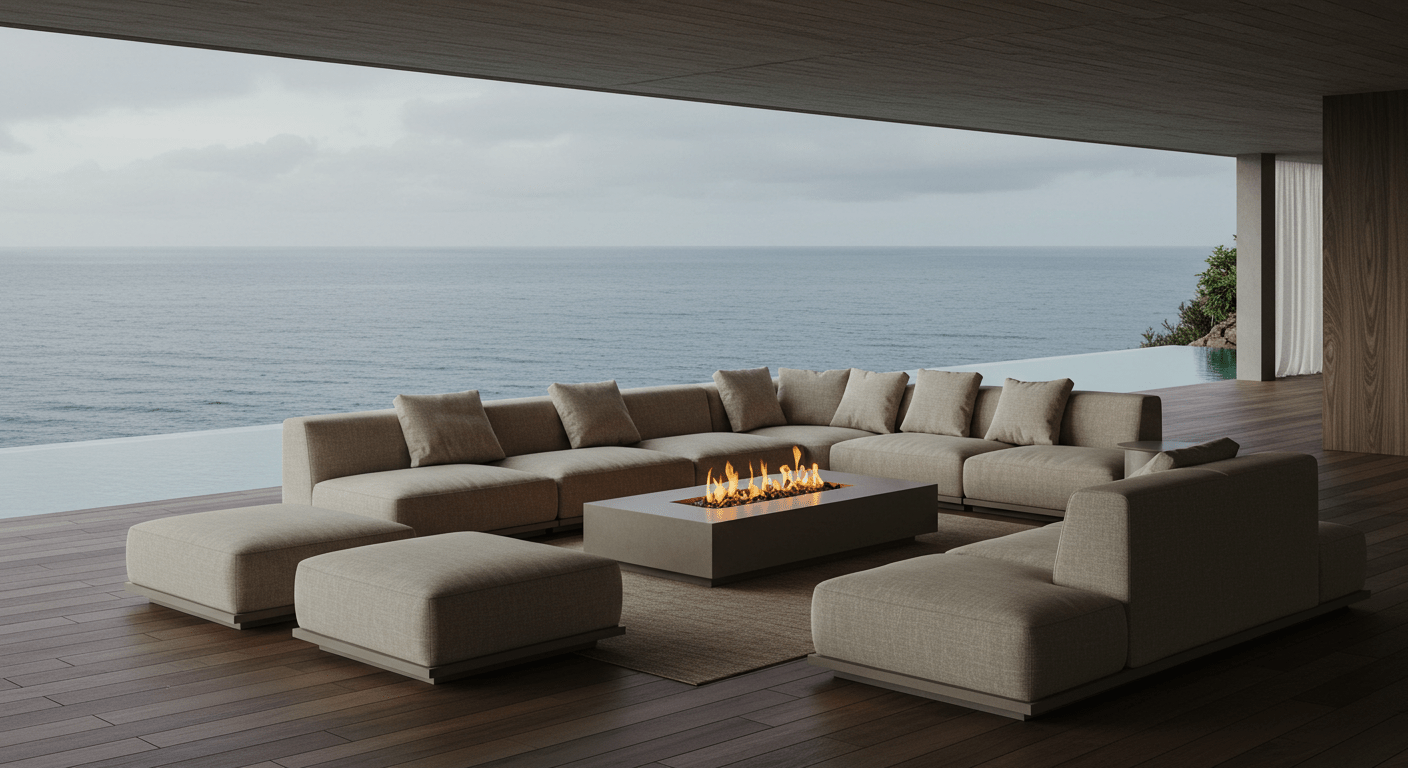
Fire table space planning must balance guest comfort, safety codes, and ADA compliance. Maintain 3-foot clearance between fire tables and surrounding luxury outdoor furniture for safe movement. Main service aisles require 48-60 inch widths to accommodate traffic flow and wheelchair access. Fire edge to seating buffers need 18-24 inches to prevent heat discomfort while maximizing usable outdoor space for guests.
ADA compliance demands 30" x 48" clear floor space at accessible seating positions, plus 27-inch minimum knee clearance at 17-inch depth for wheelchair users. These aren't negotiable dimensions—they're code requirements that prevent costly retrofits and ensure universal access to commercial fire tables.
How Can Proper Space Planning for Fire Tables Lead to Long-Term ROI?
Properly planned installations deliver 67% average immediate ROI with 9-18 month payback periods across property types. Boutique hotels achieve 9-month payback, restaurants 10 months, luxury multifamily 18 months. These timelines assume professional design integration, appropriate clearances, and programmed activation—not passive installation.
Properties that rush layouts or ignore circulation requirements face extended payback periods, underutilization, and compliance issues. Rapid, measurable gains require upfront investment in space planning that optimizes fire table placement for revenue generation, not just aesthetic appeal. Strategic outdoor living strategy 2026 starts with layout decisions that support 20-30 year asset life and sustained guest engagement.
Key Considerations When Selecting Fire Tables for Outdoor Spaces
Fire table selection determines lifecycle costs, maintenance burden, and aesthetic relevance over 20-30 year timelines. Premium commercial fire tables require $12,000-$25,000 upfront investment plus $3,000-$8,000 professional installation, but deliver decades of service versus budget alternatives that fail within 3-5 years. Material choice, design trends, and functional features directly impact guest appeal, operational efficiency, and integration with luxury outdoor furniture. Properties planning outdoor living strategy 2026 need 6-12 month lead times for specification, procurement, permitting, and installation.
What Factors Should Be Considered in Choosing the Right Fire Table for Outdoor Living Spaces?
Premium commercial units cost $12,000-$25,000 but deliver 20-30+ year lifespans with proper maintenance—amortizing to $400-$1,250 annually. Professional installation ($3,000-$8,000) ensures code compliance, warranty validity, and safe operation. Six to twelve month planning lead times accommodate design specification, vendor selection, permitting, gas line coordination, and seasonal installation windows.
Budget alternatives appear cost-effective initially but require replacement every 3-5 years, generating higher lifecycle costs and operational disruption. Hospitality fire features demand commercial-grade construction that withstands high-traffic use, weather exposure, and continuous seasonal operation without performance degradation.
How Does Size, Shape, and Material Impact the Functionality of Fire Tables?
Material selection balances durability, weight, aesthetics, and maintenance requirements. GFRC delivers 20-30+ year lifespan at 50% lighter weight than traditional concrete (15-25 years), simplifying installation and structural load considerations. Stainless steel and natural stone match GFRC longevity (20-30+ years), while hammered copper offers 25-30+ years with distinctive patina development.
Powder-coated steel (10-20 years) and composite materials (10-15 years) suit lower-traffic applications or budget constraints but require replacement during the operational life of premium alternatives. For fire table space planning in high-visibility outdoor space for guests, material longevity directly impacts total cost of ownership and aesthetic consistency with luxury outdoor furniture programs.
What Are the Leading Trends in Fire Table Designs for 2026?
Linear burners lead adoption at 70%+ with +15-25% cost premium, delivering 20-30 year longevity and very high guest appeal—defining the aesthetic standard for commercial fire tables. GFRC construction captures 65%+ adoption despite +20-30% premium, driven by weight advantages and 20-30+ year durability. Geometric shapes (60% adoption, +5-15% premium) and modular configurations (45% adoption, +10-20% premium) offer design flexibility for varied outdoor living strategy 2026 requirements.
Integrated seating (40% adoption, +30-50% premium) and dual-function tables (30% adoption, +15-25% premium) maximize space efficiency with very high guest appeal, though 15-25 year longevity. Smart technology integration grows rapidly from 35% adoption base (+25-40% premium), adding remote control, automated safety systems, and property management integration. Properties selecting 2026 hospitality fire features should prioritize trends with 60%+ adoption and 20-30 year longevity to avoid premature obsolescence.
Commercial Fire Tables: A Strategic Addition for Hospitality Venues
Commercial fire tables function as revenue infrastructure in hospitality environments, not decorative upgrades. Hotels, resorts, and country clubs document 65-80% ROI with 9-18 month payback periods—performance that justifies $15,000-$30,000 investments. Unlike residential units, hospitality fire features must withstand continuous high-traffic use, weather exposure, and stringent safety certifications while maintaining aesthetic standards that support luxury outdoor furniture programs. Strategic outdoor living strategy 2026 for hospitality venues requires commercial-grade specifications that balance guest comfort, operational durability, and environmental adaptability.
How Do Commercial Fire Tables Contribute to Luxury Hospitality and Resort Design?
Hotels and resorts investing $15,000-$25,000 in commercial fire tables achieve 67-80% ROI with 9-12 month payback periods through nightly rate premiums of $30-$75 for boutique properties. These aren't soft benefits—they're documented revenue lifts from fire-adjacent rooms and enhanced outdoor space for guests. Country clubs require slightly higher investment ($15,000-$30,000) with 65-75% ROI and 12-18 month payback, driven by event bookings and member satisfaction rather than room revenue.
Premium installations justify luxury positioning and support rate integrity during competitive periods. Properties treating hospitality fire features as programmed amenities—with dedicated seating zones, service integration, and marketing emphasis—capture the high end of ROI ranges. Passive installations without operational integration achieve lower returns despite identical capital investment.
What Features Should Commercial Fire Tables Include to Withstand High-Traffic Use?
Commercial-grade units require 40,000-200,000+ BTU heat output from natural gas or propane systems to maintain performance in high-traffic environments. Excellent weather resistance ensures year-round operation without degradation. ANSI Z21.97/CSA 2.41 certification for outdoor decorative gas appliances is mandatory for commercial fire tables—not optional. Electric units need UL Listed certification, though low heat output limits their application to ambiance-only installations.
These certifications ensure code compliance, liability protection, and warranty validity. Properties specifying residential-grade units for commercial applications void warranties, fail inspections, and assume operational liability that exceeds any cost savings from downgrading specifications.
How Can Fire Tables Be Utilized in Different Outdoor Environments to Enhance Guest Comfort?
Environmental adaptability requires specific safety features and clearances. Tempered glass wind guards maintain flame stability in wind conditions up to 10 MPH while protecting guests from direct heat exposure. Fire table to combustible structure clearances range 10-25 feet depending on jurisdiction—verify local codes before finalizing fire table space planning. Horizontal clearances require 36-inch minimum from combustibles for commercial units. Vertical clearance demands 120 inches (10 feet) overhead for safe operation.
These clearances aren't design guidelines—they're code requirements that determine permitting approval and operational legality. Properties ignoring clearance specifications face installation rejection, costly retrofits, and liability exposure. Strategic outdoor living strategy 2026 incorporates clearance requirements into initial design phases, not post-installation corrections.
Fire Table Space Planning: Maximizing Outdoor Space for Guests
Fire table space planning determines whether installations generate 67% ROI or become underutilized liabilities. Strategic placement balances circulation requirements, fuel type selection, and guest flow optimization to create functional outdoor space for guests that drives revenue and satisfaction. Properties treating commercial fire tables as programmed zones—with defined seating patterns, service access, and comfort zones—achieve faster lease-up, higher check averages, and superior performance versus alternative amenity investments. Effective outdoor living strategy 2026 requires space planning that prioritizes guest experience and operational efficiency equally.
How to Create Cozy, Functional, and Aesthetic Spaces with Fire Tables in Your Outdoor Area
Service aisle width requirements of 48-60 inches ensure accessibility and traffic flow while maintaining intimate seating zones around hospitality fire features. Natural gas suits permanent high-traffic installations with lowest operating costs and no tank management. Propane delivers flexibility for temporary or remote locations without gas infrastructure. Electric serves enclosed or semi-enclosed spaces where heat output isn't primary and code restrictions limit open flame.
Fuel type selection directly impacts operational complexity, long-term costs, and spatial flexibility. Properties planning outdoor space for guests should specify fuel type during initial fire table space planning, not after site design completion—gas line placement and electrical requirements determine feasible layouts and installation costs.
What Are the Key Principles of Fire Table Space Planning for Maximum Guest Comfort and Flow?
Strategic placement accelerates revenue capture and property performance. Luxury multifamily properties document 15-20% faster lease-up with well-designed fire table zones—a metric that reduces carrying costs and accelerates stabilization. Restaurants investing $8,000-$15,000 achieve 67-75% ROI with 10-15 month payback periods when commercial fire tables integrate with dining programs. Natural gas or propane fuel types support the heat output and operational consistency restaurants require.
Fire table space planning for maximum guest comfort balances intimacy and circulation. Defined conversation zones with appropriate luxury outdoor furniture placement encourage dwell time without blocking service access or creating congestion. Properties treating fire tables as destination amenities—not pass-through features—capture the high end of ROI ranges through intentional programming and spatial design.
How Can Fire Table Placement Contribute to a Balanced and Inviting Outdoor Layout?
Commercial fire tables outperform alternative amenity investments across all comparative metrics. Fire tables deliver 67% ROI with 12-month payback versus pool upgrades at 55% ROI with 24-month payback. Outdoor kitchens achieve 52% ROI with 18-month payback—15 percentage points below fire tables. Fitness centers lag at 45% ROI with 36-month payback, while rooftop lounges without fire features generate only 38% ROI with 30-month payback.
These comparisons confirm that hospitality fire features maximize capital efficiency for outdoor living strategy 2026. Properties allocating limited CapEx budgets should prioritize fire table installations over lower-ROI alternatives. Strategic placement creates balanced outdoor space for guests that drives revenue, satisfaction, and property value—compounding returns that justify premium investment in commercial-grade specifications and professional installation.
Integrating Luxury Outdoor Furniture with Fire Tables for 2026 Outdoor Spaces
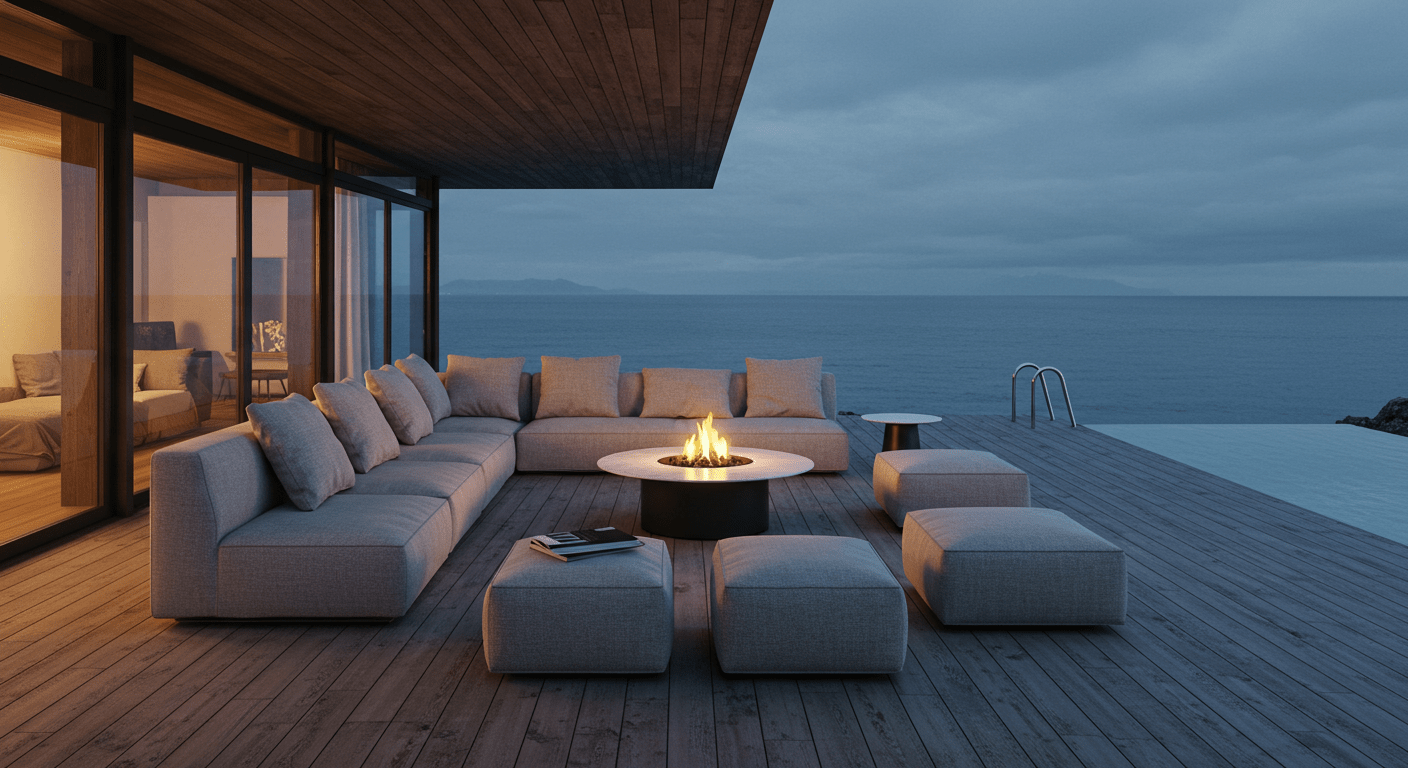
Material selection and design integration determine whether commercial fire tables enhance or conflict with existing luxury outdoor furniture programs. Cohesive outdoor space for guests requires matching aesthetic profiles, durability standards, and functional requirements across all elements—not isolated specification of individual pieces. Properties investing in premium hospitality fire features ($8,000-$30,000) must coordinate surrounding furnishings to maximize visual impact and guest appeal. Strategic outdoor living strategy 2026 demands holistic design approaches that treat fire tables and furniture as integrated systems, not separate procurement decisions.
What Are the Top Materials for Fire Tables and Outdoor Furniture in 2026?
GFRC leads premium installations at $8,000-$25,000 with modern luxury aesthetic and 50% weight advantage over traditional concrete ($3,000-$12,000, contemporary solid aesthetic). Stainless steel ($5,000-$18,000) delivers sleek industrial aesthetic for urban environments, while powder-coated steel ($2,500-$8,000) offers versatile modern styling at moderate price points. Hammered copper ($10,000-$30,000) functions as luxury statement pieces with distinctive patina development. Natural stone ($6,000-$20,000) provides rustic premium aesthetic for resort and country club settings.
Composite materials ($2,000-$7,000) serve budget-conscious projects but sacrifice longevity and aesthetic refinement. Material selection should align with property positioning—luxury hospitality requires GFRC, stainless steel, copper, or stone specifications that match 20-30 year fire table lifespans. Budget alternatives create aesthetic mismatches and premature replacement cycles that undermine long-term ROI.
How to Ensure Seamless Design Integration Between Fire Tables and Outdoor Furnishings?
Geometric shapes (60% adoption, +5-15% premium, high guest appeal) enable modular furniture arrangements that adapt to varied group sizes and event requirements. Dual-function tables (30% adoption, +15-25% premium, very high guest appeal) integrate usable surfaces with fire features, reducing furniture count while increasing functionality. Fire table space planning should specify complementary furniture profiles during design phases—not post-installation additions that compromise circulation or aesthetic cohesion.
Seamless integration requires matching material finishes, height profiles, and color palettes across commercial fire tables and luxury outdoor furniture. Properties mixing incompatible styles or quality levels create visual discord that degrades perceived value regardless of individual component quality. Strategic outdoor living strategy 2026 treats fire tables as anchor elements with surrounding furnishings specified to complement, not compete.
How Can Luxury Outdoor Furniture Elevate the Overall Aesthetic of Your Outdoor Space?
Luxury multifamily properties investing $12,000-$20,000 in integrated fire table and furniture programs achieve 67-70% ROI with 15-18 month payback periods through +5-8% rent premiums. These returns require cohesive design execution—premium hospitality fire features surrounded by budget furniture fail to capture rent premiums that justify investment. High-quality outdoor space for guests signals property positioning and supports rate integrity against competitive alternatives.
Luxury outdoor furniture elevates aesthetic perception beyond individual component quality. Professional installations create destination amenities that drive leasing velocity, resident satisfaction, and social media marketing. Properties treating fire table zones as complete experiential environments—not isolated furniture purchases—achieve faster lease-up and sustained rent premiums that compound ROI over 20-30 year asset lives.
The Role of Hospitality Fire Features in Creating Memorable Outdoor Experiences
Hospitality fire features generate measurable revenue impact through F&B uplift, guest satisfaction, and social media amplification. Properties document 30-35% increases in restaurant revenue, 3x review velocity, and 67% Instagram appearance rates—metrics that directly influence booking decisions and rate justification. Commercial fire tables function as experiential infrastructure that extends dwell time, elevates perceived value, and creates shareable moments that drive organic marketing. Strategic outdoor living strategy 2026 positions fire features as revenue multipliers, not cost centers, with documented returns across hotels, restaurants, and short-term rentals.
How Can Fire Features Enhance the Atmosphere of Outdoor Dining and Lounge Areas?
Fire features drive immediate F&B revenue increases—Ritz-Carlton documented 35% year-over-year growth in outdoor dining revenue after installation. Restaurants report 30% higher check averages as extended dwell time generates additional drinks and desserts orders. Properties monetize demand through amenity fees of $150-$300 per fire table reservation and private event upcharges of $500-$2,000 for exclusive fire table areas.
Guest dwell time increases translate directly to per-visit spending. Hospitality fire features create anchored conversation zones where guests linger beyond initial dining intentions, ordering additional rounds and extending service windows. Properties integrating commercial fire tables with F&B operations—reserved seating, dedicated service staff, premium menu pairings—capture high-end revenue performance versus passive installations.
How Do Fire Features Align with Guest Expectations for Luxury Hospitality?
Guest satisfaction increases ~30% with properly designed fire table zones, while review velocity jumps 3x for properties featuring hospitality fire features in outdoor space for guests. Seventy-nine percent of hotel guests actively prefer establishments with outdoor fire pits—a preference that influences booking decisions and loyalty. Fire features appear in 67% of property-tagged Instagram posts, generating organic user-generated content without marketing spend.
These metrics confirm fire tables meet established guest expectations for luxury positioning, not create new preferences. Properties without fire features face competitive disadvantage in guest perception and social media visibility. Strategic outdoor living strategy 2026 treats hospitality fire features as table stakes for premium positioning, with execution quality determining whether installations generate marketing assets or remain underutilized amenities.
Why Are Hospitality Fire Features Becoming a Must-Have in Premium Outdoor Spaces?
Short-term rentals demonstrate the clearest ROI case: 20% higher nightly rates and 25% booking rate increases when fire features appear in listing photos. Nightly rate premiums of $20-$50 compound over seasonal occupancy to generate 70-80% ROI with 6-12 month payback on $5,000-$12,000 investments. These returns exceed hotel and restaurant performance due to direct booking correlation and lower operational complexity.
Fire features have shifted from luxury differentiators to competitive requirements. Guests compare listings and properties based on fire table availability—absence signals inferior positioning regardless of other amenity quality. Commercial fire tables deliver the fastest payback periods and highest ROI among outdoor amenities, making them first-priority investments for properties planning outdoor living strategy 2026 enhancements.
Commercial Fire Tables Vs. Residential Fire Tables: Understanding the Differences and Benefits
Commercial fire tables require fundamentally different specifications than residential models—higher heat output, continuous-use durability, code compliance certifications, and weather resistance for year-round operation. Properties specifying residential units for hospitality applications void warranties, fail inspections, and experience premature failure within 3-5 years versus 20-30+ year commercial-grade lifespans. Installation complexity, utility coordination timelines, and fuel infrastructure investments vary significantly between commercial and residential applications. Strategic outdoor living strategy 2026 demands commercial specifications for any high-traffic outdoor space for guests, regardless of initial cost premiums.
How Do Commercial Fire Tables Differ from Residential Models in Terms of Durability and Functionality?
Commercial natural gas and propane units deliver 40,000-200,000+ BTU heat output for true climate control in outdoor environments, while electric units provide low heat output suitable only for ambiance. Budget and composite residential units typically fail within 3-5 years under commercial use—generating replacement costs and operational disruption that exceed premium unit investments. Premium commercial fire tables last 20-30+ years with proper maintenance, amortizing costs to $400-$1,250 annually versus $600-$2,400 for budget alternatives requiring repeated replacement.
Durability differences extend beyond lifespan to operational reliability. Commercial units withstand continuous seasonal use, weather exposure, and high-traffic operation without performance degradation. Residential models applied to hospitality fire features experience accelerated wear, safety issues, and aesthetic deterioration that compromise guest experience and property positioning.
What Are the Key Considerations for Commercial Fire Table Installation?
Gas line installation costs $15-$25 per linear foot with total natural gas infrastructure investment of $1,500-$3,000 for permanent installations. Propane requires moderate upfront cost for portable tank systems without gas line infrastructure. Electric delivers lowest upfront cost through plug-and-play installation but sacrifices heat output and operational flexibility. Utility coordination timelines demand 8-20 weeks for gas line permitting, installation, and inspection—requiring early planning for commercial fire tables in outdoor living strategy 2026 timelines.
Installation complexity varies by fuel type and site conditions. Natural gas suits permanent high-traffic installations with lowest operating costs but highest installation complexity. Propane offers flexibility for phased installations or locations without gas infrastructure. Fire table space planning must account for utility access, code clearances, and inspection requirements during design phases, not post-construction as retrofits that increase costs and delay activation.
How Can Commercial Properties Achieve the Perfect Balance of Luxury and Practicality with Fire Tables?
Class A office properties investing $10,000-$18,000 achieve 60-67% ROI with 18-24 month payback periods through tenant satisfaction and property value increases of 10-15%. Natural gas fuel type delivers operational simplicity and lowest long-term costs for permanent installations in professional outdoor space for guests. Unlike hospitality applications prioritizing direct revenue, Class A office installations justify investment through tenant retention, leasing velocity, and property valuation lift.
Balancing luxury and practicality requires specification discipline—premium materials and commercial-grade construction without unnecessary features that inflate costs without improving tenant experience. Fire table space planning for office properties should prioritize flexible configurations supporting varied group sizes and seasonal activation. Strategic integration with luxury outdoor furniture creates cohesive amenity spaces that support tenant recruitment and retention without excessive maintenance burden or operational complexity.
Planning for Fire Table Installation: From Concept to Execution
Fire table installation requires 6-12 month strategic planning timelines to coordinate design, permitting, utility infrastructure, and seasonal activation. Properties attempting compressed schedules face permitting delays, contractor unavailability, and missed seasonal revenue windows. Seven-phase implementation schedules ensure proper sequencing of budgeting, vendor selection, gas line coordination, professional installation, and staff training. Commercial fire tables demand code compliance complexity that residential projects avoid—NFPA standards, ADA accessibility, licensed contractors, and authority inspections. Strategic outdoor living strategy 2026 execution depends on early planning that treats hospitality fire features as infrastructure projects, not furniture purchases.
What Are the Key Steps in Planning for Fire Table Installation in Commercial Outdoor Spaces?
Six to twelve month planning timelines accommodate seven critical phases: Phase 1 (Months 12-10) covers initial planning and budgeting with stakeholder alignment. Phase 2 (Months 10-8) addresses design selection and vendor RFP processes. Phase 3 (Months 8-6) manages permitting and regulatory approvals. Phase 4 (Months 6-4) coordinates gas line installation with utility providers. Phase 5 (Months 4-2) executes fire table installation and testing. Phase 6 (Months 2-1) delivers staff training and safety protocol implementation. Phase 7 (Month 1-0) completes spring preparation and final inspections before seasonal activation.
Compressed timelines compromise execution quality and miss revenue windows. Properties planning outdoor space for guests for 2026 peak season must initiate planning by Q1 2025 to achieve spring 2026 activation. Each phase requires completion before subsequent phases begin—permitting delays cascade through entire schedules, making early initiation critical for on-time delivery.
How to Work with Architects and Designers to Incorporate Fire Tables into Your Space?
Professional installation is mandatory for code compliance—not optional cost savings. Licensed mechanical contractors must execute gas line installation to satisfy permitting authorities and maintain warranty validity. Design longevity considerations should prioritize specifications with 20-30 year lifespans: linear burners (20-30 years), GFRC construction (20-30+ years), while accepting shorter lifespans for modular components (15-25 years) that support operational flexibility.
Harsh climate environments demand durable materials—GFRC and stainless steel recommended for properties facing extreme temperature swings, salt air exposure, or freeze-thaw cycles. Architects and designers must integrate fire table space planning with utility access, code clearances, and luxury outdoor furniture placement during schematic design phases. Post-design retrofits increase costs 30-50% and compromise aesthetic integration that defines successful commercial fire tables installations.
What Are the Regulatory Requirements for Installing Fire Tables in Commercial Spaces?
Code compliance requirements vary significantly by fuel type and jurisdiction. NFPA 1 (Fire Code) governs all commercial installations. NFPA 54 (National Fuel Gas Code) mandates standards for natural gas applications. ANSI Z21.97/CSA 2.41 certifies outdoor decorative gas appliances for commercial use. 2010 ADA Standards ensure accessibility compliance for outdoor space for guests. Natural gas installations face high compliance complexity requiring NFPA 54 adherence and extensive permitting. Propane applications involve moderate complexity. Electric units present low compliance barriers.
Regulatory complexity determines professional requirements and approval timelines. Properties planning hospitality fire features must engage authorities having jurisdiction during Phase 3 (permitting) to identify local amendments to national codes. Code compliance failures result in installation rejection, costly retrofits, and delayed activation that undermines outdoor living strategy 2026 revenue projections. Early regulatory consultation prevents specification errors that compromise project feasibility.
Preparing Your Outdoor Living Strategy for a Successful 2026 Season
Commercial fire tables deliver documented 67-80% ROI with 9-18 month payback periods when properties execute strategic planning, professional installation, and preventative maintenance programs. Success in outdoor living strategy 2026 requires 6-12 month lead times, commercial-grade specifications, and lifecycle cost management that treats hospitality fire features as 20-30 year infrastructure investments. Properties initiating planning now capture full 2026 peak season revenue while competitors face permitting delays and contractor unavailability. Strategic fire table space planning, material selection, and operational integration determine whether installations generate sustained revenue growth or become underutilized liabilities.
How to Stay Ahead of Design Trends and Prepare Your Property for 2026 with the Right Fire Table Investments
Operating costs favor natural gas ($0.80-$11.00/hour) and propane ($0.80-$11.00/hour) for heating applications, while electric delivers lowest operating cost ($0.18-$0.27/hour) for ambiance-only installations. Annual maintenance budgets of $800-$1,200 for premium units include professional inspections ($150-$400) and periodic fire media replacement ($20-$66 per 10 lbs every 2-3 years). These operational costs amortize across 20-30+ year lifespans, generating significantly lower total cost of ownership than budget alternatives requiring replacement every 3-5 years.
Preventative maintenance delivers 300-400% ROI with $5 saved for every $1 invested—comprehensive preparation reduces in-season downtime by 87%. Neglected care generates 248% higher repair costs over 5 years with high downtime risk and negative ROI. Reactive maintenance strategies guarantee operational failures during peak revenue periods when replacement parts and emergency service command premium pricing.
Tax treatment favors commercial fire tables as CapEx investments eligible for Section 179 expensing (up to $1,220,000 deduction in 2024) or MACRS depreciation over 7-year periods for outdoor fixtures. Long-term lifecycle value significantly exceeds budget alternatives when accounting for replacement cycles, maintenance costs, and operational reliability. Properties planning outdoor space for guests for 2026 should prioritize premium specifications with professional installation and preventative maintenance contracts—execution quality determines whether commercial fire tables deliver documented ROI or become cost centers that undermine outdoor living strategy 2026 objectives.
Ready to Plan Your 2026 Fire Table Installation?
Strategic outdoor living strategy 2026 begins with expert consultation and professional design integration. Cooke Furniture's design specialists provide comprehensive planning support for commercial fire table installations—from material selection and fire table space planning to code compliance and ROI projections.
Properties initiating planning now secure preferred contractor availability, capture full peak season revenue, and avoid permitting delays that compress installation timelines.
Cooke's design experts are ready to discuss your property's specific requirements, review commercial outdoor fire pit tables suited for hospitality environments, and develop implementation schedules that deliver measurable returns. Planning six to twelve months ahead ensures professional execution and transforms guest-facing outdoor spaces into revenue-generating assets built to perform for 20 to 30 years or more.



,%20outdoor%20kitc...)