

Fire Tables in Luxury Hospitality: Elevating Guest Experiences at Hotels and Resorts
Key Takeaways
- Fire Tables Deliver Measurable ROI: Properties with luxury hospitality fire tables report 69% increases in Revenue Per Available Unit (RevPAU), 30% higher guest check sales, and 118% ROI in Year 1, with break-even periods of just 4-8 months.
- Commercial Specifications Are Non-Negotiable: Fire tables for resorts require 100,000-200,000 BTU output (versus 30,000-50,000 BTU residential), commercial-grade materials rated for 50,000+ guest interactions, and 3-foot minimum clearances to handle hospitality traffic patterns.
- Strategic Placement Extends Season and Revenue: Properly positioned commercial fire tables extend outdoor dining into shoulder seasons, with documented 40% increases in fall/winter revenue and properties keeping spaces open 2+ additional months annually.
- Essential Accessories Protect Multi-Decade Investments: Wind guards, smart controls, and proper winterization extend fire table lifespan by 40-88%, reducing operational downtime while premium materials like natural stone deliver 35+ years of service life.
- Fire Tables Are Infrastructure, Not Amenities: With 5-year cumulative ROI reaching 700% and total cost of ownership models spanning decades, commercial fire table ideas align with permanent capital improvements rather than furniture replacements, making early specification and quality selection critical to maximizing returns.
Luxury fire tables for hotels have evolved from purely aesthetic amenities into essential revenue-generating infrastructure that shapes high-end resort design decisions. Properties investing in commercial-grade fire features report 69% increases in Revenue Per Available Unit alongside 30% improvements in guest satisfaction scores. The financial case is compelling: quality fire installations extend outdoor season usability by months rather than weeks, meaningfully increase guest dwell time and spending, and create shareable social media moments that amplify brand reach far beyond traditional marketing investments.
Fire tables for resorts now function as profit centers—not decor—with documented ROI exceeding 118% in Year 1. This guide examines how commercial fire table ideas integrate with outdoor luxury furniture layouts, operational requirements for hospitality environments, and why resorts treat these features as multi-decade capital investments essential for competitive positioning and guest experience enhancement.
What Are Luxury Hospitality Fire Tables And Why Do They Matter In Resort Environments?
Luxury hospitality fire tables represent a fundamental shift in how resorts approach outdoor space design. These commercial-grade features function as permanent infrastructure that drives revenue, extends season usability, and shapes guest behavior. Unlike residential fire pits, fire tables for resorts are engineered for continuous operation, high-volume use, and measurable financial returns.
How Are Luxury Hospitality Fire Tables Defined In Commercial Settings?
Commercial fire tables merge three critical functions: heat source, social anchor, and service surface. This combination creates a natural focal point for conversation and connection that residential units cannot replicate. Fire tables combine warmth, ambiance, and functionality in a single footprint.
Commercial properties require larger tables—48 to 72 inches—to accommodate multiple guests and withstand heavy use. Materials matter. Commercial-grade specifications include 304 stainless steel and GFRC (glass fiber reinforced concrete) rated to withstand over 50,000 guest interactions. These materials ensure the fire table performs reliably through years of daily operation without degradation.
Why Are Fire Tables Considered Permanent Hospitality Infrastructure Rather Than Decor?
Fire tables function as profit centers, not amenities. Properties achieve 78% to 150% ROI within the first 18-24 months of operation. This financial performance elevates fire tables from decorative elements to strategic infrastructure investments that differentiate properties in competitive markets.
Lifespan expectations align with permanent construction. Low-end commercial fire tables last 10-12 years. Premium natural stone units exceed 30-35 years. These timelines match major capital improvements like pools and hardscaping—not furniture that requires replacement every few seasons. Fire tables for resorts are built to the same durability standards as the buildings they serve.
How Do Fire Tables Align With High-End Hospitality Design Expectations?
Visual appeal signals commitment. When guests see commercial fire tables integrated into outdoor luxury furniture layouts, they recognize intentional design and investment in their comfort. Luxury properties report fire tables as essential differentiators—not optional upgrades—because guests expect this level of sophistication.
Fire tables serve architectural functions beyond guest experience enhancement. Designers use them to demarcate pathways, frame views, and define zones within large outdoor spaces. A strategically placed fire table guides circulation, creates intimacy in expansive areas, and anchors furniture groupings. The flame itself becomes architectural lighting that shapes how guests perceive and move through resort environments.
Why Have Fire Tables For Resorts Become A Standard In High-End Hotel Design?
Market expectations have shifted. Fire tables for resorts have transitioned from unique amenities to baseline requirements for luxury properties. Guests now anticipate outdoor fire features as standard components of high-end hospitality experiences. Properties without them face competitive disadvantages in guest satisfaction scores, social media presence, and premium rate justification.
How Do Fire Tables Signal Luxury And Brand Positioning To Guests?
The dancing flame communicates instantly. Luxury hospitality fire tables provide an effortless, chic visual that immediately sets properties apart from competitors. Guests recognize the investment before they sit down—the presence of fire signals attention to ambiance and willingness to exceed standard expectations.
Social media amplifies this positioning. Fire tables create "Instagram-worthy moments" that drive organic social engagement and free marketing. Every guest photo shared extends brand reach without advertising spend. Properties gain user-generated content that authenticates their luxury positioning more effectively than any paid campaign.
Why Are Resorts Moving Away From Residential-Grade Fire Features?
Scale demands commercial specifications. Residential fire tables produce 30,000-50,000 BTU for intimate backyard settings. Commercial fire tables must compensate for larger, more exposed spaces and lower ambient temperatures with 100,000-150,000 BTU output. Large resorts in extreme cold climates require up to 200,000 BTU to deliver guest experience enhancement across expansive outdoor areas.
Residential-grade units fail under hospitality conditions. Higher guest volume, continuous operation, and exposure to severe weather overwhelm equipment designed for occasional home use. Commercial fire table ideas prioritize engineering that handles 24/7 operation cycles residential products cannot sustain.
How Does Durability Influence Resort Fire Table Selection?
Material selection determines lifecycle costs. Stainless steel installations last 15+ years, Corten steel reaches 25+ years, and natural stone exceeds 35 years. These timelines directly impact total cost of ownership and replacement planning. Properties that select premium materials front-load investment but eliminate mid-term capital expenditures.
Construction quality prevents operational failures. Commercial-grade fire tables feature rugged construction engineered for strength and reliable performance under constant use. Proper winterization extends lifespan by 40-88% and prevents costly failures during off-seasons. This maintenance discipline transforms essential fire table accessories—covers, protective systems, seasonal care protocols—from optional to mandatory for protecting multi-decade investments.
How Do Fire Tables Influence Guest Behavior And Time Spent In Outdoor Spaces?
Behavioral impact drives ROI. Luxury hospitality fire tables don't just create ambiance—they measurably alter how guests use outdoor spaces, how long they stay, and how much they spend. Properties that understand these behavioral shifts can design fire table installations that maximize revenue per square foot of outdoor space.
How Do Fire Tables Increase Dwell Time In Hospitality Environments?
Controlled flames change spending patterns. The presence of fire encourages guests to linger longer, order additional rounds, and return specifically for the outdoor experience. This isn't subjective observation—properties report 30% increases in guest check sales when outdoor fire features are present.
Extended dwell time compounds revenue. A guest who stays an extra 30 minutes orders another cocktail, shares an appetizer, or upgrades to premium spirits. Fire tables for resorts function as passive revenue drivers that require no additional labor or operational cost once installed. The flame itself becomes the sales catalyst.
Why Are Fire Tables Effective For Evening And Nighttime Activation?
Heat extends profitable hours. Fire tables act as elegant heat sources that extend usability into cooler evenings and shoulder seasons, directly increasing revenue-generating hours. The Cliffside Terrace resort reported a 40% increase in terrace food and beverage revenue during fall and winter seasons—periods that previously generated minimal outdoor dining income.
Season extension delivers outsized returns. A luxury restaurant kept its rooftop lounge open for an additional two months annually, resulting in a 25% increase in off-season revenue. Commercial fire tables transform marginal-use outdoor spaces into year-round assets. Properties in temperate climates capture the greatest advantage, operating outdoor venues profitably during months competitors close.
How Do Fire Features Encourage Social Interaction And Gathering?
Warmth and light foster connection. The combination creates intimacy that encourages guests to linger, promoting conversation and social interaction in relaxed settings. Fire tables naturally draw people together—guests gravitate toward the flame, creating spontaneous social environments that enhance guest experience enhancement scores.
Real applications prove social impact. A boutique hotel's circular concrete fire table became the property's most popular gathering spot, generating significant increases in guest engagement and social media mentions. The fire table didn't just add seating capacity—it created a destination within the property that guests actively sought out and shared online.
What Types Of Commercial Fire Tables Work Best In Luxury Hospitality Settings?
Selection drives performance. Not all fire tables deliver the heat output, durability, and spatial flexibility luxury hospitality environments demand. Commercial fire tables differ fundamentally from residential units in engineering, materials, and configuration. Understanding these distinctions prevents costly specification errors that compromise guest experience enhancement.
How Are Commercial Fire Tables Different From Residential Fire Tables?
Power separates categories. Residential fire tables produce 30,000-50,000 BTU for backyard gatherings. Commercial fire tables demand 100,000-150,000 BTU for standard applications—up to 200,000 BTU for large resorts in extreme cold climates. This power differential determines whether fire tables for resorts actually heat outdoor spaces or merely provide decorative flames.
Materials and clearances for designer outdoor fire pits must reflect the operational intensity of hospitality environments. Commercial-grade construction withstands the 24/7 demands of resort and hotel use, including continuous operation, heavy guest traffic, and exposure to severe weather year after year. Proper installation requires three feet minimum clearance between fire feature edges and seating positions to accommodate higher guest volumes and safe service circulation. Residential specifications permit tighter spacing that proves inappropriate and potentially hazardous when applied to hospitality traffic patterns and ADA accessibility requirements.
Which Commercial Fire Table Ideas Support Dining And Lounge Applications?
Shape determines function. Square or round fire tables strategically delineate smaller, private seating areas ideal for couples and intimate gatherings. Linear tables excel at creating intimate zones within large spaces like rooftops—the Sensei Lāna'i Four Seasons model demonstrates this approach at scale.
Dimensions match guest capacity. Rectangular and linear tables (60" x 24" to 96" x 30") seat 6-10 guests with high space efficiency. These configurations work best when fire tables integrate with outdoor luxury furniture in high-density dining areas. Larger footprints support group dining and bar-height lounge applications where guest count and circulation matter more than intimacy.
How Does Table Height Influence Hospitality Use Cases?
Height defines atmosphere. Bar-height fire tables made of Corten steel provide industrial-chic aesthetics perfect for rooftop lounge applications. Standard dining height supports formal table service. Counter height bridges both uses—flexible enough for drinks and substantial enough for small plates.
Shape and height combine to control intimacy. Round tables accommodate 4-8 guests with very high intimacy levels—ideal for couple-focused dining areas. Rectangular tables seat 6-10 guests with medium intimacy—better for social groups and communal experiences. Commercial fire table ideas must align height and shape with the specific guest behaviors each space should encourage.
How Should Fire Tables Be Integrated With Outdoor Luxury Furniture Layouts?
Furniture placement determines fire table effectiveness. Luxury hospitality fire tables require deliberate integration with outdoor luxury furniture to maximize guest comfort, staff efficiency, and spatial function. Poor layouts waste heat, create circulation problems, and diminish the guest experience enhancement fire tables should deliver. Proper planning transforms fire features from isolated elements into organizing principles for entire outdoor zones.
How Do Fire Tables Anchor Outdoor Luxury Furniture Groupings?
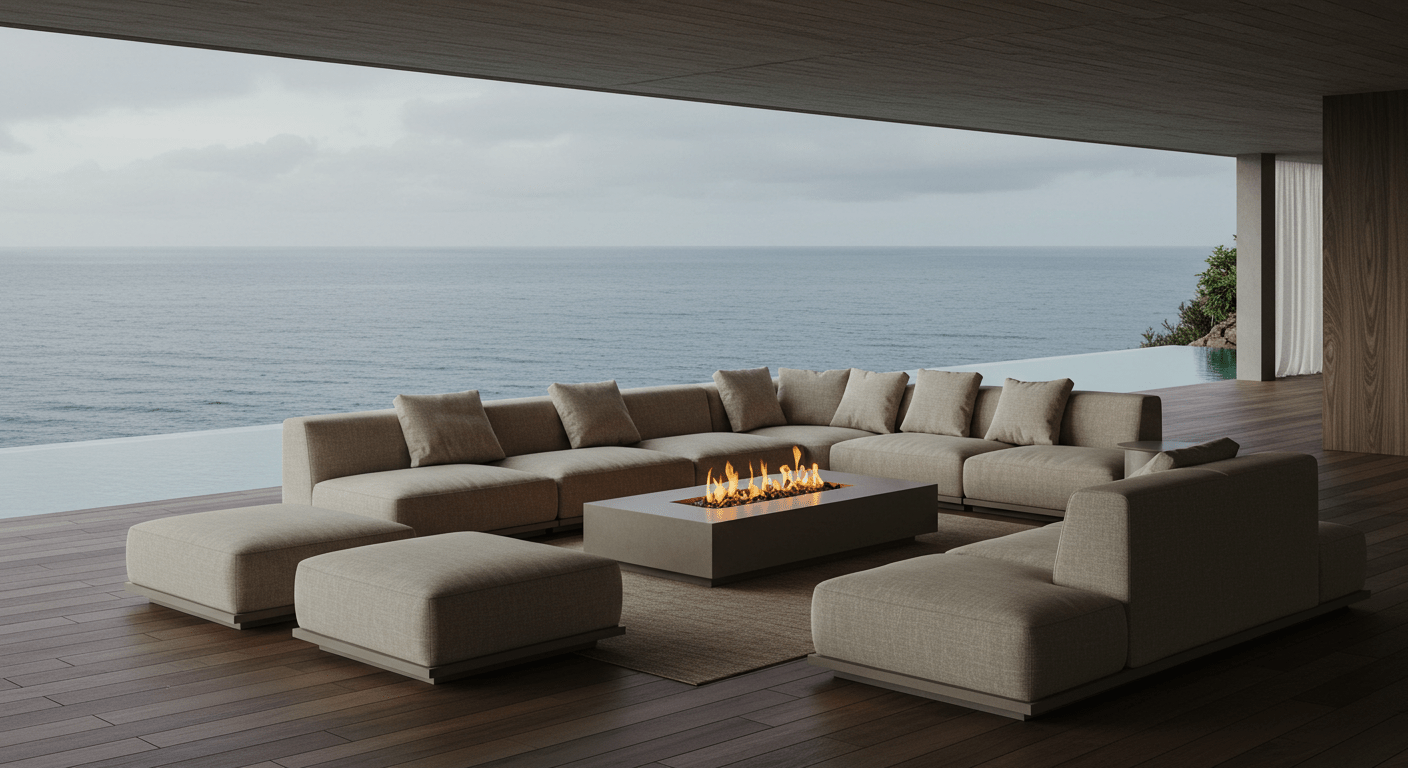
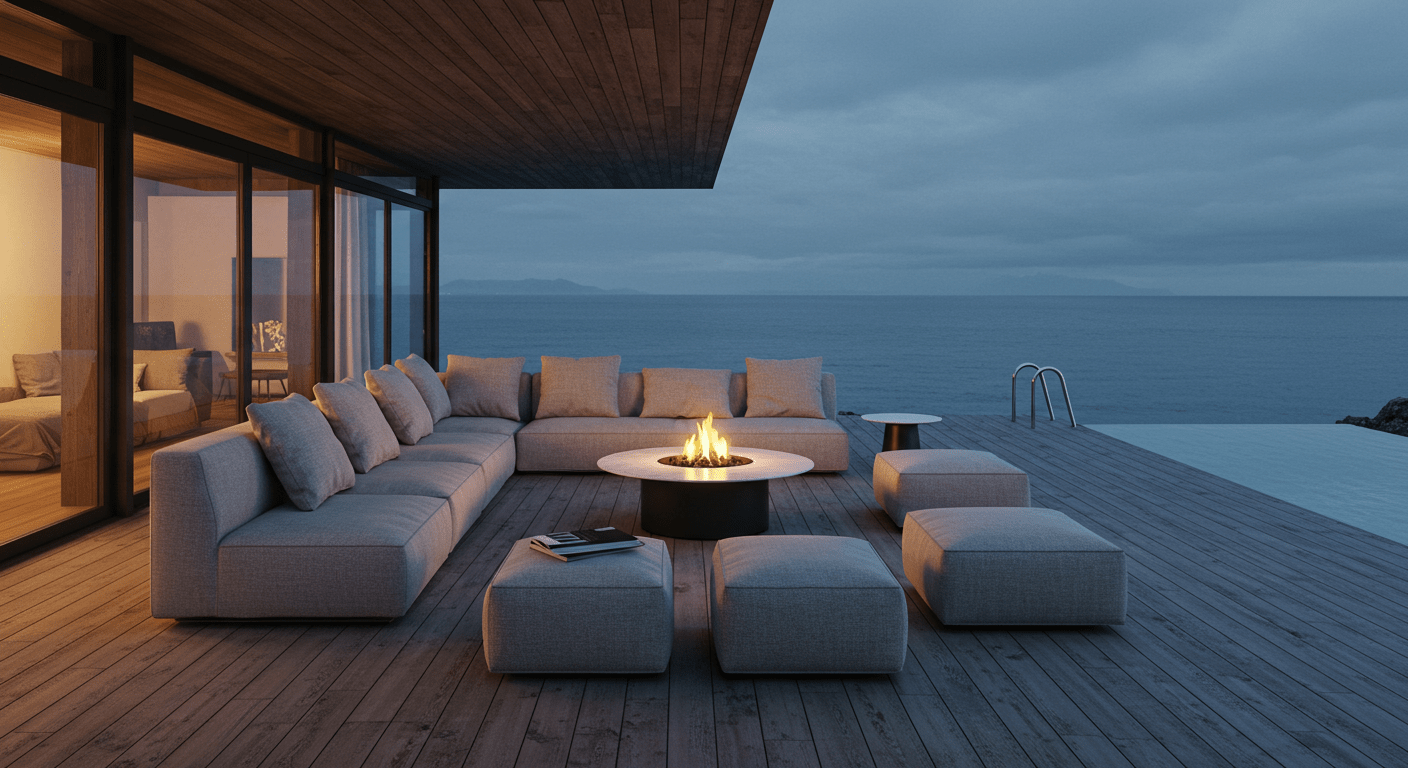
Fire tables serve as natural focal points for conversation and connection. Furniture should orient toward the flame, creating cohesive groupings that feel intentional rather than arranged around empty space. Deep-seated lounge furniture surrounded fire tables at Cliffside Terrace resort, establishing intimate zones that encouraged extended stays.
Configuration drives atmosphere. Modular seating paired with a circular fire table created a cozy, inviting atmosphere at a boutique hotel courtyard—transforming an underutilized space into the property's most popular gathering area. Commercial fire table ideas succeed when furniture selection and arrangement amplify the fire's gravitational pull rather than competing with it.
How Should Seating Density And Circulation Be Planned Around Fire Tables?
Precise clearances balance warmth and function. Optimal distance from fire edge to seat is 22-24 inches—close enough for warmth and intimacy without discomfort from heat. Service corridors require 60 inches to ensure smooth, discreet service flow while maintaining guest privacy during dining.
Traffic flow demands generous pathways. Minimum 5-foot pathways between fire tables and seating clusters in high-traffic commercial areas prevent bottlenecks and ensure safety. Fire tables for resorts operate in higher-density environments than residential settings. Inadequate circulation creates staff conflicts, guest discomfort, and code violations that negate the installation's value.
Why Is Visual Balance Important In Resort-Scale Outdoor Layouts?
Spacing creates perceived exclusivity. Staggering outdoor fire tables across a patio or terrace makes each dining area feel private and exclusive—even when multiple tables operate simultaneously. Clustering fire tables destroys this effect, making the space feel institutional rather than intimate.
Deliberate spacing shapes emotional response. Proper distribution makes guests feel relaxed and "at home"—a core goal of luxury hospitality. This perception drives satisfaction scores, repeat visits, and social media sharing. Visual balance isn't aesthetic preference—it's psychological engineering that commercial fire tables must support through thoughtful placement within the larger outdoor luxury furniture composition.
What Operational And Safety Factors Must Hotels Consider With Fire Tables?
Safety and reliability determine liability exposure. Luxury hospitality fire tables operate in high-traffic environments with continuous guest interaction, creating operational demands residential installations never face. Properties must implement strict safety protocols, maintenance schedules, and supervision practices to protect guests and staff while preserving the guest experience enhancement fire features deliver.
How Should Fire Tables Be Positioned To Maintain Guest Safety?
Clearances are non-negotiable. Position fire tables 10-25 feet from combustible structures and 21 feet from vegetation to prevent fire hazards. Gas tables require minimum 72 inches (6 feet) overhead clearance—7-10 feet is ideal for proper heat dissipation and code compliance.
Surface selection prevents catastrophic failures. Fire tables must be placed on non-flammable surfaces such as concrete or patio blocks, never directly on wooden decks. This requirement affects entire outdoor luxury furniture layouts and hardscape specifications. Commercial fire tables demand foundation planning during initial construction—not afterthought installations that compromise structural integrity.
What Reliability Expectations Exist During Peak Occupancy Periods?
Certification protects operations. ANSI Z21.97 standard addresses wind, rain, and temperature resistance—adherence is often a prerequisite for maintaining warranties and minimizing liability. Fire tables for resorts without proper certification expose properties to insurance complications and regulatory violations.
Active supervision is mandatory. Fire tables must be supervised when in use, especially when guests are present. Responsible staff should monitor flames and surrounding areas continuously during operating hours. Mandatory covers maintain manufacturer warranties—UV-resistant and rated for extreme cold (e.g., -40°F). These essential fire table accessories aren't optional; they're contractual requirements that determine whether warranty coverage remains valid.
How Do Fire Tables Impact Daily Operations And Maintenance Planning?
Operating costs require budget allocation. Annual operating cost per table ranges from $1,500 to $3,200 depending on fuel type and usage patterns. Routine maintenance costs $200-$400 annually; professional inspections cost $150-$300 annually. Commercial fire table ideas must account for these recurring expenses in pro forma calculations.
Winter maintenance protects capital investments. Six-step winter maintenance checklist: shutdown with lockout/tagout procedures, clean and dry all components, protect valves and electronics, secure covers and wind guards, store LP cylinders properly, implement winter inspection cadence. Properties that skip winterization face 40-88% shorter lifespans and costly mid-season failures during peak occupancy periods when replacements can't be sourced quickly.
What Essential Fire Table Accessories Improve Performance And Guest Comfort?
Accessories separate functional installations from optimized systems. Essential fire table accessories transform luxury hospitality fire tables from standalone features into integrated components of property-wide operations. Smart controls, protective equipment, and automation reduce labor costs, extend equipment life, and improve guest experience enhancement. Properties that treat accessories as optional face higher maintenance costs, more frequent failures, and operational inefficiencies that erode ROI.
Which Essential Fire Table Accessories Improve Usability And Control?
Smart control systems deliver operational flexibility. Remote adjustment, scene settings, and integration with other outdoor features allow staff to manage fire tables for resorts from central locations. Smart technology enables staff to ignite, extinguish, and monitor fire via user-friendly apps—offering a blend of convenience and safety critical during high-occupancy periods.
Automation eliminates manual intervention. Dusk-to-dawn sensors (photocells) automatically switch lights on and off; timers allow 24/7 load control for energy management. These systems reduce labor requirements while ensuring commercial fire tables operate consistently during guest hours without staff walking properties to manually adjust settings.
How Do Accessories Protect Fire Tables In High-Exposure Environments?
Wind guards are non-negotiable. Tempered glass surrounds are critical for maximizing heat throw and maintaining stable flames during gusts and precipitation. Without wind protection, commercial fire tables waste fuel, deliver inconsistent heat, and create poor guest experiences during moderate weather that should remain usable.
Covers and hard tops extend equipment life. Custom-fit covers should allow approximately 2 inches clearance for air circulation while protecting from elements. Aluminum hard tops (3/16" thick) convert fire tables into functional outdoor coffee or dining tables when burners aren't in use—maintaining aesthetic value and outdoor luxury furniture utility during off-hours or off-seasons.
Why Do Accessories Reduce Operational Downtime And Staff Intervention?
Weather-responsive operation extends revenue hours. Automated systems adjust or shut down lighting and fire features based on wind or rain, extending usable hours without staff monitoring. Properties capture additional operating time during marginal weather that would otherwise close outdoor spaces.
Preventive accessories eliminate failures. Proper accessory use—covers, desiccants, lubricants—prevents moisture damage, mold, and corrosion that cause mid-season breakdowns. Electronic ignition systems ensure quick, safe, and convenient flame control, reducing operational friction during busy service periods. Essential fire table accessories aren't add-ons—they're operational requirements that determine whether commercial fire table ideas deliver projected returns or become maintenance liabilities.
How Should Hotels And Resorts Evaluate Fire Table Partners And Manufacturers?
Partner selection determines project outcomes. Choosing manufacturers and installers for luxury hospitality fire tables requires evaluating capabilities beyond product specifications. Hospitality experience, customization flexibility, and delivery reliability separate partners who understand commercial fire tables from residential suppliers attempting to serve resort markets. Poor partner selection creates code violations, brand inconsistencies, and warranty disputes that cost far more than initial price differences.
Why Is Hospitality Experience Critical When Selecting A Fire Table Partner?
Compliance demands licensed professionals. Properties must work with licensed contractors for installation and ensure full compliance with local building and fire codes. Professional installation costs $1,500-$3,000 per unit—licensed contractors are required for gas lines and safety compliance. Cutting corners on installation creates liability exposure that exceeds any savings.
Track record proves capability. Documented success from premium venues like Sensei Lāna'i Four Seasons model demonstrates the importance of experienced partners. Fire tables for resorts involve complexities—permitting, utility coordination, warranty compliance—that residential installers don't encounter. Partners without hospitality portfolios learn on your property, creating delays and specification errors that impact opening schedules.
How Does Customization Capability Affect Brand Consistency?
Price reflects capability range. Fire table unit costs range from $2,500 (cast aluminum, basic concrete) to $20,000+ for premium custom materials. Custom and irregular shapes offer highest visual impact for signature spaces and artistic installations where brand differentiation matters most.
Design flexibility supports brand alignment. Commercial fire table ideas span modern/contemporary to luxury/elegant aesthetics—each requiring different material and shape combinations to align with brand standards. Manufacturers without customization capabilities force properties to compromise design intent or integrate outdoor luxury furniture that doesn't match fire table aesthetics. Brand consistency demands partners who can execute specific visions, not catalog products.
Why Do Delivery Control And Warranty Terms Matter In Hospitality Projects?
Warranties signal quality confidence. Coverage ranges from 1-2 years (low-end) to 10+ years (premium), with some manufacturers offering long-term structural guarantees exceeding 50 years. Warranty terms directly correlate with expected lifespan and manufacturer commitment to hospitality-grade construction.
Investment scale demands delivery certainty. Total initial investment varies significantly: $15,000-$40,000 for small installations with 1-2 tables to $200,000-$500,000+ for premium resorts with 10+ tables. Projects this size cannot tolerate delivery delays that push installations past opening dates. Five-year total cost of ownership ranges from $22,500 (low-end) to $65,000 (premium) per table including operating costs—making warranty coverage and parts availability critical to protecting lifecycle economics. Essential fire table accessories, replacement components, and technical support determine whether commercial fire tables deliver projected guest experience enhancement or become stranded assets when manufacturers can't fulfill service obligations.
How Are Fire Tables Shaping The Future Of Outdoor Luxury Hospitality Design?
Market trajectory shows permanence, not trend. Luxury hospitality fire tables have evolved from differentiators to baseline expectations in high-end resort design. Properties now face competitive disadvantages without fire features—not competitive advantages with them. This shift reflects measurable financial performance, guest behavior data, and fundamental changes in how properties monetize outdoor spaces.
Why Are Fire Tables Becoming Core To Experiential Hospitality Strategy?
Financial performance drives adoption. Properties with properly installed fire table amenities report 69% increases in Revenue Per Available Unit (RevPAU). Properties see 30% increases in guest satisfaction scores following fire table installation. These aren't marginal improvements—they're transformative performance metrics that justify capital allocation.
Guest behavior creates compounding effects. Increased dwell time and guest engagement directly impact property financial performance and competitive positioning. Fire tables for resorts function as passive revenue multipliers—once installed, they continuously drive higher spending without proportional increases in labor or operational costs. This economic model makes fire tables essential to experiential hospitality strategies focused on per-guest revenue rather than occupancy alone.
How Do Fire Tables Align With Long-Term Guest Experience Trends?
Sensory engagement dominates modern hospitality. Fire tables appeal directly to human senses, transforming ordinary outdoor areas into dynamic, welcoming environments that guests actively seek and remember. This aligns with broader shifts away from transactional lodging toward immersive experiences that justify premium pricing.
Social media amplifies value exponentially. Commercial fire tables generate valuable "Instagram moments" serving as free, high-quality social media marketing worth $5,000-$15,000 annually per installation. Integration has evolved from seasonal luxury to year-round operational necessity for maintaining competitive advantage. Properties without fire features increasingly lose booking consideration to competitors who offer these experiences as standard amenities integrated with outdoor luxury furniture.
Why Are Resorts Treating Fire Tables As Multi-Decade Investments?
ROI exceeds traditional capital improvements. Five-year cumulative ROI reaches 700% for moderate scenarios with consistent annual revenue of $60,000 per table. Break-even periods of 4-8 months for most commercial installations (conservative to premium scenarios) make fire tables among the fastest-returning capital investments properties can make.
Returns justify premium specifications. Commercial fire tables represent high-return, low-risk investments with 118% ROI in Year 1 (moderate scenario: $25,000 investment, $60,000 annual revenue). These economics explain why resorts specify premium materials with 30-35+ year lifespans and invest in essential fire table accessories that protect long-term performance. Properties approach commercial fire table ideas as permanent infrastructure—not furniture or decor—because financial analysis supports multi-decade planning horizons. Guest experience enhancement through fire features delivers returns that compound annually, making early adoption and quality specification critical to capturing maximum value over equipment lifespans.
Transform Your Resort's Outdoor Spaces With Commercial Fire Tables
Ready to elevate your property's guest experience and capture proven revenue increases? Cooke's design experts specialize in luxury hospitality fire tables engineered for commercial environments.
Our team guides resort managers through fire table selection, outdoor luxury furniture integration, and compliance requirements specific to hospitality applications. With documented case studies showing 69% RevPAU increases and 118% first-year ROI, commercial fire tables represent one of the highest-returning capital improvements available to luxury properties.
Cooke's hospitality design team specializes in premium custom fire tables engineered for the unique demands of resort and hotel environments. Contact us to evaluate how commercial-grade fire features can transform your outdoor spaces into year-round revenue centers that guests remember and return to experience. Schedule your consultation today to explore design options tailored to your property's architectural character, regional climate challenges, and target guest demographics.



,%2030%25%20higher%20guest%20check%20sales,%20and%20118...)