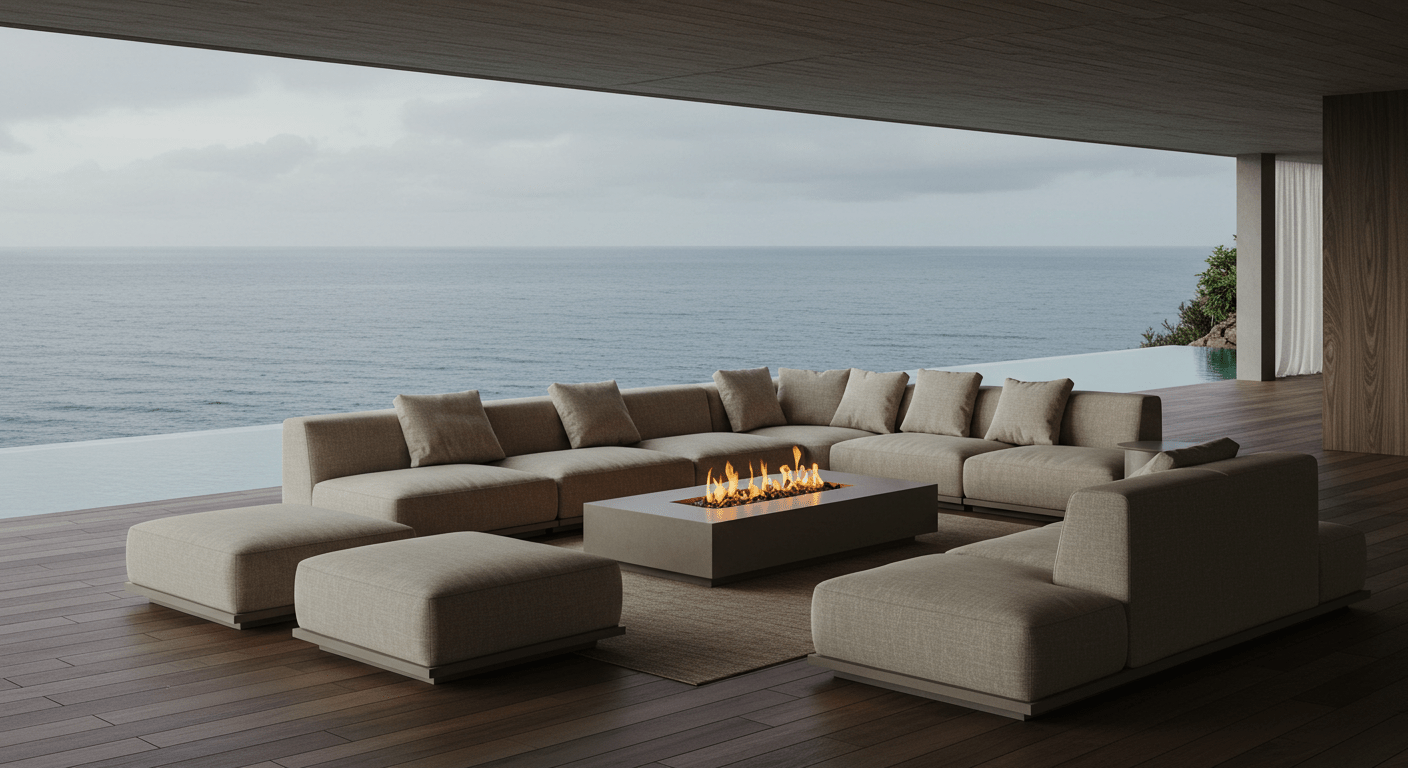
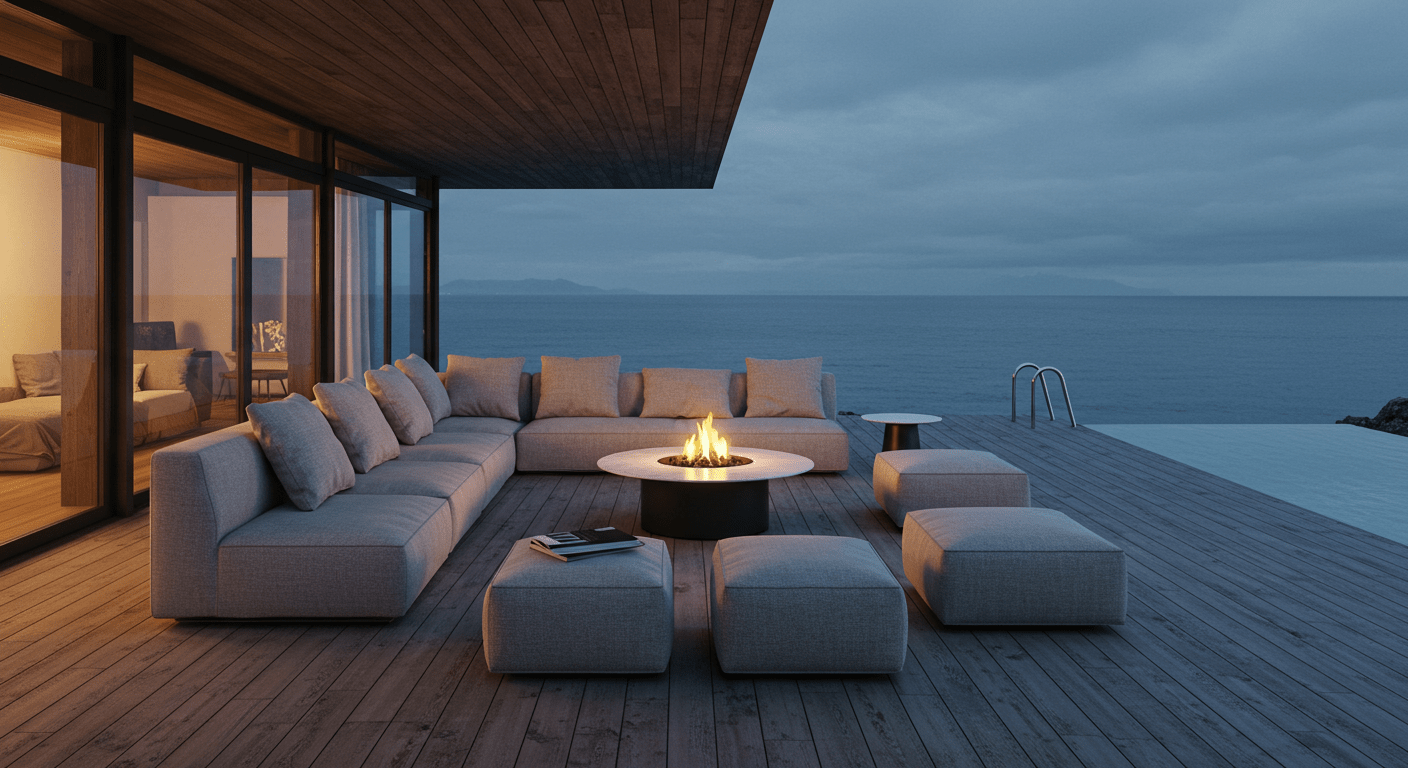
Integrating Fire Tables with Outdoor Kitchens: Design Harmony for Restaurant Properties
Key Takeaways
- Fire tables increase revenue through extended dwell time: Guests linger 95 minutes versus 65 minutes at traditional outdoor seating, ordering additional drinks and desserts. Natural gas installations generate $12,000-$15,000 estimated annual revenue while extending seasonal operations into cooler months.
- Commercial specifications differ drastically from residential features: Commercial fire tables require 60,000-250,000 BTUs for warmth applications, 90,000+ BTUs for cooking, UL/CSA certification (ANSI Z21.97 or CSA 2.41), and materials like cast concrete, natural stone, or #304 stainless steel that withstand high-traffic environments.
- Clearance requirements determine layout viability: Maintain 3 feet from flame to seating for ambiance applications, 10-20 feet for cooking operations. Seating positions 18-24 inches from fire edge. Separation between cooking zones and dining areas prevents cross-traffic and maintains service flow.
- Natural gas delivers superior ROI compared to alternatives: Natural gas achieves 73-76% ROI with $800 annual operating costs versus wood-burning's 50% ROI and $1,500 annual costs. Silent, odorless operation suits fine dining while eliminating refueling interruptions and daily maintenance demands.
- Social media impact drives organic brand visibility: Fire table dining scores 9.5 versus 5.2 for social sharing compared to traditional outdoor seating. Instagram-worthy moments create free promotion as guests document experiences, positioning properties as premium destinations without paid advertising spend.
Commercial fire pit tables for restaurants transform underperforming outdoor spaces from weather-dependent seasonal amenities into profitable year-round revenue generators. Successful installations demand strategic planning that addresses performance specifications, safety compliance with local codes, spatial design that maximizes covers, and operational workflows that support efficient service. This guide examines how thoughtfully specified fire features enhance the guest experience, extend average dwell time and check totals, and position your establishment as a premium dining destination worth seeking out regardless of season.
Restaurant owners, property developers, and designers will understand clearance requirements, fuel selection, layout strategies, and partner evaluation criteria. Fire tables function as infrastructure investments—not decorative additions—delivering measurable returns through increased spending, social media visibility, and repeat visits. Proper integration aligns brand identity with architectural intent, creating cohesive outdoor kitchen design fire table installations that feel purposeful rather than improvised across commercial restaurant properties.
What Defines Successful Outdoor Kitchen Design for Modern Restaurant Outdoor Spaces?
Restaurant outdoor spaces perform as revenue centers when design, functionality, and guest experience align. Fire table integration transforms passive patios into active dining environments that extend service hours, increase per-table revenue, and drive repeat business. Success requires commercial-grade infrastructure, safety compliance, and deliberate spatial planning distinct from residential applications.
How Do Outdoor Kitchens Function as Revenue-Generating Dining Environments Rather Than Amenities?
Fire table dining generates measurable revenue through extended dwell time and increased spending. Guests linger 95 minutes versus 65 minutes at traditional outdoor seating, ordering additional drinks, appetizers, and desserts. Natural gas fire tables produce $12,000-$15,000 in estimated annual revenue per installation. Fire tables function as attended appliances, creating ambiance that keeps guests seated longer and spending more.
Social media amplification drives organic brand visibility. Fire table for dining and bar setups score 9.5 versus 5.2 for traditional outdoor dining in guest photo sharing. Instagram-worthy moments provide free promotion as guests document experiences. This visibility attracts new customers while reinforcing brand positioning without paid advertising spend.
Why Do Restaurant Outdoor Spaces Require Different Design Logic Than Residential Patios?
Commercial fire table installations demand robust construction and regulatory compliance. Cast concrete, natural stone, or heavy-gauge steel frames withstand high-traffic environments. #304 stainless steel burners resist corrosion in exposed conditions. UL or CSA certification (ANSI Z21.97 or CSA 2.41) is mandatory—non-negotiable for liability and insurance.
Installation requires licensed gas contractors and electricians. Commercial applications integrate flame sensing, automatic gas shut-offs, and emergency stop mechanisms. Regular maintenance schedules inspect for leaks and blockages. Fire tables operate as attended appliances requiring continuous monitoring, not set-and-forget residential features. Restaurant outdoor spaces prioritize safety systems, durability, and code compliance over aesthetic flexibility.
How Does Outdoor Kitchen Design Influence Guest Perception, Dwell Time, and Repeat Visits?
Fire-centered outdoor kitchen design elevates satisfaction across all metrics. Overall guest satisfaction reaches 8.7 versus 7.3 for traditional outdoor dining. Ambiance ratings climb to 9.2 from 6.8. Return likelihood increases to 8.9 compared to 7.1. Fire serves as a visually striking focal point that holds attention and extends stays.
Dwell time impacts directly correlate with revenue. The Rustic Tap & Grill reported 45% longer average stays after fire table integration. Seasonal extension matters—fire tables enable comfortable outdoor dining during cooler months, expanding revenue-generating periods. Guests associate fire-centered layouts with premium experiences, justifying higher menu pricing and positioning properties as destinations rather than convenience options.
How Can Fire Tables Be Seamlessly Integrated into Outdoor Kitchens for Commercial Restaurant Properties?
Seamless fire table integration requires intentional spatial planning that separates service operations from guest experience. Positioning, fuel type, and material selection determine whether installations enhance or hinder workflow. Successful outdoor kitchen design fire table integration balances visual impact with operational efficiency.
How Does Fire Table Integration Support Both Dining Flow and Visual Cohesion?
Fire tables belong in dining and lounge zones, not cooking areas. Separation between outdoor kitchen operations and fire table placement maintains smooth workflow. Service staff move efficiently without crossing guest spaces, preventing safety issues and service interruptions. Fire tables function as focal points that organize seating naturally around central gathering spots.
Integration into existing luxury outdoor furniture and architectural elements creates visual continuity. The Veranda at The Grand Oak embedded a natural gas fire table into a marble-topped bar, achieving seamless luxury design. Clean-burning fuels like natural gas and bioethanol enable integration into benchtops and bars without ventilation complications. This approach reduces maintenance demands while preserving aesthetic cohesion across restaurant outdoor spaces.
Where Should a Fire Table Kitchen Element Be Positioned Within Prep, Service, and Seating Zones?
Fire table for dining and bar applications perform best in guest-facing areas, never in prep or service zones. Avoid high-traffic paths, entrances, and main walkways where flowing clothing or hair creates hazards. Three placement strategies address different spatial needs.
Central placement positions the commercial fire table as a seating area focal point, creating natural gathering spots. Linear placement uses elongated fire features to define patio edges or separate zones visually. Integrated placement incorporates fire tables into countertops or bars for custom, built-in aesthetics. The Beachside Grill at The Coral Sands demonstrates hybrid strategy—a large built-in natural gas fire pit anchors the main dining area while portable propane fire tables create intimate beach seating zones.
How Do Integrated Fire Tables Enhance Comfort Without Disrupting Operations?
Natural gas fire tables deliver silent, odorless operation that preserves dining ambiance. Conversations flow naturally without smoke, noise, or fuel odors. This makes natural gas ideal for refined restaurant outdoor spaces where atmosphere matters. Operating costs run $800 annually—lowest among fuel options—with no refueling interruptions or tank replacements.
Electronic ignition systems eliminate manual lighting procedures, reducing staff workload and failure points. Minimal maintenance requirements keep staff focused on service rather than fire table management. Permanent natural gas installations provide consistent performance without operational complexity, enabling luxury outdoor furniture arrangements and fire table kitchen integration that function reliably across service periods.
Why Are Commercial Fire Tables Essential for High-Traffic Restaurant Outdoor Spaces?
Commercial fire table specifications address durability, performance, and revenue generation demands that residential features cannot meet. Heat output, construction materials, and maintenance requirements determine whether installations withstand high-traffic conditions while delivering consistent guest experiences. Infrastructure-grade equipment justifies investment through measurable returns and operational longevity.
What Performance Requirements Separate a Commercial Fire Table From Residential Fire Features?
BTU output defines functional capacity. Decorative residential fire pits operate at 30,000-50,000 BTUs—insufficient for commercial applications. Commercial fire table installations require 60,000-250,000 BTUs for effective warmth across expansive restaurant outdoor spaces. Cooking applications demand minimum 90,000 BTUs to achieve searing temperatures. High-performance systems reach 380,000 BTUs for large patios or cold climates.
Heat output scales with space size and climate conditions. Larger patios require higher BTU ratings to maintain comfort across seating zones. Cooler climates demand increased output to extend seasonal viability. Commercial fire table specifications must match venue scale and geographic location—undersized installations fail to deliver guest comfort or operational value.
How Do Durability, Materials, and Construction Impact Long-Term ROI?
Material selection determines lifecycle costs and returns. Natural gas fire tables deliver 73-76% ROI on $4,500-$8,500 initial investment. Propane achieves 68-69% ROI at $3,500-$6,500 upfront cost. Wood-burning systems produce only 50% ROI despite lower $3,000 entry price, burdened by $1,500 annual operating costs versus $800 for natural gas.
Commercial-grade construction uses cast concrete, natural stone, or heavy-gauge steel frames with #304 stainless steel burners. These materials withstand high-traffic exposure and temperature extremes (minimum 90°F/32°C tolerance). Weather-resistant, easy-to-clean surfaces reduce maintenance downtime and labor costs. Durable luxury outdoor furniture and fire table kitchen components maintain appearance and function across years of continuous service, protecting investment value.
Why Do Hospitality Operators Evaluate Fire Tables as Infrastructure, Not Décor?
Fire tables function as revenue-generating infrastructure, not aesthetic enhancements. Natural gas installations produce $12,000-$15,000 estimated annual revenue through extended dwell times—95 minutes versus 65 for traditional seating. This 46% increase translates to measurable per-table spending growth. Seasonal extension into cooler months expands revenue-generating periods beyond summer-only operation.
Infrastructure evaluation requires comprehensive commercial warranties and replacement parts availability. Regular maintenance schedules prevent operational downtime and ensure consistent guest experiences. Total cost of ownership includes initial investment, annual operating expenses, and maintenance requirements. Fire table for dining and bar installations justify capital expenditure through documented returns, not subjective design preferences. Operators assess commercial fire table purchases using the same metrics as HVAC systems or kitchen equipment—performance, reliability, and financial impact.
What Layout Strategies Work Best When Combining Fire Tables With Dining and Bar Areas?
Fire table placement dictates traffic flow, seating capacity, and safety compliance. Clearance requirements, zoning principles, and seating configurations determine functional layouts. Strategic positioning guides guest movement and staff workflow without physical barriers while maximizing usable space.
How Does a Fire Table for Dining and Bar Seating Change Spatial Planning?
Clearance requirements establish minimum spatial boundaries. Maintain 3 feet from flame to combustible materials or seating—greater distances required for higher BTU outputs and specific local codes. Seating positions 18-24 inches from fire edge to seat edge. If the fire table rim serves drinks or small plates, flames must sit 12 inches from rim edge. Burners center at least 4 inches from pit edge to prevent material overheating.
Functional zoning separates cooking, dining, and relaxation areas with clear pathways. Cooking zones remain distinct from dining and lounge spaces to eliminate cross-traffic and maintain service flow. This separation prevents staff-guest collisions and isolates heat, smoke, and activity from seated guests. Outdoor kitchen design fire table integration requires deliberate zoning—operational areas and guest-facing spaces function independently while maintaining visual cohesion across restaurant outdoor spaces.
When Should Fire Tables Anchor Communal Seating Versus Intimate Table Groupings?
Central placement creates communal gathering spots that encourage social interaction and maximize fire table visibility. Linear configurations define zone edges or create visual separations while accommodating larger groups. The Beachside Grill demonstrates hybrid strategy: a large built-in natural gas fire pit anchors communal main dining while portable propane tables establish intimate beach seating zones.
Propane portability enables flexible arrangements for private events and seasonal variations. The resort's "toes-in-the-sand" private dining with personal propane fire table and dedicated server became their most popular premium offering. Communal layouts maximize capacity and social energy for high-volume periods. Intimate groupings command premium pricing and serve special occasions. Commercial fire table selection—built-in natural gas versus portable propane—determines which seating strategies remain viable across service types and seasons.
How Can Fire Tables Guide Circulation Without Physical Barriers?
Fire tables function as focal points that organize movement patterns naturally. Positioning away from high-traffic areas and main walkways prevents accidents while creating psychological boundaries. Guests navigate around fire features instinctively, requiring no physical barriers when clearances meet code requirements.
Linear fire table for dining and bar placements define patio edges or zone separations, providing functional and aesthetic benefits. Long installations create visual divisions that guide circulation between dining, lounge, and service areas. Spatial planning establishes clear pathways for guest and staff movement while fire features anchor each zone's identity. This approach maximizes usable square footage—safety clearances double as circulation corridors rather than dead space. Luxury outdoor furniture arrangements respond to fire table positioning, completing the circulation system through furniture placement rather than railings or planters.
How Does Fire Table Integration Affect Safety, Codes, and Operational Planning?
Fire table installations trigger regulatory review, clearance requirements, and ongoing compliance obligations. Early planning addresses ventilation, fuel systems, and inspection schedules before construction begins. Coordination between fabricators, designers, and authorities prevents costly redesigns and operational delays.
What Clearance, Ventilation, and Fuel Considerations Must Be Addressed Early?
Clearance distances vary by application intensity. Ambiance-only installations require 3 feet from flame to seating. Cooking applications demand 10-20 feet from combustibles. High-heat operations near temporary structures require 20 feet from tents or canopies and 10 feet from food booths. NFPA 96 principles for fire suppression, grease management, and ventilation extend to high-BTU outdoor cooking despite the standard's indoor focus.
Material specifications protect surrounding infrastructure. Surfaces directly surrounding and beneath fire tables must tolerate minimum 90°F (32°C) without damage. Non-combustible materials are mandatory for outdoor kitchen design fire table integration into countertops and bars. Gas-fueled systems—natural gas or propane—dominate commercial fire table installations due to superior safety profiles and code compliance compared to wood-burning alternatives. Natural gas requires professional installation with dedicated gas lines. Propane demands regular tank replacement but offers installation flexibility across restaurant outdoor spaces.
How Do Fire Table Kitchens Differ From Standalone Fire Installations in Compliance Planning?
Fire table kitchen applications trigger health department and fire marshal review before installation. Local authorities require detailed plan submissions and approval for any outdoor cooking operation. UL/CSA certification (ANSI Z21.97 or CSA 2.41) is mandatory for all components. Operators must secure local permits and coordinate fire department inspections prior to operation.
Wood-burning systems face heightened restrictions. Local fire codes often limit or prohibit wood-burning commercial fire table use in urban settings due to fire risks and emissions. The Rustic Tap & Grill invested in robust fire suppression systems and extensive staff training to operate wood-burning installations legally. Daily cleaning, ash disposal, and frequent inspections add operational burden versus gas alternatives. Wood-burning suits rustic or resort concepts with appropriate safety infrastructure and regulatory clearance—not standard fire table for dining and bar applications in most jurisdictions.
Why Is Early Coordination With Fabricators and Designers Critical for Approvals?
Licensed professionals must execute all installations. Certified gas contractors and electricians prevent leaks and ensure safety feature function. Integrated placement into luxury outdoor furniture, countertops, or bars requires custom fabrication coordinated before construction begins. Access to gas lines, burners, and ignition systems must be designed into initial plans for routine maintenance and inspection.
Manufacturer coordination secures comprehensive commercial warranties and replacement parts availability. Service contracts with manufacturers or specialized technicians provide annual inspections and repairs. Commercial liability insurance providers require engagement before installation to confirm coverage—policies may exclude improperly installed or non-certified equipment. Early coordination prevents approval delays, ensures code compliance, and establishes maintenance infrastructure. Operators who coordinate fabricators, designers, and authorities during planning avoid expensive retrofits and operational shutdowns after installation.
When Should Restaurants Choose Fire Tables Instead of Traditional Fire Pits?
Fire tables deliver functional surfaces and dining integration that traditional fire pits cannot match. Rim surfaces, height specifications, and portability options support diverse service models and meal periods. Fire pit vs. fire table decisions hinge on whether installations serve pure ambiance or dual-purpose dining functionality.
How Does the Fire Pit Vs. Fire Table Decision Change in Dining-Focused Environments?
Fire tables provide functional surfaces for beverages and small plates—traditional fire pits do not. Rims must position flames 12 inches from edge when serving this purpose. This functional capacity enables fire table for dining and bar applications where guests need stable surfaces within arm's reach. Fire tables integrate into countertops and bars seamlessly, creating refined atmospheres suited to fine dining. The Veranda demonstrates this advantage: fire table embedded in marble-topped bar delivers sophisticated ambiance without sacrificing bar functionality.
Traditional fire pits serve pure ambiance in lounge-focused restaurant outdoor spaces. Without functional rim surfaces, they suit conversation areas and waiting zones better than active dining. Fire tables offer superior spatial efficiency in dining layouts—guests access table surfaces while fire provides warmth and visual interest. This dual function maximizes return per square foot in space-constrained venues where every surface must justify its footprint.
Why Are Fire Tables Better Suited for Seating Integration and Service Flow?
Fire tables maintain 18-24 inch fire-edge-to-seat clearance, optimizing seating density without compromising safety. Height specifications align with dining and bar standards, enabling luxury outdoor furniture arrangements that feel cohesive rather than improvised. Integrated placement into countertops and bars elevates design sophistication—installations appear architectural, not added afterthought.
Linear commercial fire table configurations define zones while preserving service flow. Central placement creates gathering spots without blocking pathways. The Veranda's marble-topped bar integration demonstrates simultaneous service and ambiance—bartenders work efficiently while fire enhances guest experience. Fire tables at proper dining height support comfortable eating and drinking positions. Traditional fire pits sit lower, forcing awkward reach angles that disrupt dining ergonomics and service efficiency.
How Do Fire Tables Provide Greater Flexibility Across Meal Periods?
Propane fire tables enable portable reconfiguration between breakfast, lunch, dinner, and private events. The Beachside Grill leverages this flexibility to customize outdoor kitchen design fire table integration for varying service demands throughout the day. Morning coffee stations transform into evening cocktail bars with fire table as consistent focal point—furniture moves, fire feature remains.
Electronic ignition systems activate instantly for different dining periods without setup delays. Natural gas installations require zero refueling between services, maintaining operational continuity. Multi-level grill grates on fire table kitchen installations create variable heat zones for different menu items—searing steaks at high heat while warming sides at lower temperatures. This versatility supports diverse culinary programs from single installation. Fixed traditional fire pits cannot relocate for event needs or accommodate cooking accessories that expand menu capabilities across dayparts.
How Do Fire Tables Enhance Guest Experience and Revenue Potential?
Fire tables transform restaurant outdoor spaces from functional seating into memorable experiences that drive spending and repeat visits. Measurable improvements in satisfaction, dwell time, and social sharing translate directly to revenue. Guest perception shifts from transactional dining to destination-worthy occasions when fire becomes the focal point.
How Does Fire Contribute to Intimacy, Warmth, and Evening Activation?
Fire table dining scores 9.2 versus 6.8 for ambiance and 8.7 versus 7.3 for overall satisfaction compared to traditional outdoor seating. Fire creates visually striking focal points that generate intimate atmospheres—guests perceive fire-centered layouts as more refined and intentional. Evening activation shows greatest impact: 95-minute dwell time versus 65 minutes traditional. Extended stays increase beverage, appetizer, and dessert orders per table.
Seasonal extension drives revenue beyond summer-only operation. Fire tables provide warmth that makes restaurant outdoor spaces viable during cooler months, expanding profitable service periods. The Veranda demonstrates atmosphere creation—fire table integration produces sophisticated, romantic evening dining ambiance that elevates guest perception. Natural gas operation remains silent and odorless, preserving conversation quality while delivering visual and thermal benefits that justify premium positioning.
Why Do Guests Associate Fire-Centered Layouts With Premium Dining Experiences?
Return likelihood reaches 8.9 versus 7.1 for fire table versus traditional outdoor dining. Fire table for dining and bar installations outperform traditional setups across every measured metric—satisfaction, ambiance, social sharing, and return intent. Guests cite fire tables as decision factors when choosing dining venues, particularly for evening reservations. The Veranda reports guest feedback identifying fire features as primary dining motivation during cooler periods.
Premium pricing finds support in differentiated experiences. The Beachside Grill's "toes-in-the-sand" private dining with personal fire table became the property's most popular premium offering, demonstrating willingness to pay for fire-centered exclusivity. Fire tables position properties as destinations for romantic occasions and celebrations rather than convenient meal locations. Brand differentiation through commercial fire table integration justifies higher menu pricing and attracts guests seeking memorable experiences over basic dining transactions.
How Do Fire Tables Increase Photo Sharing and Brand Visibility?
Social media sharing scores 9.5 versus 5.2 for fire table versus traditional outdoor dining. Fire creates Instagram-worthy moments that guests document and share voluntarily—free promotion with authentic endorsement. Visually striking focal points encourage photography without prompting. Dramatic lighting from flames produces atmospheric images ideal for social platforms where guests showcase dining experiences.
Enhanced engagement translates to marketing advantage without paid advertising spend. Organic brand awareness grows as guests tag locations and share images across networks. Real-world examples demonstrate fire features becoming signature shareable elements that identify properties visually. Outdoor kitchen design fire table integration with luxury outdoor furniture creates cohesive branded environments that photograph distinctively. This user-generated content drives discovery and consideration among audiences that trust peer recommendations over traditional advertising—measurable marketing value from infrastructure investment.
What Defines a Well-Executed Fire Table Integration Strategy for Restaurant Properties?
Successful fire table integration aligns brand identity, operational capabilities, and architectural intent. Execution quality separates installations that feel purposeful from those that appear added as afterthoughts. Partner selection, material coordination, and compliance planning determine whether commercial fire table investments deliver promised returns.
How Do Design Intent, Operations, and Brand Alignment Intersect?
Brand identity dictates fuel type, placement strategy, and guest interaction model. The Rustic Tap & Grill deployed wood-burning fire tables with "grill-your-own" skewers and s'mores kits—rustic brand positioning supported interactive cooking despite daily maintenance demands. The Veranda selected sleek linear natural gas fire table for dining and bar purely for ambiance, aligning with upscale fine dining where cooking distractions would undermine sophistication. The Beachside Grill combined natural gas and propane installations, matching resort flexibility needs across diverse guest experiences.
Operational requirements follow brand decisions. Wood-burning demands daily cleaning, ash disposal, and frequent inspections. Gas systems require minimal maintenance, freeing staff for service focus. Materials and finishes must match surrounding aesthetic—outdoor kitchen design fire table integration succeeds when fire features blend seamlessly with luxury outdoor furniture and architectural finishes. Brand differentiation emerges from unique dining formats and interactive experiences, not generic fire pit additions to restaurant outdoor spaces.
Why Do the Best Integrations Feel Architectural Rather Than Decorative?
Integrated placement into countertops, bars, or built-in features creates seamless custom design that elevates sophistication. The Veranda embedded fire table into marble-topped bar—installation reads as architectural intent, not decorative addition. Real-world examples demonstrate fire features functioning as structural elements within benchtops and bars, organizing space rather than occupying it.
Material coordination reinforces architectural integration. Non-combustible surfaces surrounding fire table kitchen installations use cast concrete, natural stone, or heavy-gauge steel matching existing finishes. Functional zoning with clear pathways makes fire tables integral to circulation and space organization. Fire features positioned to create sense of place guide movement patterns naturally. Architectural integration requires early coordination with fabricators and designers for regulatory approvals—afterthought installations compromise safety clearances and design cohesion. Commercial fire table execution succeeds when installations appear inevitable rather than optional.
How Should Operators Evaluate Partners for Commercial Fire Table Execution?
Licensed professionals—certified gas contractors and electricians—must execute all installations to ensure compliance and prevent leaks. UL/CSA certification (ANSI Z21.97 or CSA 2.41) is non-negotiable for liability and insurance coverage. Comprehensive commercial warranties and replacement parts availability separate infrastructure-grade partners from residential suppliers. Service contracts with manufacturers or specialized technicians provide annual inspections and repairs that prevent operational downtime.
Regulatory expertise determines approval success. Partners must understand NFPA 96 principles for ventilation, grease management, and fire suppression systems. Local fire marshals and health departments require consultation during planning—experienced partners navigate these requirements efficiently. Commercial liability insurance providers must confirm coverage before installation begins. Evaluate partners on staff training capabilities for safe operation, emergency procedures, and cooking techniques. Manufacturer support for ongoing maintenance and parts availability protects long-term investment. Partner selection determines whether fire table for dining and bar installations deliver compliance, performance, and revenue—or create liability and operational burden.
Ready to Transform Your Restaurant's Outdoor Space With Fire Table Integration?
Cooke's design team specializes in commercial fire table installations that align performance, compliance, and brand identity. Our experts navigate clearance requirements, fuel selection, and regulatory approvals while coordinating fabricators, licensed contractors, and local authorities.
We deliver outdoor kitchen design fire table solutions engineered for high-traffic restaurant environments—from natural gas installations integrated into luxury outdoor furniture to portable propane configurations for flexible seating.
Cooke's design team works with restaurant owners and hospitality operators to evaluate outdoor spaces and identify opportunities for luxury fire pit tables that transform guest experiences. Contact us to review layout strategies tailored to your service style, explore custom solutions that encourage longer visits and higher check averages, and discover how social-worthy fire features generate organic marketing that paid advertising cannot replicate. Let us help you create outdoor dining spaces guests actively choose over indoor alternatives.