Planning Your Property's Outdoor Legacy: Fire Tables For Generational Investment
Key Takeaways
- Fire tables increase revenue and value. Hotels see +30% guest satisfaction, 20% higher rates, and 25–40% longer dwell time; premium installs add $15k–$30k in appraised value.
- Choose heirloom-quality materials. Natural stone + 304 stainless steel delivers 20–30+ year performance; far beyond residential-grade pieces.
- Plan for the total cost of ownership. Expect $300–$1,200/yr in maintenance to avoid costly failures and protect warranties and resale.
- Fuel and safety drive operations. Natural gas often cuts operating costs ~75% vs propane; flame-sensing systems reduce liability.
- Documentation and brand legacy design matter. Service logs, permits, and proven vendor portfolios preserve value through ownership transitions.
The difference between a forgettable patio and an unforgettable outdoor experience often centers on a single element: fire. For commercial properties competing in today's experience economy, outdoor fire tables have evolved from optional amenities to essential investments that drive measurable returns.
Properties with professional fire installations report 30% increases in guest satisfaction scores, command 20% higher nightly rates, and see guests linger 25-40% longer; directly impacting F&B revenue. Yet the gap between residential-grade furniture that fails within three years and commercial-grade installations that anchor properties for decades remains poorly understood.
This guide bridges that gap, providing property owners, general managers, and design professionals with the technical knowledge and financial frameworks needed to specify, install, and maintain fire tables as generational assets for your outdoor living space rather than seasonal purchases.
What Does An "Outdoor Legacy" Mean, And How Do Fire Tables Fit Into It?
An outdoor legacy is the enduring value created when commercial properties invest in spaces that serve guests for decades, not seasons. Fire tables anchor these spaces as permanent gathering points that enhance property value, guest satisfaction, and brand reputation across generations.
Legacy Objectives And Outcomes
- Family gathering: Success metric: 25-40% increase in dwell time; Time horizon: 20-30+ years with natural stone materials; Typical pitfall: Choosing residential-grade furniture that fails within 2-3 years
- Resale appeal: Success metric: 67% average ROI on natural stone gas fire pit installations; Time horizon: 10-15 year property value increase of 10-15%; Typical pitfall: Not maintaining proper documentation for warranty transfer
- STR income: Success metric: 20% higher nightly rates and 25% increase in booking rates; Time horizon: 5-year value add of $4,000-$8,000 for cost-effective models; Typical pitfall: Neglecting the $200-$400 annual maintenance needed to preserve appeal
Terminology Quick-Defs
- BTU (British Thermal Unit): Heat output measurement; 40,000 BTUs warms a 6-person dining area
- GFRC: Glass Fiber Reinforced Concrete; lightweight yet durable fire table material
- Fire media: Decorative materials covering the burner (glass, lava rock, ceramic logs)
- CSA certified: Canadian Standards Association safety approval for commercial use
- Ignition system: Electronic or manual starter mechanism for gas flow
What Types Of Fire Tables Exist, And Which Format Suits Long-Term Ownership?
Commercial properties need fire tables that balance guest capacity with operational efficiency. The right format depends on your space configuration and typical group sizes.
Height Formats Vs. Use
|
Height Format |
BTU Output |
Ideal Setting |
Guest Capacity |
Best For |
|
Bar Height |
50,000-80,000 |
Rooftop lounges, cocktail areas |
4-8 standing |
Hotels, upscale bars |
|
Dining Height |
40,000-65,000 |
Restaurant patios, resort dining |
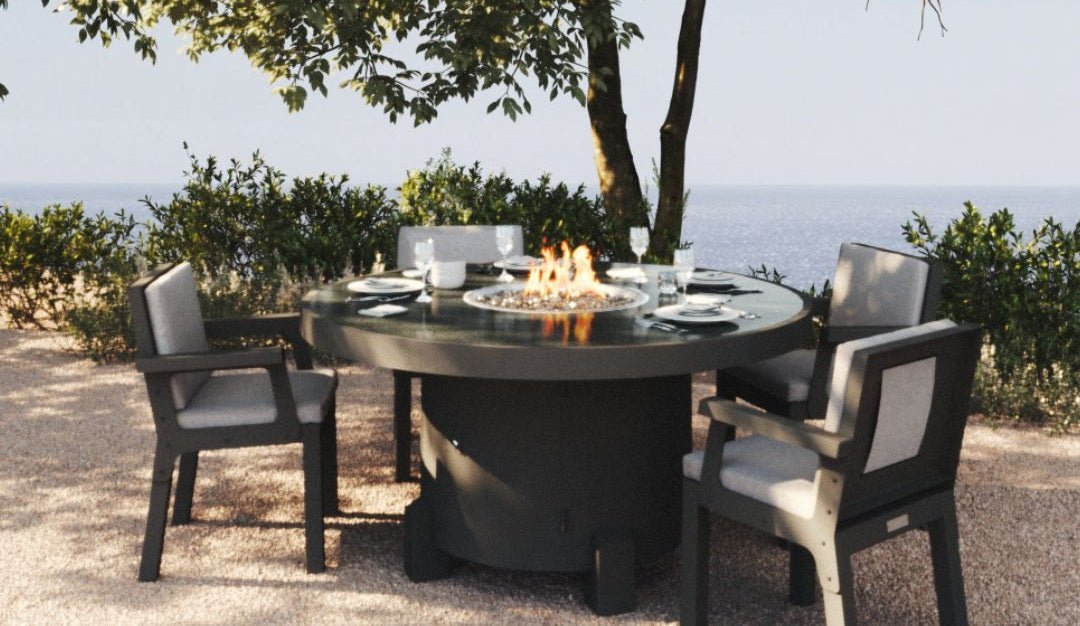
6-10 seated |
Full-service restaurants |
|
Coffee Table |
40,000-60,000 |
Lobby lounges, conversation areas |
4-6 seated |
Hotel lobbies, waiting areas |
Top Shapes Vs. Circulation
Shape choice should complement landscape design and furniture flow to preserve clear paths and revenue seats.
|
Shape |
Guest Capacity |
Traffic Flow |
Space Efficiency |
|
Fire Pit Bowl |
8-15 surrounding |
360° access |
Requires 12-15' diameter clearance |
|
Rectangular |
6-10 along length |
Linear seating |
Maximizes narrow patios |
|
Square/Round Table |
4-8 seated |
Defined seating |
Fits standard furniture layouts |
Portable Vs. Built-In
- Built-in: Professional installation increases property value immediately by up to $15,000-$30,000 for premium commercial installations. Requires permits and gas line installation, but delivers permanent value enhancement.
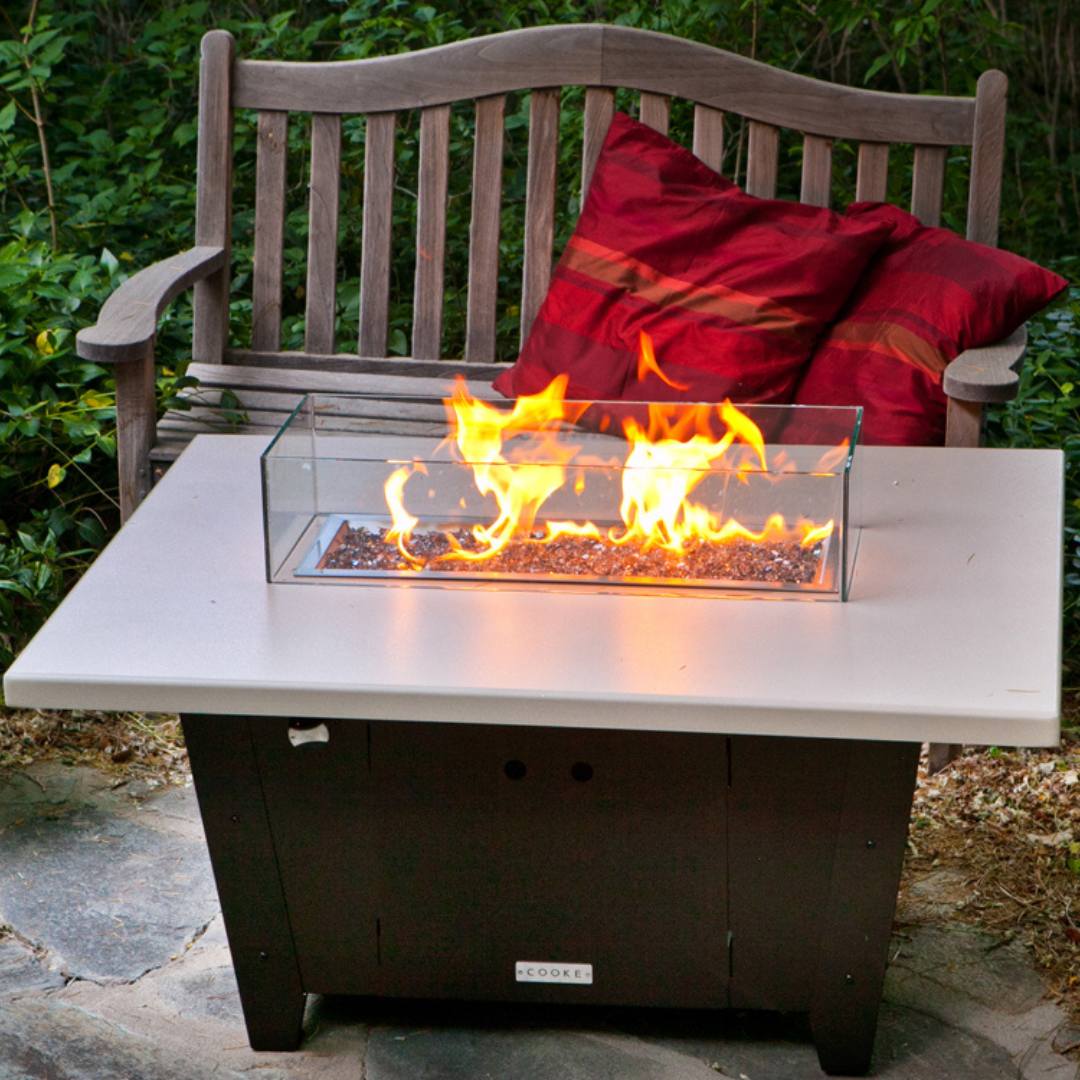
- Portable: Tabletop models ($500-$2,000) offer 50-60% ROI for corporate gifting applications. Allow seasonal repositioning and easier maintenance access without construction costs.
Which Fuel Strategy Will Serve You Best For Decades?
Fuel choice impacts operational costs, maintenance requirements, and guest experience. Natural gas dominates commercial installations for reliability and cost efficiency.
Fuel Comparison
|
Fuel Type |
BTU Range |
Operating Cost |
Best Application |
Maintenance |
|
Natural Gas |
40,000-150,000+ |
$0.50-$1.50/hour |
Permanent installations |
Annual inspection |
|
Propane |
40,000-80,000 |
$2-$4/hour |
Portable units |
Tank replacement |
|
Gel/Ethanol |
5,000-15,000 |
$3-$5/hour |
Intimate settings |
Fuel refill each use |
Note: Linear architectural features require 60,000-150,000+ BTU for proper flame presentation along extended lengths.
For linear runs in patio space constrained by wind, specify higher BTU and wind-rated components to maintain flame presentation.
What Makes A Fire Table "Legacy-Grade" In Build Quality, Safety, And Serviceability?
Legacy-grade fire tables combine commercial durability with long-term warranty protection and heirloom-quality materials selected for the climate. Material selection determines both lifespan and maintenance requirements.
Components vs. Lifespan
|
Component Material |
Expected Lifespan |
Maintenance Needs |
Cost Tier |
|
304 Stainless Steel |
15-25 years |
Minimal |
$$$ |
|
Marine-Grade Aluminum |
12-18 years |
Low |
$$ |
|
Powder-Coated Steel |
10-15 years |
Medium (recoating) |
$$ |
|
Natural Stone |
20-30+ years |
Annual sealing |
$$$ |
Warranty Signals
|
Warranty Type |
Industry Standard |
Premium Standard |
What It Signals |
|
Structural |
1-3 years |
50 years |
Manufacturer confidence |
|
Components |
1 year |
5-10 years |
Commercial durability |
|
Finish |
6 months |
2-5 years |
Quality materials |
Critical insight: 98% of commercial buyers request existing installation visits before purchase. Manufacturers with established hotel and resort portfolios demonstrate proven reliability for long-term investments.
How Should You Size And Place A Fire Table For Comfort And Safety?
Proper sizing ensures guest comfort while meeting commercial fire codes. Placement determines both operational flow and revenue potential through optimized seating capacity.
Seating Count To Dimensions
|
Seating Capacity |
Table Dimensions |
BTU Required |
Clearance Needed |
Commercial Application |
|
4-6 seats (coffee height) |
42-48" diameter |
40,000-60,000 |
6' perimeter |
Hotel lobbies, intimate lounges |
|
6-8 seats (dining) |
54-60" diameter |
50,000-65,000 |
8' perimeter |
Restaurant patios, resort dining |
|
8-10 seats (dining) |
72-84" length |
60,000-80,000 |
8' perimeter |
Event venues, large gatherings |
|
10-15 surrounding (bowl) |
36-48" bowl |
50,000-75,000 |
10' perimeter |
Resort courtyards, pool areas |
Safety requirements: Commercial installations require 36" minimum clearance to combustibles. ADA compliance mandates 48" pathways around fixed installations.
How Can A Fire Table Add Property Value Or Income Over Time?
Fire tables deliver measurable returns through increased revenue, higher property valuations, and enhanced market positioning. The investment pays dividends across multiple performance metrics.
How Does It Influence Buyer Appeal And Appraisal Conversations?
Properties with professional fire installations command premium valuations. Appraisers recognize outdoor fire features as permanent improvements, not furniture. Hotels report 30% increases in guest satisfaction scores, while 79% of guests actively prefer establishments featuring outdoor fire pits. This preference translates directly to booking decisions and rate premiums.
STR/Hospitality ROI Examples
|
Investment Tier |
Initial Cost |
Immediate ROI |
10-Year Value Add |
Annual Revenue Impact |
|
Premium Commercial |
$12,000-$25,000+ |
67% |
$25,000-$50,000 |
+$15,000-$30,000 |
|
High-End Commercial |
$8,000-$12,000 |
67% |
$18,000-$30,000 |
+$10,000-$18,000 |
|
Mid-Range |
$4,000-$8,000 |
60-70% |
$12,000-$20,000 |
+$6,000-$12,000 |
|
Cost-Effective |
$2,000-$4,000 |
80-90% |
$8,000-$15,000 |
+$4,000-$8,000 |
KPI Tracker
- Guest satisfaction: +30% improvement documented in hotel case studies; directly impacts online reviews and repeat bookings
- Dwell time: 25-40% increase in average customer stay; translates to higher F&B revenue per guest
- Operating cost: $300-$1,200 annual maintenance for commercial installations; predictable expense vs emergency replacements
- Booking premium: 20% higher nightly rates for STR properties; sustainable competitive advantage
- Occupancy lift: 25% increase in booking rates; fills shoulder seasons and weekday gaps
What Are The Main Steps To Plan And Install A Legacy-Grade Fire Table?
Commercial fire table installation requires strategic planning across 9-24 months. Success depends on early stakeholder alignment and vendor selection.
Steps 1–8
- Define objectives and budget (Months 1-2): Align ROI targets with long-term outdoor planning and brand legacy design standards. Premium installations ($12,000-$25,000) deliver the highest long-term value.
- Assess site conditions (Months 2-3): Evaluate gas line access, structural requirements, and permit needs. Coastal properties require marine-grade materials.
- Select design and materials (Months 3-6): Match architectural elements and brand standards. Natural stone lasts 20-30+ years; stainless steel lasts 15-25 years.
- Vendor evaluation (Months 6-9): Visit existing installations and verify references. 98% of commercial buyers require site visits before purchasing.
- Customization and approvals (Months 9-12): Develop custom specifications and secure design team sign-off. Allow multiple revision cycles.
- Calculate total cost of ownership (Month 12): Premium commercial units ($12,000-$25,000) require $500-$1,000 annual maintenance but deliver 50-year structural guarantees versus 1-3 year industry standard.
- Coordinate installation (Months 13-18): Schedule around property operations and peak seasons. Professional installation protects warranty coverage.
- Establish maintenance protocol (Month 18+): Schedule quarterly cleaning and annual inspections. Document all services for warranty compliance and future property sale.
How Do Materials Perform In Coastal, Cold, Or High-Sun Environments?
Environmental conditions dictate material selection. Salt air destroys standard metals in 18 months, while freeze-thaw cycles crack inferior concrete. Choose materials engineered for your specific climate challenges.
Cast Aluminum Vs Gfrc Vs Natural Stone
|
Material |
Lifespan |
Initial Cost |
Environmental Performance |
Best Application |
|
Natural Stone |
20-30+ years |
$8,000+ |
Excellent in all climates with proper sealing |
Resorts, country clubs, legacy properties |
|
Concrete/GFRC |
15-25 years |
$2,000-$8,000 |
Good; requires drainage for freeze-thaw zones |
High-traffic hospitality, custom projects |
|
Cast Aluminum |
12-18 years |
$2,000-$6,000 |
Excellent corrosion resistance; lightweight for rooftops |
Coastal properties, weight-restricted installations |
|
Stainless Steel (304) |
15-25 years |
$4,000-$10,000 |
Superior coastal performance; heat resistant |
Contemporary hotels, urban rooftops |
|
Powder-Coated Steel |
10-15 years |
$2,000-$5,000 |
Moderate; coating degrades in UV/salt |
Protected patios, seasonal use |
Critical consideration: Coastal installations require marine-grade materials. Standard metals corrode within 18 months, creating liability and replacement costs that exceed initial savings.
How Do Ignition Systems And Controls Affect Reliability And Liability?
Modern ignition systems prevent operational failures that damage reputation and revenue. Electronic controls eliminate the guest frustration of manual lighting while reducing staff liability.
How Does Flame-Sensing Technology Reduce Risk In Shared Spaces?
Flame-sensing safety systems automatically shut off gas flow if flames are extinguished, preventing dangerous accumulation. Thermocouple sensors detect flame presence within seconds, critical for commercial liability protection. A single furniture failure during a VIP event can cost $65,000+ in comped services and reputation damage; far exceeding any savings from basic ignition systems.
Commercial-grade features include wind-resistant pilots, battery backup systems, and remote shut-off capabilities. Smart controls enable staff to manage multiple units from central locations, ensuring consistent operation during peak service periods.
What Maintenance Schedule Preserves A 10- To 20-Year Lifespan?
Preventive maintenance costs a fraction of emergency replacements. Commercial properties budget $300-$1,200 annually to protect their investment and ensure uninterrupted operation.
Maintenance Cadence
|
Task |
Frequency |
Cost |
DIY vs Professional |
Consequence of Neglect |
|
Gas Line Inspection |
Annual |
$150-$300 |
Professional required |
Safety violations, liability exposure |
|
Burner Cleaning |
Quarterly |
$50-$150 DIY / $200-$400 pro |
Professional recommended |
Uneven flames, clogging, guest complaints |
|
Fire Media Replacement |
Annual |
$100-$500 |
DIY acceptable |
Aesthetic decline, poor first impressions |
|
Ignition System Check |
Semi-annual |
$75-$200 |
Professional recommended |
Operational failures during service |
|
Surface Sealing |
Annual |
$100-$300 |
Professional for stone/concrete |
Cracking, staining, premature replacement |
|
Cover Replacement |
Every 2-3 years |
$100-$400 |
DIY |
Accelerated wear, water damage |
Documentation requirement: Maintain service logs for warranty compliance and property sale preparation. Insurance carriers may request maintenance records after incidents.
How Should You Manage Risk, Insurance, And Operations At Home, In STRs, Or In HOAs?
Risk management protects both investment and reputation. Commercial properties face unique liability exposures requiring comprehensive operational protocols.
Operating Policies
Establish clear operational guidelines before installation. Commercial properties require staff training on daily startup/shutdown procedures, emergency protocols, and guest interaction policies. Create written SOPs covering weather thresholds for operation, cleaning schedules, and incident response.
Insurance considerations demand attention. Verify coverage explicitly includes outdoor fire features. Commercial general liability policies may require riders for fire tables. Document manufacturer certifications, professional installation, and maintenance compliance.
Vendor reliability directly impacts operations. Project delays from vendor failures can cost $200,000+ in pre-booked revenue losses. Protect against disruption by selecting manufacturers with proven delivery records and requiring contractual completion guarantees. Build 20% timeline buffer for custom installations.
HOA and municipal compliance vary dramatically. Secure written approvals before investment. Commercial properties typically need fire marshal inspection, gas permits, and ADA compliance certification. STR operators must verify local ordinances allowing guest-operated fire features. Residential installations may face setback requirements and architectural review processes.
When Do Alternatives Outperform A Fire Table?
Fire tables excel in social settings, but aren't universal solutions. Understanding when alternatives deliver better ROI prevents costly specification errors.
Fire Table Vs Fireplace Vs Patio Heater
|
Feature |
Fire Table |
Outdoor Fireplace |
Patio Heater |
|
Heat Output |
40,000-80,000 BTU |
80,000-150,000 BTU |
40,000-50,000 BTU |
|
Gathering Style |
360° social seating |
Linear viewing |
No gathering point |
|
Installation Cost |
$4,000-$25,000 |
$10,000-$50,000+ |
$500-$2,000 |
|
Space Required |
100-200 sq ft |
200-400 sq ft |
25 sq ft |
|
Revenue Impact |
25-40% dwell increase |
Architectural statement |
Extends season only |
|
Market Growth |
13.1% CAGR (2025-2030) |
5% CAGR |
3% CAGR |
Choose fireplaces for architectural impact in grand spaces. Select patio heaters for pure heating efficiency. Fire tables win when creating intimate gathering spaces that drive F&B revenue.
What Sustainability Choices Matter Over The Long Haul?
Sustainability drives purchasing decisions and brand perception. ESG-conscious properties leverage American-made fire tables as tangible commitments to environmental and social responsibility.
Lower-Impact Choices
- Domestic manufacturing: California production supports brand legacy design consistency and reduces shipping emissions
- Natural gas over propane: Reduces carbon footprint by 30% and eliminates tank disposal waste while cutting operating costs 75%
- Durable materials selection: 20-30 year lifespans prevent landfill waste from frequent replacements; one quality purchase versus ten disposable units
- Corporate gifting programs: Branded fire features deliver 300-400% average ROI (up to 600%) while demonstrating environmental commitment through permanent, functional gifts
- Client relationship building: Strategic luxury gifting leads to 5x greater client retention rates and 306% increase in customer lifetime value; sustainable business relationships through sustainable products
How Do You Handle Resale, Handoff, Or Inheritance Of The Amenity?
Proper documentation preserves value across ownership transitions. Commercial properties must maintain comprehensive records for warranty transfer and valuation purposes.
Transfer Packet
Compile complete documentation, including original purchase invoices, warranty certificates, installation permits, and gas line certifications. Maintain annual maintenance logs with dated service receipts; buyers discount undocumented assets by 30-50%.
Include manufacturer specifications, operating manuals, and replacement parts sources. Document custom features and material selections that justify premium valuations. Note that 75% of commercial buyers visit vendor facilities to assess manufacturing capabilities before purchase; provide vendor facility tour documentation if available.
Create visual documentation with professional photos showing seasonal configurations and typical guest usage. Include guest satisfaction metrics and revenue attribution data when possible. Transfer all smart control system access credentials and programming instructions.
What Should You Do Next To Start Your Outdoor-Legacy Plan?
Success requires methodical evaluation and stakeholder alignment. Start with clear objectives before engaging vendors. Scope the amenity within a holistic outdoor living area so fire, seating, water features, and outdoor kitchens work as one experience.
Short-List & Bids
Define your investment parameters first. Luxury hotels/resorts typically budget $500K-$5M annually for furniture and fixtures. High-end restaurants allocate $100K-$1M for outdoor dining areas. Establish your budget range and ROI expectations.
Request proposals from 3-5 qualified vendors. Require portfolio evidence from comparable properties, not residential projects. Demand specific references from properties operating for over five years. Note that 90% of commercial purchases involve multiple stakeholders in final approval; identify your decision team early.
Evaluate the total cost of ownership, not the initial price. Include 10-year maintenance projections, warranty coverage, and replacement parts availability. Visit existing installations personally; photographs hide critical details.
How Do You Schedule A Site Walk To Validate Fuel, Code, And Layout?
Professional site assessment prevents costly modifications post-purchase. Schedule your landscape architect early to coordinate utilities, grades, hardscape material transitions, and accessibility.
Request gas line capacity evaluation and permit requirement assessment. Verify structural load capacity for rooftop installations. Document setback requirements and ADA compliance paths. Photograph existing architectural elements for custom matching.
Bring your operations team to evaluate maintenance access and storage requirements. Include design stakeholders to confirm aesthetic integration. Remember that 85% of commercial buyers require direct conversations with current clients for references; schedule these during site visits to comparable properties.
Final action: Start with one signature installation rather than a property-wide deployment. Prove ROI and operational efficiency before scaling investment. Premium properties that master outdoor fire features create competitive advantages lasting decades, not seasons.
Your Next Steps Toward Outdoor Excellence
Done right, fire tables are not décor; they’re customizable fire features designed within a cohesive Outdoor Living program to perform for decades. The data proves their value: 79% of guests actively choose properties with fire features, driving occupancy and rate premiums that compound over decades.
Success requires selecting commercial-grade materials, budgeting for lifecycle maintenance, and partnering with manufacturers who understand that a single vendor failure can cost hundreds of thousands in lost revenue.
Ready to transform your outdoor spaces into revenue-generating legacy assets? Connect with our design specialists to schedule your property assessment.