Sizing Fire Tables for Your Property’s Entertaining Style: Intimate Dining to Grand Events
Key Takeaways
- Fire table sizing should start with your entertaining style—intimate dining, lounge seating, or large events—because layout purpose affects shape, heat output, spacing, and guest comfort.
- Matching table dimensions to guest count improves both experience and performance, with smaller tables serving close conversation zones and larger commercial units supporting circulation-heavy event spaces.
- Clearance and furniture spacing are critical for safety and flow, including seat frontage per guest, walkway width, and proper distance between seating and the flame.
- Dining-focused spaces typically need larger, dining-height fire tables with more usable surface area, while cocktail and social zones often perform better with lower, conversation-height models.
- Accurate site measurements, BTU-to-space planning, and environmental factors such as wind exposure help prevent costly sizing errors and determine whether a single large unit or multiple smaller tables is the better fit.
Choosing the right designer fire table size depends on how you plan to use your outdoor space. A small gathering fire pit works for intimate dinners, while a large fire table entertaining demands commercial-grade dimensions and higher heat output. This fire table dimensions guide covers everything from party size fire table selection to fire pit seating planning for terraces, courtyards, and event venues. Whether you're outfitting a boutique hotel lounge or a private residence, matching table scale to entertaining style determines guest comfort, traffic flow, and overall ambiance. The following sections break down sizing by layout type, guest capacity, and common mistakes to avoid.
Why Does Entertaining Style Matter When Choosing a Fire Table Size?
Your entertaining style dictates table shape, heat requirements, and spacing. A fire table that works for a six-person dinner will underperform at a 50-guest reception. Commercial fire table sizing starts with understanding how guests will use the space.
What Changes Between Intimate Dining, Lounge Seating, and Large Event Layouts?
Table shape and heat distribution shift based on layout type. Round fire tables promote inclusive conversation where everyone sits equidistant from the flame. Rectangular tables suit longer, narrower spaces and integrate with linear seating arrangements common in lounge or event configurations. Circular designs distribute heat more evenly, while linear models may require higher BTU outputs to achieve equivalent warmth across their full length.
Choose a round fire table if your priority is conversation and connection at smaller gatherings. Choose a rectangular or linear fire table when accommodating lounge seating, L-shaped sectionals, or large event layouts where guests circulate rather than sit in fixed positions. Properties with outdoor tables with fire pit features report 89% longer average guest stays and 80% better social engagement—metrics that justify matching shape to intended use.
How Do Guest Count, Dwell Time, and Table Purpose Affect Sizing Needs?
Guest count and intended purpose determine how many fire tables you need and how large each should be. For ambient warmth across a general circulation area, plan for one fire table per 15–25 guests. For intimate conversation zones where guests gather closely, plan for one fire table per 8–12 guests.
Fire tables directly influence dwell time and revenue. Properties with fire features see a 25–40% increase in average customer dwell time, which translates to higher check averages in restaurant and hospitality settings. Food and beverage revenue increases by 47% on average when fire tables anchor outdoor dining or lounge areas. These numbers make fire pit seating planning a revenue decision, not just an aesthetic one.
What Size Mistakes Make Commercial Outdoor Spaces Feel Crowded or Underused?
Three common errors compromise guest experience. First, undersizing seating space: failing to allow 24–30 inches per person creates discomfort and discourages lingering. Second, clearance oversight: not maintaining a minimum 3-foot walkway between furniture blocks traffic flow and creates bottlenecks during service.
Third, mismatching the able scale to patio size. Small tables (36–48 inches) on large terraces (30×40 feet or more) leave spaces feeling empty and underutilized. Conversely, large tables (72–96+ inches) on small patios (under 20×20 feet) overwhelm the area and restrict movement. Luxury outdoor furniture investments fail when scale doesn't match the footprint. Measure your space before selecting dimensions.
What Size Fire Table Is Best for Your Commercial Outdoor Layout?
Fire table dimensions depend on available square footage, guest capacity, and intended use. This section breaks down commercial fire table sizing by space type, from intimate patios to large-scale event venues.
What Size Works Best for Small Patios and Intimate Dining Zones?
Small patios and intimate dining areas require tables sized between 36 and 48 inches in length or diameter. Round tables in the 36–44 inch range accommodate 4–6 guests comfortably, while 48-inch models seat 6–8. BTU output should fall between 30,000 and 50,000 BTU—enough warmth without overwhelming a compact space.
Choose a small gathering fire pit in this range if your patio measures at least 20×20 feet and your typical party size stays under eight guests. Quality residential and light commercial units in these dimensions cost $2,000–$6,000. This tier suits private residences, small restaurant patios, and boutique hotel balconies where intimate conversation takes priority over crowd capacity.
What Size Works Best for Medium Lounge Areas and Mixed-Use Seating Plans?
Medium spaces call for mid-range dimensions. Rectangular fire tables should measure 60–72 inches in length. Round options work best at 48–54 inch diameters. BTU output increases to 50,000–80,000 BTU at this scale, capable of warming 675–700 square feet and projecting heat up to 10 feet from the table edge.
Choose this party-size fire table range if you host 8–16 guests regularly or need flexible configurations that shift between dining service and lounge seating. Investment runs $4,000–$10,000 for units built to handle mixed-use demands. This tier fits mid-size restaurant terraces, hotel pool decks, and residential properties with dedicated outdoor entertaining zones.
What Size Works Best for Large Terraces, Courtyards, and Event-Focused Spaces?
Large fire table entertaining requires commercial-grade equipment. Standard dimensions range from 72–96+ inches in length, with custom sizes available for unique venues. Linear fire features spanning 10–20+ feet create dramatic focal points for event zones. BTU output at this scale ranges from 80,000 to 150,000 BTU.
Choose this tier if your outdoor space measures 30×40 feet or larger, and you host events exceeding 20 guests. Premium commercial units cost $8,000–$25,000+ per installation. Units in the $12,000–$25,000 range are engineered for continuous hospitality use and typically last 20–30+ years. This investment level suits resorts, event venues, rooftop bars, and luxury outdoor furniture installations designed for high-traffic commercial operation.
How Much Clearance Should You Leave Around a Fire Table in Commercial Settings?
Clearance requirements ensure safety and comfortable circulation. For gas fire tables, maintain a minimum 2-foot (24-inch) clearance between seating and the fire pit edge. Mid-size to large tables require 4–5 feet of distance from the flame to seating positions for optimal comfort.
Walkways need a minimum 3-foot aisles between furniture groupings to accommodate guest movement and service traffic. Bench seats should measure 12–24 inches deep to allow comfortable seating with room for pillows or cushions. Fire pit seating planning that ignores these clearances creates bottlenecks during peak service and compromises the guest experience. Build these measurements into your layout before ordering outdoor tables with fire pit features.
How Do You Match Fire Table Dimensions to Seating Capacity and Furniture Layout?
Furniture style and guest count determine the right fire table size. This fire table dimensions guide breaks down capacity by table size, compares shapes for different layouts, and covers how seating choices affect spacing requirements.
How Many Guests Can Different Fire Table Sizes Seat Comfortably?
Use this reference table for party size fire table planning:
|
Guest Count |
Recommended Table Size |
BTU Range |
|
4–6 |
36–42" diameter (round) |
30,000–40,000 |
|
6–8 |
42–48" / 36–48" (rectangular) |
40,000–50,000 |
|
8–12 |
60–66" (rectangular) |
50,000–65,000 |
|
12–16 |
66–72" / 48–54" diameter |
65,000–80,000 |
|
16–20 |
72–84" (rectangular) |
80,000–100,000 |
|
20+ |
84–96"+ / 10–20 ft linear |
100,000–150,000 |
BTU requirements scale with guest count because larger groups need wider heat distribution. A small gathering fire pit at 36 inches serves intimate dinners, while a large fire table entertaining for 20+ guests demands linear features spanning 10–20 feet with commercial-grade heat output.
Should You Choose Round, Rectangular, or Square Fire Tables for Your Layout?
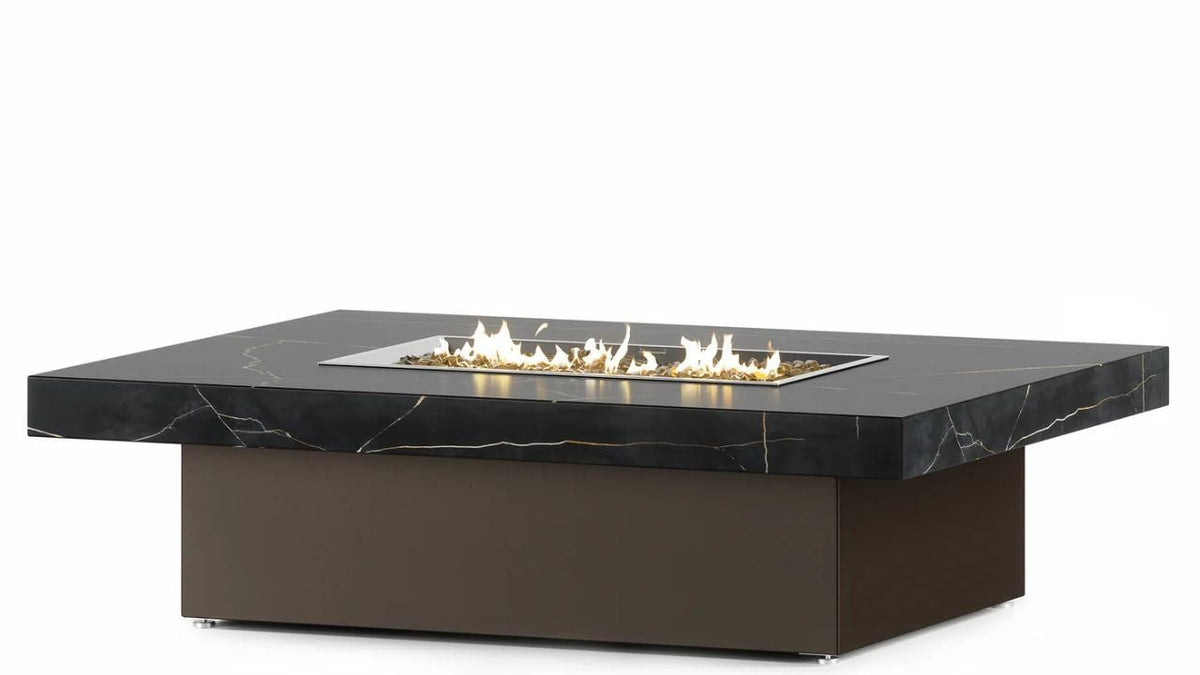
Shape determines traffic flow and social dynamics. Round fire tables create a natural focal point where all guests face the center. Rectangular tables offer more surface area for drinks and small plates while integrating with linear furniture arrangements.
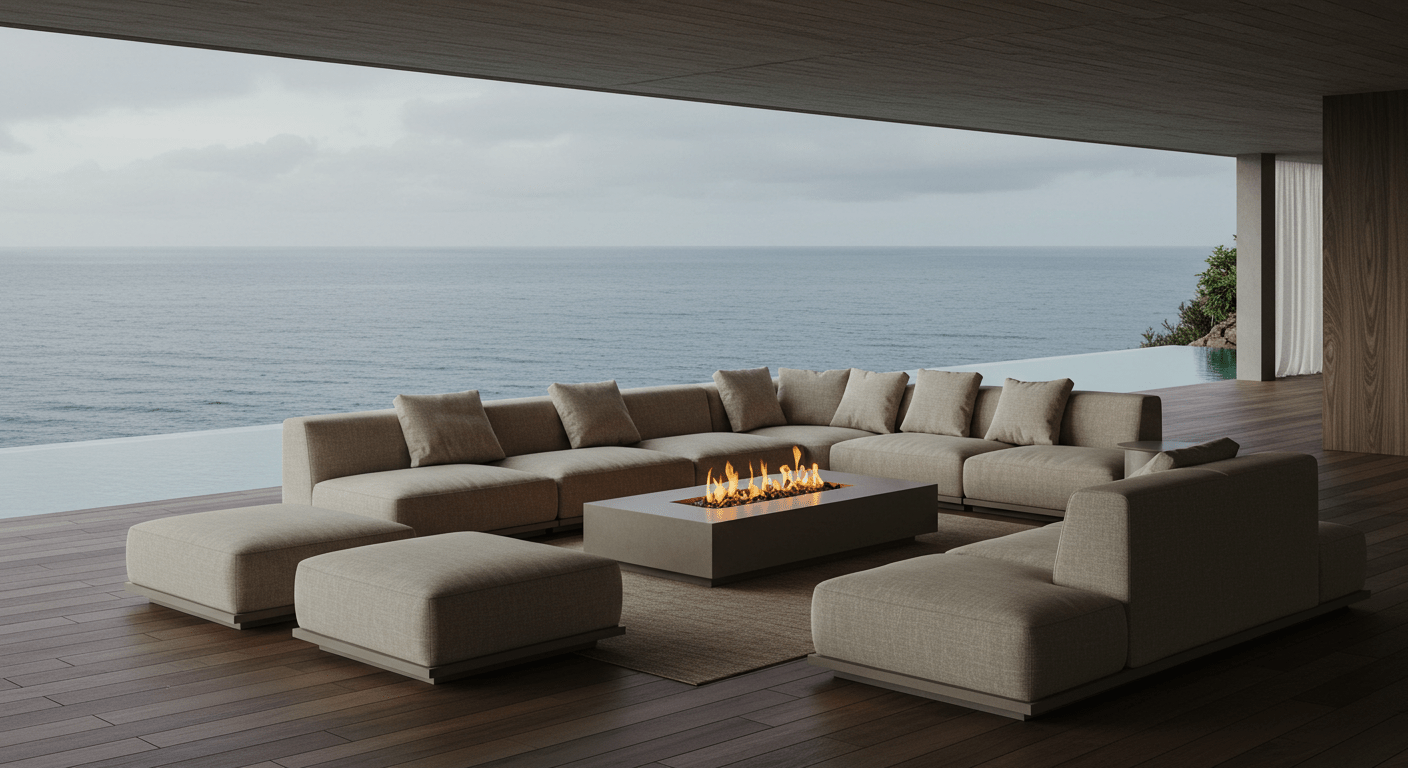
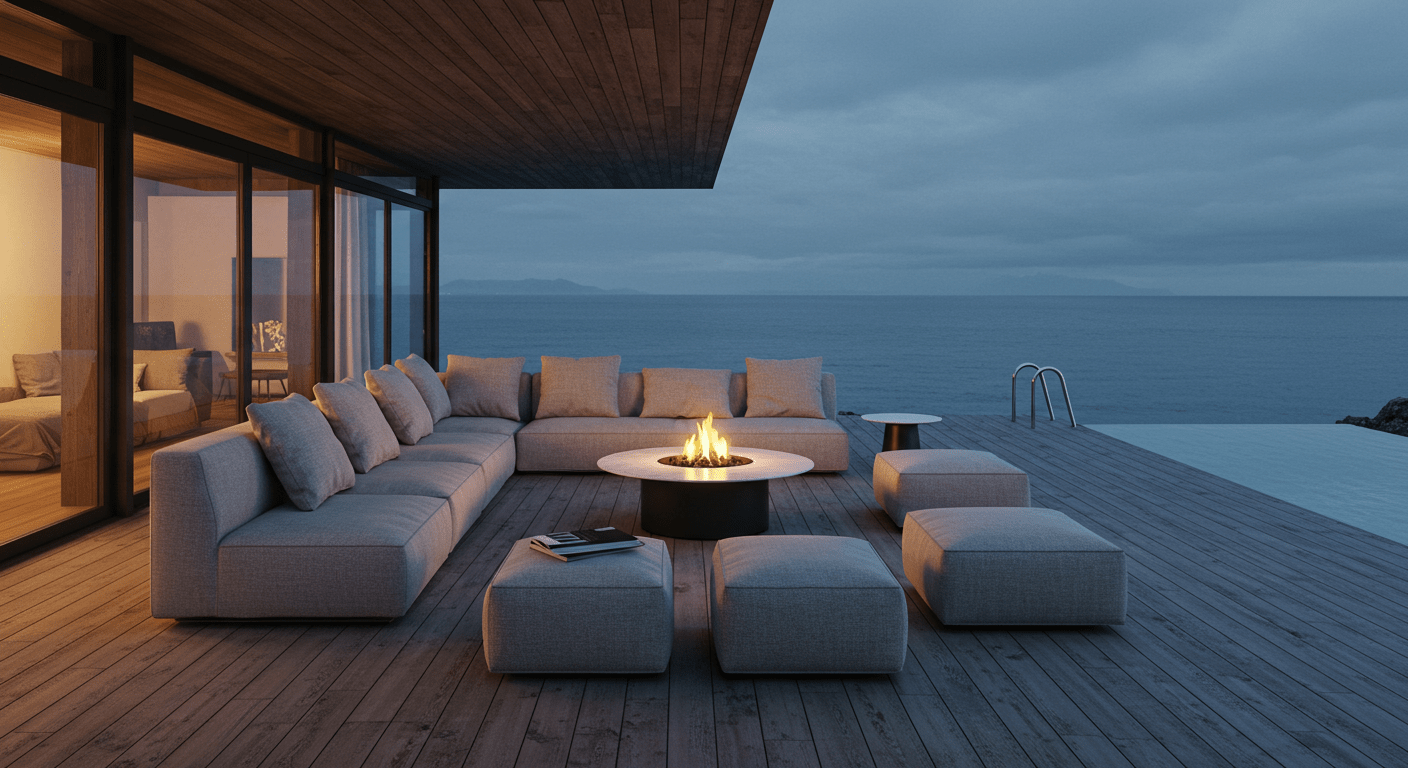
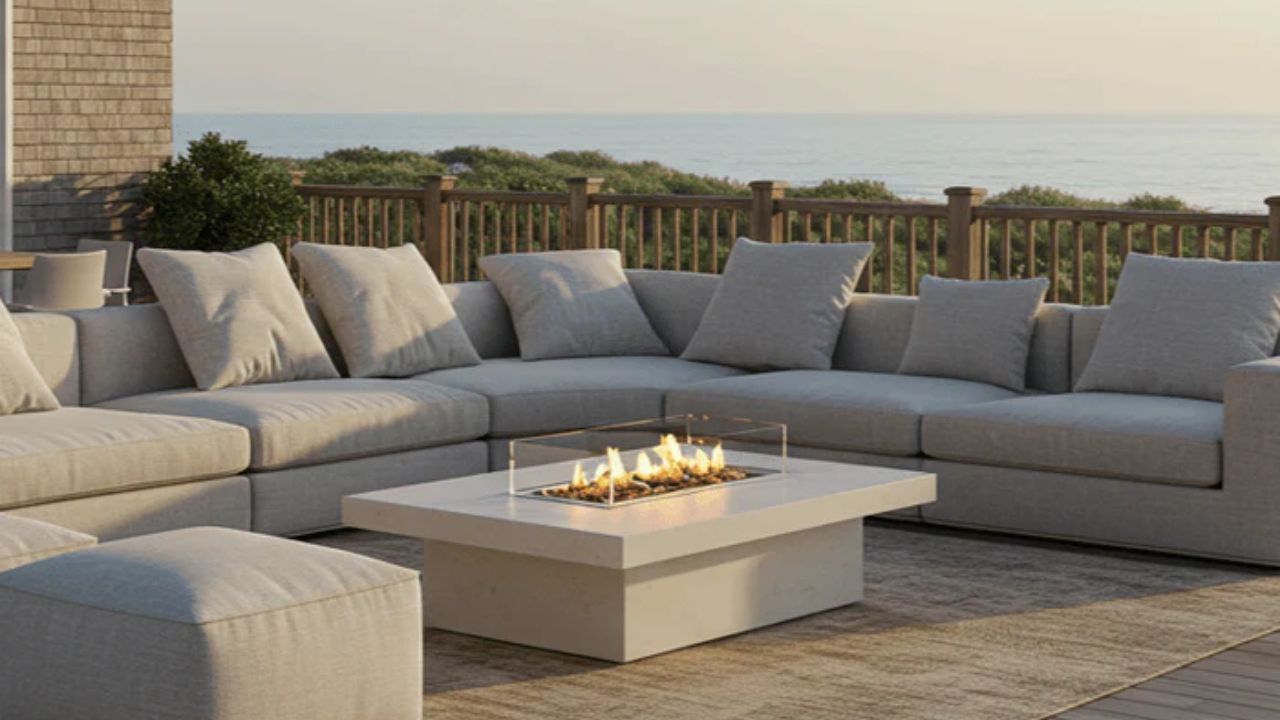
Choose round tables if your layout centers on a single gathering point and conversation is the priority. Choose rectangular tables if you need surface space for service, plan to pair with L-shaped sectionals, or integrate with an outdoor kitchen. Up to six larger club chairs can comfortably surround a standard round fire table. Rectangular models complement lounge configurations where guests spread across longer seating runs. Both shapes work for luxury outdoor furniture installations—selection depends on your specific layout geometry and service needs.
How Do Chair Style, Sofa Depth, and Aisle Spacing Change the Ideal Table Size?
Furniture dimensions directly affect fire pit seating planning. Club chairs allow individual comfort and flexible positioning, typically accommodating 4–6 guests per table. L-shaped or curved sectionals create defined conversation zones; curved models enhance circular flow around round tables. Ottomans and poufs serve as supplemental seating or footrests when hosting larger groups.
Spacing rules apply regardless of furniture style when specifying luxury outdoor furniture for hotels with fire feature integration. Each guest requires 24 to 30 inches of seat frontage to avoid crowding that diminishes the premium experience. Position seating 22 to 24 inches from fire table edges, allowing comfortable reach to tabletops without excessive heat exposure. These measurements ensure guests move freely, service staff circulate efficiently during peak hours, and fire table configurations remain fully functional when every seat is occupied. Factor furniture depth into your commercial fire table sizing calculations before finalizing any order to avoid costly reconfigurations after delivery.
How Do You Choose the Right Fire Table Size for Dining Service Vs. Social Ambiance?
Fire tables serve different functions depending on whether guests are eating a meal or mingling at a cocktail event. Size, height, and flame settings vary based on primary use. This section covers commercial fire table sizing for dining-focused venues, social lounges, and dual-purpose installations.
What Size Is Best for Properties Prioritizing Food and Beverage Service?
Dining service demands table height and surface space that accommodate plates, glassware, and serving. Dining-height fire tables measuring 60–72 inches in length work best for meal service. Rectangular shapes provide the surface area servers and guests need for plating and drinks.
Choose this configuration if food and beverage revenue is a priority. The Ritz-Carlton Laguna Niguel saw outdoor dining F&B revenue increase 35% year-over-year after installing fire tables. Properties with fire features also report 31% higher guest satisfaction scores. These metrics demonstrate that party size and fire table selection directly impact bottom-line performance in hospitality settings. Rectangular dining-height models maximize both ambiance and functional service capacity.
What Size Is Best for Cocktail-Style Gathering Areas and Conversation Zones?
Lounge and cocktail settings call for lower tables that encourage standing, mingling, and casual seating. Conversation-height fire tables in the 36–48 inch range work best for these environments. Optimal flame height falls between 6– and 2 inches—enough radiant heat while keeping flames below the line of sight for standing guests.
Choose this configuration if your venue prioritizes social atmosphere over seated dining. The Fairmont Scottsdale Princess operates four distinct fire table venues ranging from intimate to large-group configurations, demonstrating how luxury outdoor furniture installations scale across different social contexts. Fire features appear in 67% of property-tagged Instagram posts, providing organic marketing value beyond the immediate guest experience. A small gathering fire pit at conversation height becomes a visual anchor that drives both engagement and social sharing.
Can One Fire Table Size Support Both Dining Hours and Event Programming?
Mid-size fire tables offer flexibility for properties that shift between dining service and event programming. Tables measuring 48–54 inches (round) or 60–72 inches (rectangular) can serve dual purposes without compromising either function.
Choose mid-size dimensions if your space transitions between uses throughout the day or season. Lower flame settings during the summer months provide an aesthetic focal point without excessive heat. Higher settings in autumn and winter deliver genuine warmth for extended outdoor dining. Hotel Vermont uses a single fire pit installation to blend indoor and outdoor dining, attracting diverse demographics and generating multiple revenue streams from one feature. Properties highlighting fire features in marketing see a 25% increase in booking rates. This fire table dimensions guide principle applies broadly: mid-size units deliver the best return when programming flexibility matters more than specialized scale.
What Should You Measure Before Finalizing a Commercial Fire Table Size?
Accurate site measurements prevent costly sizing errors. Before ordering outdoor tables with fire pit features, document your space dimensions, environmental factors, and access requirements. This section covers the critical measurements for commercial fire table sizing.
What Site Measurements Matter Most Before Ordering a Fire Table?
Start with the total patio footprint. Small fire tables require a minimum of 20×20 feet of space. Large installations need 30×40 feet or more. These minimums ensure adequate clearance for seating, circulation, and safety buffers.
BTU-to-space ratios determine heating effectiveness. As a baseline, 1,000 BTU heats approximately 10 square feet in mild conditions. Effective heating radius scales with output:
|
BTU Output |
Effective Heating Radius |
|
30,000–40,000 |
8–10 feet |
|
60,000–80,000 |
12–15 feet |
|
100,000–150,000 |
18–25 feet |
Use these figures for fire pit seating planning. Position furniture within the heating radius to ensure guest comfort. A small gathering fire pit at 30,000 BTU covers an 8–10 foot radius, while a large fire table entertaining at 100,000+ BTU projects warmth up to 25 feet from the center.
How Do Wind Exposure, Traffic Flow, and Access Routes Influence Size Selection?
Environmental factors affect real-world performance. Wind, ambient temperature, and enclosures like pergolas or walls significantly impact heating effectiveness. Glass wind guards stabilize flames in exposed locations and reduce gas consumption by preventing heat loss.
Placement requirements include level, non-combustible surfaces with clear access for service and emergency egress. Delivery logistics matter for commercial installations—large fire tables often require freight delivery on pallets. Plan for units to arrive 1–2 days before events to allow setup and testing time. Factor these constraints into your fire table dimensions guide planning before committing to a size that complicates installation or ongoing operations.
When Should You Use Multiple Smaller Fire Tables Instead of One Large Unit?
Multiple units offer flexibility that single large installations cannot match. Tables measuring 24–36 inches can create intimate guest-table ambiance at receptions while allowing reconfiguration for different event types. Multiple units also distribute heat across a large terrace more evenly than one central feature.
Choose multiple smaller tables if you host varied event formats or need flexible zone creation. Choose a single large unit if your programming is consistent, and a dramatic focal point matters more than adaptability. Capacity guidelines remain consistent: plan for one fire table per 8–12 guests in intimate conversation areas, or one per 15–25 guests for ambient warmth across general circulation zones.
Operating costs factor into this decision. Natural gas runs $0.50–$2.00 per hourthe —lowest long-term cost, but requires fixed installation. Propane costs $2.00–$4.00 per hour but offers portability for luxury outdoor furniture setups that change seasonally. Multiple smaller propane units provide maximum flexibility; single large natural gas installations minimize operating expenses for permanent-party-size fire-table configurations.
How Can You Finalize the Best Fire Table Size for Your Property's Layout and Events?
Use this sizing checklist and ROI framework to confirm your selection before ordering.
What Sizing Checklist Helps You Compare Options With Confidence?
|
Specification |
Intimate (4–8) |
Mid-Size (8–16) |
Grand (20+) |
|
Table Size |
36–48" |
60–72" / 48–54" Ø |
72–96"+ |
|
BTU Output |
30,000–50,000 |
50,000–80,000 |
80,000–150,000 |
|
Min Patio Size |
20×20 ft |
25×25–30×30 ft |
30×40+ ft |
|
Seat Clearance |
24" |
4–5 ft |
4–5 ft |
|
Investment |
$2,000–$6,000 |
$4,000–$10,000 |
$8,000–$25,000+ |
Match your typical guest count to the appropriate column. Verify your patio meets minimum size requirements, and the budget aligns with the investment range.
Which Layout Goals Should Guide Your Final Decision and Next Steps?
Align fire table selection with business objectives. Guest satisfaction increases 31% with fire features, and repeat visit rates improve by 49%. Revenue impact is measurable: properties report 47% higher F&B revenue and 25–40% longer dwell times.
Property value benefits compound over time. Professional installations lift property value 10–15%. Premium commercial units average 67% immediate ROI and add $25,000–$50,000 in property value over 10 years.
For venues hosting 12–15+ events annually, purchasing outperforms renting. Rental costs run $300–$1,500 per day plus $200–$800 delivery and setup. Commercial-grade ownership eliminates recurring fees while building asset value.
Choose based on your primary goal: guest experience, revenue generation, or long-term property investment. All three benefit from proper commercial fire table sizing matched to your layout and event programming.
Transform Your Outdoor Space With the Right Fire Table
Matching fire table size to your entertaining style ensures guest comfort, efficient traffic flow, and maximum return on investment. Whether you need a small gathering fire pit for intimate dining or commercial-grade installations for large-scale events, proper sizing decisions impact guest satisfaction, dwell time, and revenue performance.
At Cooke Furniture, we specialize in helping commercial properties and hospitality venues select the right fire table dimensions for their unique layouts and programming needs. Our team understands the technical requirements—BTU output, clearance specifications, and furniture integration—that make luxury outdoor furniture installations perform.
Cooke's commercial team helps hospitality operators select premium fire pit dining tables matched to their space requirements, service style, and guest capacity goals. Contact us today to discuss your project and receive expert guidance from initial configuration through professional installation and beyond.