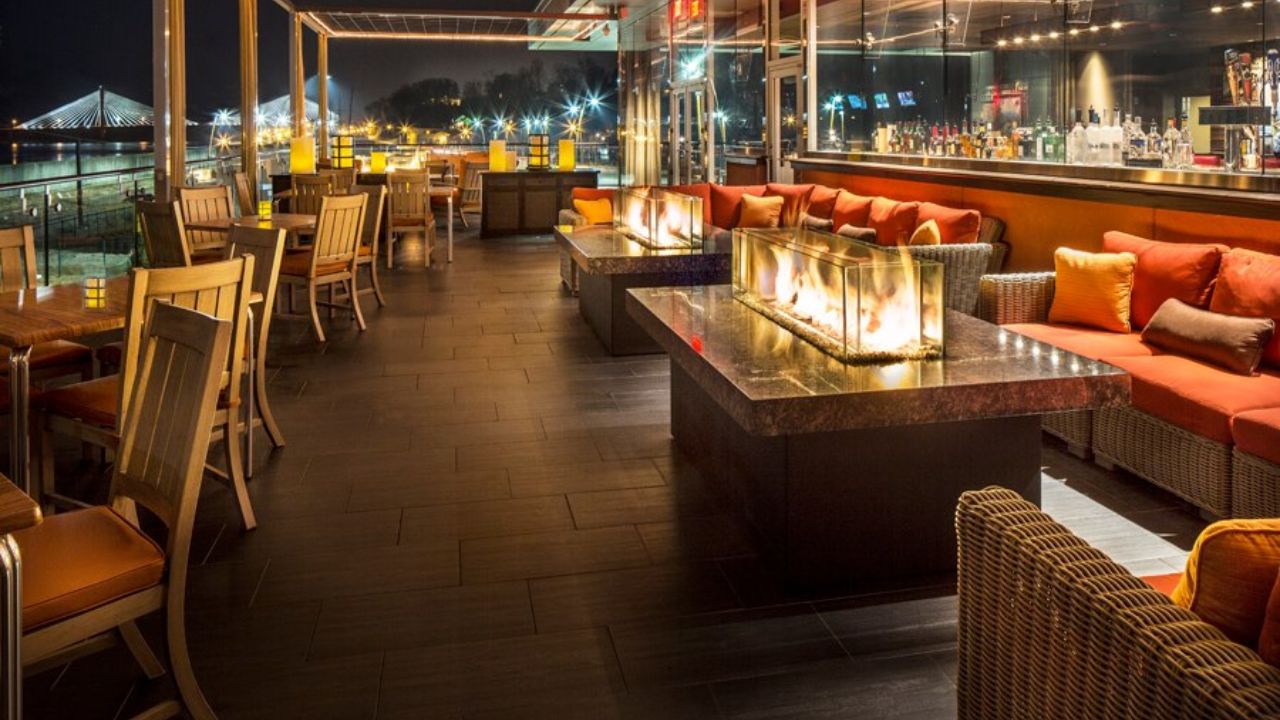
Fire Tables for Small Commercial Spaces: Luxury in Compact Hotel and Restaurant Areas
Key Takeaways
- Certification Unlocks Tight Spaces: ANSI Z21.97-certified fire tables require only 24-inch side clearances versus 15-foot IFC requirements for portable units—enabling legal installation in narrow balconies, small rooftops, and compact courtyards where traditional fire features cannot operate.
- Proven Financial Returns: Commercial fire tables deliver 67% average ROI with 9-18 month payback periods, 69% RevPAU increases for hotels, and 30% gains in guest satisfaction, check sizes, and dwell time—making them strategic revenue investments rather than decorative amenities.
- Format Selection Determines Efficiency: Linear tables (16-20" width) maximize narrow balconies, corner/L-shaped units convert wasted space into high-capacity zones, and round formats optimize intimate areas—proper format selection extracts maximum seating from minimal square footage.
- BTU Output Must Match Space Size: Small commercial spaces (100-200 sq ft) require 50,000-75,000 BTU with 2-4 foot seating distance. Oversized units waste fuel and overwhelm guests; undersized units fail to extend seasonal usability—precise BTU matching optimizes comfort and operating costs.
- Natural Gas Wins Long-Term Economics: Despite higher installation costs ($2,000-$5,000+), natural gas operates at $0.50-$1.50 per hour versus propane's $1.50-$3.00—breaking even within 18-24 months in high-use restaurant and hotel applications while eliminating tank logistics and refill interruptions.
Luxury Fire Tables for Hotels with compact footprints are transforming how boutique properties and upscale restaurants maximize limited outdoor space. Traditional fire features often require prohibitive clearances that eliminate rooftop patios and narrow balconies from consideration. Certified commercial fire tables change this equation entirely, operating safely and legally in tight spaces with just 24 inches of side clearance while delivering the same guest experience and ambiance as larger installations.
The business case extends beyond ambiance: properties report 67% average ROI, 9-18 month payback periods, and 69% increases in Revenue Per Available Unit after installation. This guide examines how strategic fire table integration converts spatial constraints into luxury amenities, covering code compliance, format selection, BTU optimization, and design strategies that maximize guest satisfaction and revenue in restaurant patio fire tables and boutique hotel outdoor design applications, where every square foot determines profitability.
What Are Fire Tables and Why Are They Essential for Small Commercial Spaces?
Fire tables have evolved from residential amenities into strategic revenue generators for hotels and restaurants. In compact commercial environments where every square foot matters, these certified appliances deliver luxury ambiance while meeting strict code requirements that traditional fire pits cannot.
Defining Fire Tables and Their Functionality in Commercial Settings
Fire tables for small spaces are gas-powered or electric appliances that combine a functional table surface with an integrated flame feature. Unlike decorative fire pits, compact commercial fire tables certified under ANSI Z21.97/CSA 2.41 standard operate with just 24 inches of side clearance from combustible walls and 72 inches overhead. This certification transforms the design equation for boutique hotel outdoor design and restaurant patio fire tables.
The alternative—portable fire pits—requires a prohibitive 15-foot clearance from structures under IFC code. That spacing eliminates most balconies, rooftops, and compact courtyards from consideration. ANSI certification makes space-saving fire features legally viable in tight commercial footprints where traditional options fail.
Why Fire Tables Are Perfect for Small Spaces in Hotels and Restaurants
The business case for fire table size for commercial outdoor space is quantifiable. Properties with fire table amenities report 30% increases across three critical metrics: guest satisfaction scores, restaurant check sizes in outdoor dining and bar areas, and dwell time in fire-feature seating zones.
Revenue impact scales higher. Hotels and vacation rentals see 69% increases in Revenue Per Available Unit (RevPAU) after upgrading outdoor spaces with fire tables. The investment delivers 67% average ROI with 9-18 month payback periods. Over ten years, properties add $25,000-$50,000 in estimated value. For compact commercial applications, fire tables convert underutilized square footage into high-performing amenity space.
How Can Hotels and Restaurants with Limited Outdoor Space Incorporate Fire Tables to Deliver a Luxury Experience Without Crowding Guests?
Successful integration of compact commercial fire tables requires three-dimensional spatial planning. The right format, proper clearances, and strategic furniture placement transform constrained footprints into functional luxury zones without compromising guest comfort or code compliance.
Choosing Compact Commercial Fire Tables for Small Patios
Fire table size for a commercial outdoor space starts with format selection. Linear tables with 16-20 inch widths solve extreme balcony constraints where depth is critical. These narrow profiles pair with wall-adjacent seating to maximize usable capacity. For BTU output, the 50,000-100,000 range provides adequate warmth for 4-8 guests without overwhelming small areas.
Round formats (48-54" diameter) optimize square or corner applications where linear configurations waste space. Square formats (48-64") deliver the most versatility—they adapt to modular seating and convert between dining and bar service. Format choice directly impacts capacity and circulation efficiency in restaurant patio fire tables.
Maximizing Design Potential with Space-Saving Fire Features
Space-saving fire features require layered clearance planning. Zone 1 addresses code minimums: 24 inches from burner to combustible walls, 72 inches overhead. Zone 2 positions seating 22-24 inches from the fire edge for optimal warmth without excessive heat exposure. Zone 3 maintains 36-48 inch circulation paths for guest movement and staff service.
Built-in or banquette seating recovers 18-24 inches compared to individual chairs—critical savings in tight footprints. Fire tables with 10-12 inch integrated ledges eliminate separate side tables, further conserving space. Each design decision compounds efficiency in boutique hotel outdoor design applications.
Integrating Fire Tables into Boutique Hotel Outdoor Design
Linear and rectangular formats deliver highest space efficiency for narrow balconies and wall-adjacent placements. They preserve central circulation while maximizing perimeter seating. Corner and L-shaped units convert awkward, underutilized corners into high-capacity zones that feel intentional rather than constrained.
Chat height tables (21-26 inches) enable seamless transitions between dining and bar service throughout the day. Morning coffee shifts to lunch service, then converts to evening cocktails without furniture changes. This flexibility maximizes return on limited square footage in fire tables for small spaces.
How to Select the Right Fire Table Size for Commercial Outdoor Spaces
Fire table size for commercial outdoor space dictates capacity, circulation flow, and guest comfort. Precise dimensional planning ensures compact commercial fire tables fit code requirements while maximizing seating density and operational flexibility.
Fire Table Size for Commercial Outdoor Space: What You Need to Know
Linear and rectangular restaurant patio fire tables scale across three tiers. Narrow balconies accommodate 48-60" x 16-20" units seating 4-6 guests in 8-12 square feet. Restaurant dining areas support 60-72" x 24-30" tables seating 6-8 in 12-18 square feet. Hotel terraces fit 72-96" x 30-36" configurations seating 8-12 in 18-28 square feet.
Square formats range from 36-42" (4-6 seats, 12-18 sq ft) for modular layouts to 60-64" (8-10 seats, 35-45 sq ft) for larger patios. Round tables start at 36-42" diameter (4-5 seats, 12-16 sq ft) for small corners and scale to 60-66" (8-10 seats, 28-38 sq ft) for boutique hotel outdoor design applications. Bar-height configurations (42" table + 30" stools) increase seating density 15-20% versus standard dining height—critical efficiency gains in space-saving fire features.
Dining and Bar: Using Fire Tables to Enhance Outdoor Dining Experiences
Fire tables for small spaces maximize utilization through dual-purpose design. Spaces function as dining and bar areas during peak service, then convert to lounge zones for late evening guests. Modular, stackable, or nesting chairs enable quick reconfigurations between service periods without permanent furniture commitments.
Burner covers transform active fire tables into standard dining surfaces when flames aren't needed—expanding functional capacity during busy lunch service. Long linear fire tables naturally zone rectangular patios, creating visual separation between dining and bar sections without physical barriers. This flexibility extracts maximum revenue from limited square footage throughout operating hours.
Key Benefits of Using Fire Tables in Small Commercial Spaces
Compact commercial fire tables deliver dual value: engineered comfort for guests and magnetic appeal that drives traffic. Proper heat management and strategic positioning transform space-saving fire features into revenue-generating focal points.
Enhancing Ambiance and Social Interaction Without Sacrificing Comfort
Seating positioned 22-24 inches from the fire edge delivers optimal warmth without excessive radiant heat exposure. This precise offset maintains guest comfort during extended stays—critical for increasing dwell time in restaurant patio fire tables and boutique hotel outdoor design applications.
Round formats provide superior 360-degree heat distribution and natural traffic flow that encourages social interaction. Glass wind guards serve triple duty: they improve flame appearance, enhance guest comfort in windy conditions, and reduce fuel consumption by up to 50%. The efficiency gain compounds operational savings across seasons while maintaining consistent ambiance in fire tables for small spaces.
Attracting Customers: How a Fire Table Can Become a Social Centerpiece
Fire tables create dramatic focal points that draw guests to outdoor areas. Narrow widths (18-24 inches) preserve essential circulation in tight layouts while maintaining visual impact. Extended linear tables (8-10 feet) maximize presence without overwhelming compact footprints—they command attention proportional to their length, not width.
Strategic placement near railings or perimeter edges captures views while maintaining code-compliant clearances. This positioning maximizes experiential value: guests enjoy fire ambiance, outdoor atmosphere, and sightlines simultaneously. The layered experience drives social media sharing, repeat visits, and premium pricing opportunities for dining and bar service around fire table installations.
Design Considerations for Integrating Fire Tables in Limited Commercial Spaces
Material selection and heat output directly impact functionality in compact commercial fire tables. Design integration must balance aesthetic requirements, spatial constraints, and thermal performance to deliver consistent guest comfort.
Customizing Fire Tables for Unique Commercial Spaces
High-performance materials dominate boutique hotel outdoor design specifications: Glass Fiber Reinforced Concrete (GFRC), corten steel, and marine-grade stainless steel (304/316). These materials withstand weather exposure and heavy use while maintaining upscale appearance in restaurant patio fire tables. GFRC enables complex forms at reduced weight; corten develops protective patina; stainless steel delivers corrosion resistance in coastal environments.
Planter-fire feature combinations maximize utility in fire tables for small spaces by adding greenery without consuming additional square footage. Vertical slat bases provide visual lightness while accommodating narrow profiles for tight applications. Multi-functional elements integrate fire tables with built-in seating and modular furniture pieces—each component serves dual purposes to extract maximum value from limited footprints. This layered functionality defines current space-saving fire features in commercial applications.
Managing Heat Distribution and Space Flow
BTU optimization scales to space size. Very small areas under 100 square feet require 30,000-50,000 BTU with 2-3 foot comfort distance. Small spaces (100-200 sq ft) need 50,000-75,000 BTU at 2-4 feet. Medium areas (200-350 sq ft) operate at 75,000-100,000 BTU with 3-5 foot range. Large spaces (350-500 sq ft) demand 100,000-150,000 BTU at 4-6 feet. Fire table size for commercial outdoor space must match BTU output to seating distance.
Commercial-grade units operate safely in winds up to 10 MPH and shut down automatically at 31 MPH—critical for rooftop installations. Gas and electric fire tables run virtually silent, producing only natural flame sound. This acoustic neutrality preserves dining and bar conversation quality while maintaining ambient warmth in compact commercial fire tables.
Commercial-Grade Fire Tables: Durability and Maintenance for High-Traffic Use
Fuel type selection determines long-term operational costs and maintenance requirements for compact commercial fire tables. Installation permanence, BTU output, and hourly operating expenses create distinct value propositions for different commercial applications.
Built to Last: Why Commercial-Grade Fire Tables Are a Smart Investment
Natural gas fire tables dominate permanent, high-use installations in restaurant patio fire tables and boutique hotel outdoor design. They deliver the highest BTU output (60,000-300,000+ BTU) with zero refill requirements—critical for uninterrupted service during peak hours. Professional installation with gas line connections costs more upfront but eliminates ongoing tank logistics.
Propane units provide superior portability for seasonal or flexible layouts in fire tables for small spaces. However, they remain subject to IFC's 15-foot clearance from structures—a constraint that eliminates most compact applications. Propane works for properties without gas infrastructure or spaces requiring occasional reconfiguration, but permanence limitations restrict their role in space-saving fire features for tight commercial footprints.
Low-Maintenance Solutions for Hospitality and Restaurant Owners
Operating costs vary significantly by fuel type. Natural gas runs $0.50-$1.50 per hour—the lowest sustained cost for dining and bar fire table operations. Propane costs $1.50-$3.00 per hour. Electric units operate at $0.30-$1.00 per hour but deliver minimal heat output compared to gas options.
Installation costs invert the operating equation. Natural gas requires $2,000-$5,000+ for professional gas line connections. Propane installations cost $800-$2,500. Electric units start at $500-$2,000 with simplest installation requirements. For fire table size for commercial outdoor space decisions, calculate total cost of ownership across 3-5 years—natural gas typically breaks even within 18-24 months in high-use applications.
Glass wind guards reduce fuel consumption by 50% across all gas fire tables, significantly lowering long-term operating costs while improving flame stability. This single accessory delivers immediate ROI through reduced fuel spend and enhanced guest experience in compact commercial fire tables.
Future Trends: Fire Tables as a Staple of Luxury Commercial Outdoor Spaces
Market growth and design innovation are converging to make compact commercial fire tables standard equipment in upscale hospitality. Financial performance metrics drive adoption as property owners prioritize measurable returns over purely aesthetic upgrades.
The Growing Demand for Fire Tables in Boutique Hotels and Restaurants
The North American fire pit and fire table market reached $3.09 billion in 2024, with 5.6% CAGR projected through 2030. This sustained growth reflects commercial demand, not residential trends. The commercial gas fire table segment alone projects $2 billion in 2025—evidence that boutique hotel outdoor design and restaurant patio fire tables are becoming standard competitive differentiators.
Market expansion correlates directly with proven performance metrics: 30% increases in guest satisfaction, check sizes, and dwell time. Properties that quantify RevPAU gains (69% average increase) and ROI (67% with 9-18 month payback) justify fire table budgets as revenue investments rather than amenity costs. This data-driven approach accelerates adoption in fire tables for small spaces.
Innovations in Fire Table Design for Small Commercial Spaces
Narrow linear profiles (16-20" width) solve previously impossible balcony constraints. Corner optimization with L-shaped units converts wasted space into high-capacity seating zones. These format innovations specifically target space-saving fire features for compact footprints where standard designs fail.
Dual-purpose layouts enable seamless dining and bar transitions throughout operating hours without furniture changes. Biophilic integration blends fire tables with planters, living walls, and natural materials—layering functionality while maintaining minimal footprints. Low-profile linear designs create sophisticated centerpieces that command attention through length rather than bulk.
ROI-driven decision making defines current purchasing behavior among hospitality operators. Property owners now quantify nightly rate premiums, average check increases, and RevPAU gains before specifying designer fire pit tables for commercial outdoor spaces. This analytical approach positions compact, high-quality fire features as strategic investments rather than aesthetic luxuries, with measurable financial returns that satisfy ownership groups and justify premium specifications in competitive luxury hospitality markets.
Why Fire Tables Are the Perfect Solution for Compact Luxury in Hotels and Restaurants
Compact commercial fire tables solve the fundamental challenge of luxury hospitality in constrained footprints: delivering premium guest experiences where space is the limiting resource. ANSI Z21.97 certification enables legal installation with 24-inch side clearances—transforming narrow balconies, small rooftops, and tight courtyards from unusable space into high-performing revenue generators. Strategic format selection (linear for balconies, corner for unused zones, round for intimate areas) optimizes every square foot in boutique hotel outdoor design and restaurant patio fire tables.
Financial performance justifies investment. Properties report 67% average ROI with 9-18 month payback periods, 69% RevPAU increases, and 30% gains across guest satisfaction, check sizes, and dwell time. These aren't aesthetic upgrades—they're strategic installations that drive measurable returns. When space is limited, fire tables for small spaces convert square footage constraints into competitive advantages. Properly executed installations deliver the luxury experience guests expect while generating the financial performance operators require from dining and bar amenity investments in space-saving fire features.
Transform Your Compact Commercial Space with Expert Fire Table Design
Ready to convert your constrained outdoor area into a revenue-generating luxury amenity? Cooke's design experts specialize in compact commercial fire tables for boutique hotels, restaurants, and high-end hospitality properties. We'll guide you through ANSI Z21.97 certification requirements, optimal format selection for your specific footprint, and BTU calculations that balance guest comfort with operational efficiency.
Cooke has equipped hundreds of hospitality properties with space-efficient fire pit tables outdoor solutions delivering proven 67% ROI and measurable RevPAU gains. Whether your project involves a narrow urban balcony, compact rooftop terrace, or intimate courtyard, our commercial team designs fire feature configurations that maximize seating capacity, satisfy code requirements, and create the memorable focal points guests photograph and share. Contact Cooke's design specialists today to begin your consultation.