
Premium Stone Fire Table Tops: Granite, Marble, and Beyond for Commercial Applications
Key Takeaways
- Material Longevity Hierarchy: Sintered stone (Dekton/Neolith) delivers 25-50+ year lifespans, granite fire tables last 20-30 years, while marble fire tables fail in 5-10 years due to thermal shock and staining—making marble unsuitable for commercial outdoor applications despite aesthetic appeal.
- Total Cost of Ownership: Natural granite configurations ($960/year over 20 years) provide lowest TCO, while premium sintered stone ($1,388/year) eliminates replacement cycles. Component refurbishment ($800-1,500) costs 6-10x less than full unit replacement ($12,000-15,000).
- Burner Material Critical: 316 stainless steel burners last 10-25 years (2.5x longer than 304 SS at 5-10 years). Coastal properties require 316 SS mandatory; premium cost (40-60% higher) justified by extended service life in salt air environments.
- Climate Performance: Dekton and porcelain slabs achieve perfect 5/5 ratings across all climate zones with 10/10 UV stability. Standard engineered quartz suffers catastrophic UV degradation; only UV-stable formulations (2023+) provide 15-20 year outdoor viability.
- Innovation Impact: All-Weather Electronic Ignition Systems (AWEIS) extend component life from 3-7 years to 7-15 years. Field-serviceable modules reduce replacement costs 40%, while new UV-stable GFRC formulations cut finish fading 60-80%.
Premium stone fire table tops define luxury hospitality environments—combining architectural presence with functional heating in hotels, resorts, and upscale restaurants. Material selection determines lifecycle performance, maintenance demands, and total cost of ownership across decades of commercial use.
This analysis examines granite fire tables, marble fire tables, and engineered stone alternatives, comparing stone vs. steel vs. concrete through durability testing, climate performance data, and documented installations.
Commercial-grade fire table materials span natural granite and quartzite to sintered stone (Dekton/Neolith), porcelain slabs, and GFRC engineered concrete. Understanding technical specifications, refurbishment economics, and aesthetic customization options enables property managers and designers to specify luxury modern outdoor furniture delivering measurable long-term value in high-traffic outdoor spaces.
What Are Premium Stone Fire Table Tops?
Premium stone fire table tops are permanent outdoor installations designed for hotel resorts, luxury restaurants, and high-end commercial properties. Unlike moveable furniture, these engineered features combine heat-resistant stone surfaces with integrated gas burner systems, creating focal points in hospitality environments. Analysis of 16 commercial installations across resort, restaurant, and outdoor settings reveals consistent material performance across diverse climate conditions and usage demands.
What Materials Are Used for Premium Stone Fire Table Tops?
Natural stone options include granite fire table tops ($45-160/sq ft), marble fire tables ($60-200/sq ft), and quartzite ($55-180/sq ft). Granite with flamed or textured finishes dominates commercial applications, while marble's vulnerability to outdoor conditions makes it unsuitable for commercial-grade fire table materials.
Engineered alternatives offer superior performance. Sintered stone products like Dekton and Neolith ($95-200/sq ft) deliver 25-50+ year lifespans. Porcelain slabs withstand temperatures exceeding 1,100°F with exceptional stain and etch resistance. GFRC (Glass Fiber Reinforced Concrete) ranges from $70-250/sq ft installed, offering 50+ year structural durability. New UV-stable engineered quartz formulations (2023+) now provide 15-20 year outdoor lifespans. Material weights vary minimally—Dekton 12mm thickness ranges from 29-31 kg/m² (6.00-6.40 lb/ft²) across product families.
How Are Stone Fire Tables Different from Other Outdoor Furniture?
Stone fire tables require permanent installation with structural support, distinguishing them from moveable luxury modern outdoor furniture. While comparing stone vs. steel vs. concrete, stone surfaces integrate with stainless steel burner systems—316-grade stainless steel components deliver 10-25 year lifespans, 2.5x longer than 304-grade alternatives (5-10 years).
GFRC engineered concrete serves as a structural substrate accepting natural stone veneer or porcelain cladding for aesthetic customization. Sintered stone materials like Dekton demonstrate 0.1% water absorption and 0.2% open porosity (EN ISO 10545-3 standard), making them virtually non-porous compared to traditional outdoor materials. This engineered density prevents moisture infiltration that degrades conventional concrete or unsealed natural stone.
Why Choose Stone Fire Table Tops Over Other Materials Like Steel or Concrete?
When comparing stone vs. steel vs. concrete for commercial-grade fire table materials, performance durability and aesthetic versatility determine long-term value. Material selection impacts structural longevity, maintenance intervals, and design flexibility in high-traffic hospitality environments.
How Do Stone Fire Table Tops Compare to Steel or Concrete in Terms of Durability?
Material longevity rankings place sintered stones (Dekton/Neolith) at 25-50+ years, natural granite fire tables at 20-30 years, and GFRC engineered concrete at 50+ year structural potential—though electronic ignition components limit practical lifespan to 15-20 years. GFRC delivers 10/10 stain resistance matching sintered stone while exceeding natural granite, plus 8/10 repairability superior to most natural stones.
Steel component integration determines system durability. Marine-grade 316 stainless steel burners last 10-25 years in 24/7 hospitality applications, while structural frames provide 30-50+ year stability. Dekton demonstrates exceptional strength under ASTM C99 testing: 7,510-8,144 psi modulus of rupture in dry conditions and 6,705-7,948 psi when wet, maintaining 85-98% of dry strength. This performance exceeds conventional concrete and matches structural steel in compressive applications.
What Are the Aesthetic Differences Between Stone, Steel, and Concrete Fire Tables?
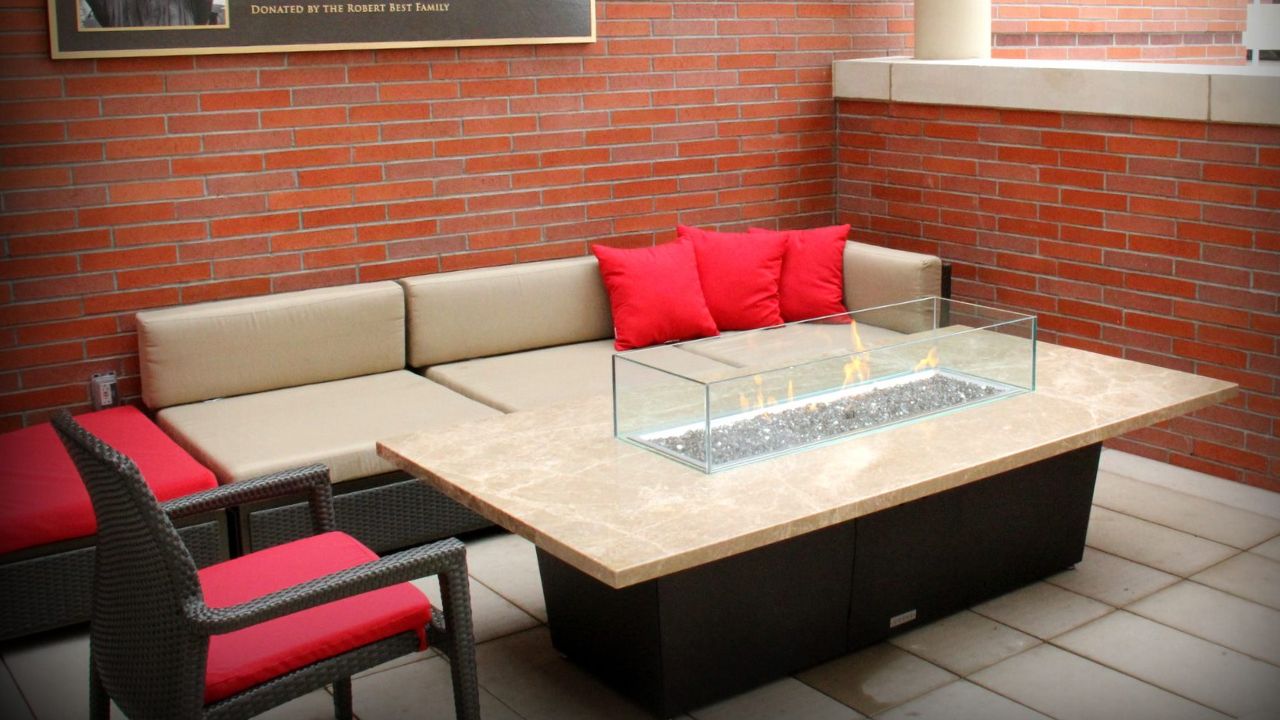
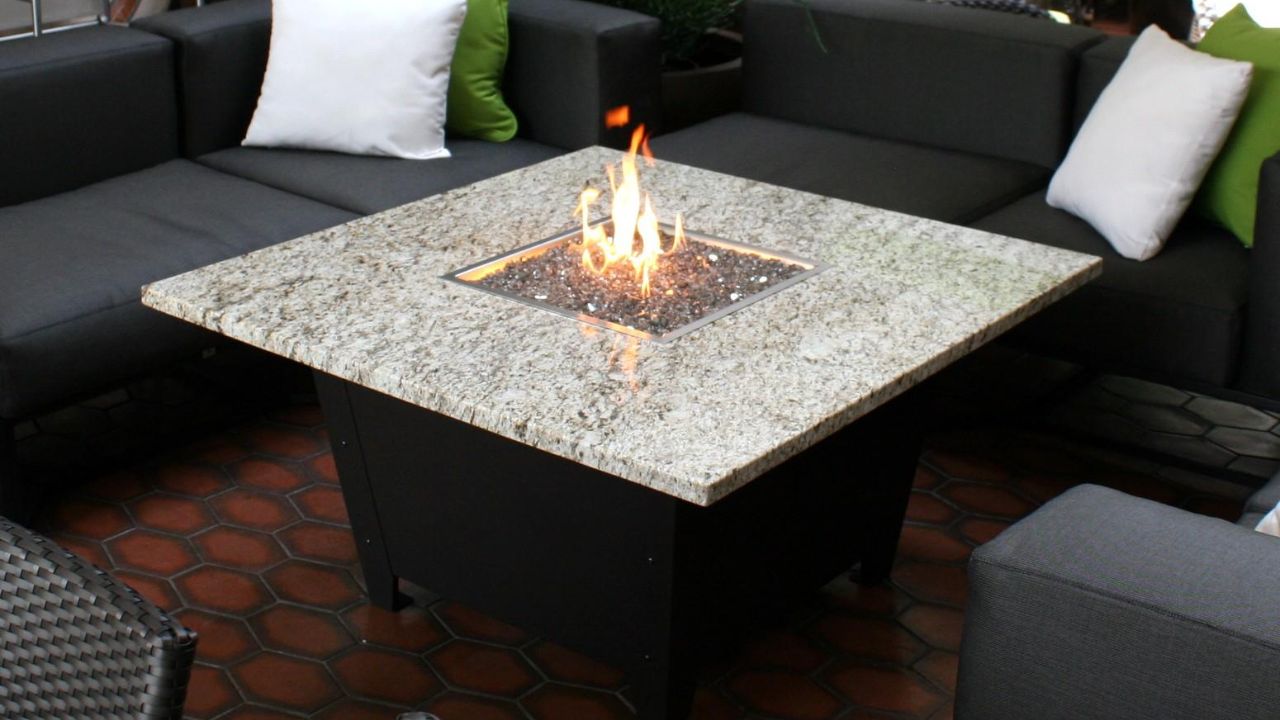
Natural stone aesthetics offer unrepeatable character. Granite fire table tops display speckled patterns with green and gold mineral variations—each slab unique. Marble fire tables provide classic luxury but require engineered alternatives for outdoor durability.
Engineered materials replicate premium aesthetics with superior performance. Marble-look porcelain and sintered stone achieve Carrara marble's white veined surfaces without maintenance drawbacks. GFRC accepts natural stone veneer cladding, stacked stone applications, or multi-material construction combining GFRC bases with wood-look porcelain tops. Sintered stones like Dekton offer marble-look, concrete-look, and natural stone patterns with 10/10 UV stability—maintaining color consistency where standard materials fade. GFRC finishes range from smooth white and carbon textures to custom colors, providing aesthetic versatility unavailable in monolithic steel or poured concrete installations.
How Does Stone Perform in Different Weather Conditions Compared to Steel and Concrete?
UV stability separates premium from standard materials. Dekton and Neolith sintered stone achieve 10/10 perfect UV ratings, while new GFRC formulations (2023-2025) reduce finish fading 60-80%. Standard engineered quartz suffers catastrophic UV degradation (1/5 rating unsuitable), though UV-stable outdoor formulations now deliver 15-20 year lifespans.
Moisture and freeze-thaw resistance favor stone fire table tops over conventional concrete. Dekton shows 0.0% water absorption (ASTM C373) and 0.0-0.1 mm/m maximum moisture expansion. Both GFRC and granite rate 5/5 (Excellent) for freeze-thaw cycling. Coastal environments demand material-specific specifications: 316 SS burners are mandatory for salt air exposure versus optional for inland installations. Steel material grade is the single most critical factor for burner longevity—brass construction delivers 15-25 years even in challenging coastal conditions. Dekton's thermal properties (5.11-6.10 × 10⁻⁶ °C⁻¹ linear expansion coefficient per ASTM C372) demonstrate minimal expansion/contraction compared to metal alternatives, reducing thermal stress fractures common in welded steel assemblies.
How Can Stone Fire Tables Elevate Commercial Outdoor Spaces?
Stone fire table tops function as architectural anchors in luxury hospitality design, creating visual destinations that drive guest engagement and social media visibility. Commercial installations demonstrate how premium materials transform functional outdoor seating into branded experiences.
What Role Do Stone Fire Tables Play in Creating "Instagram-Worthy" Spaces for Hospitality?
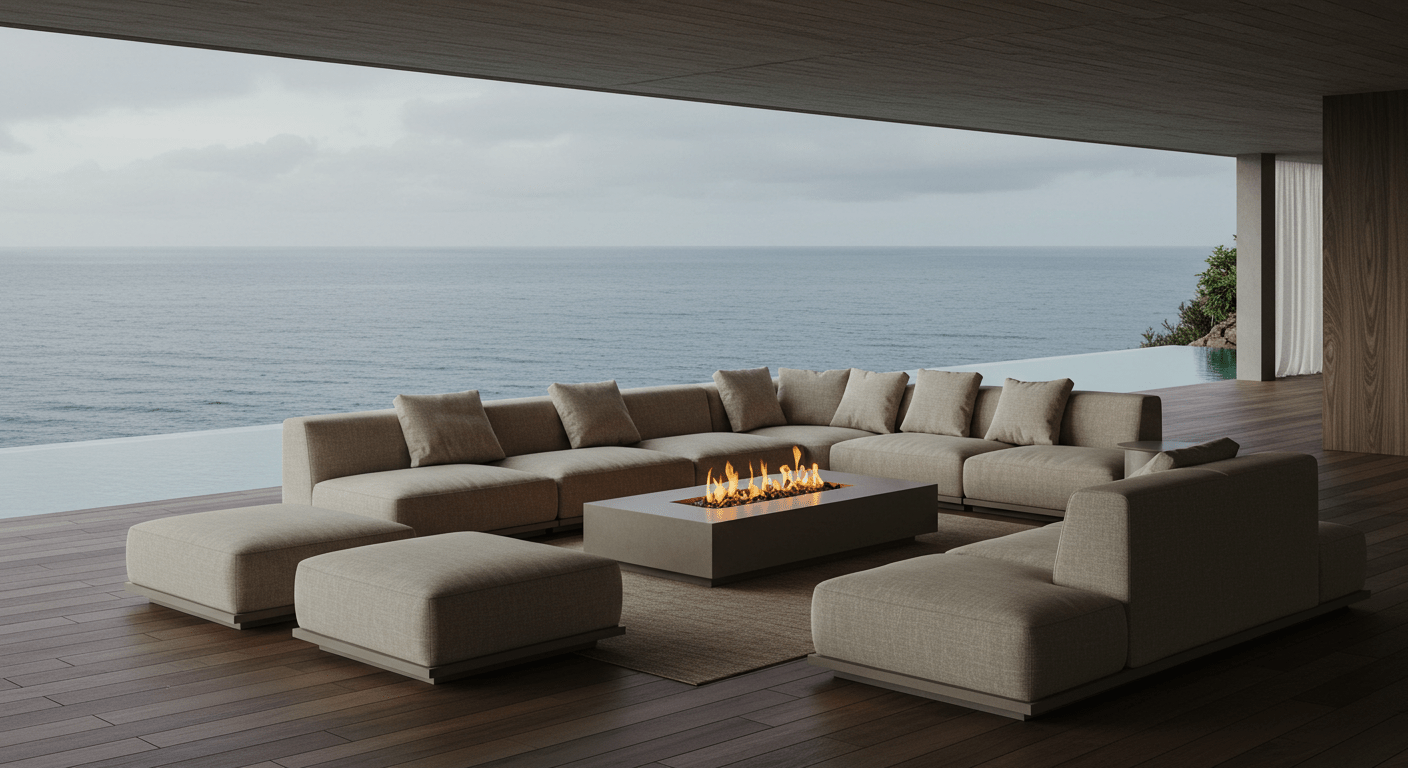
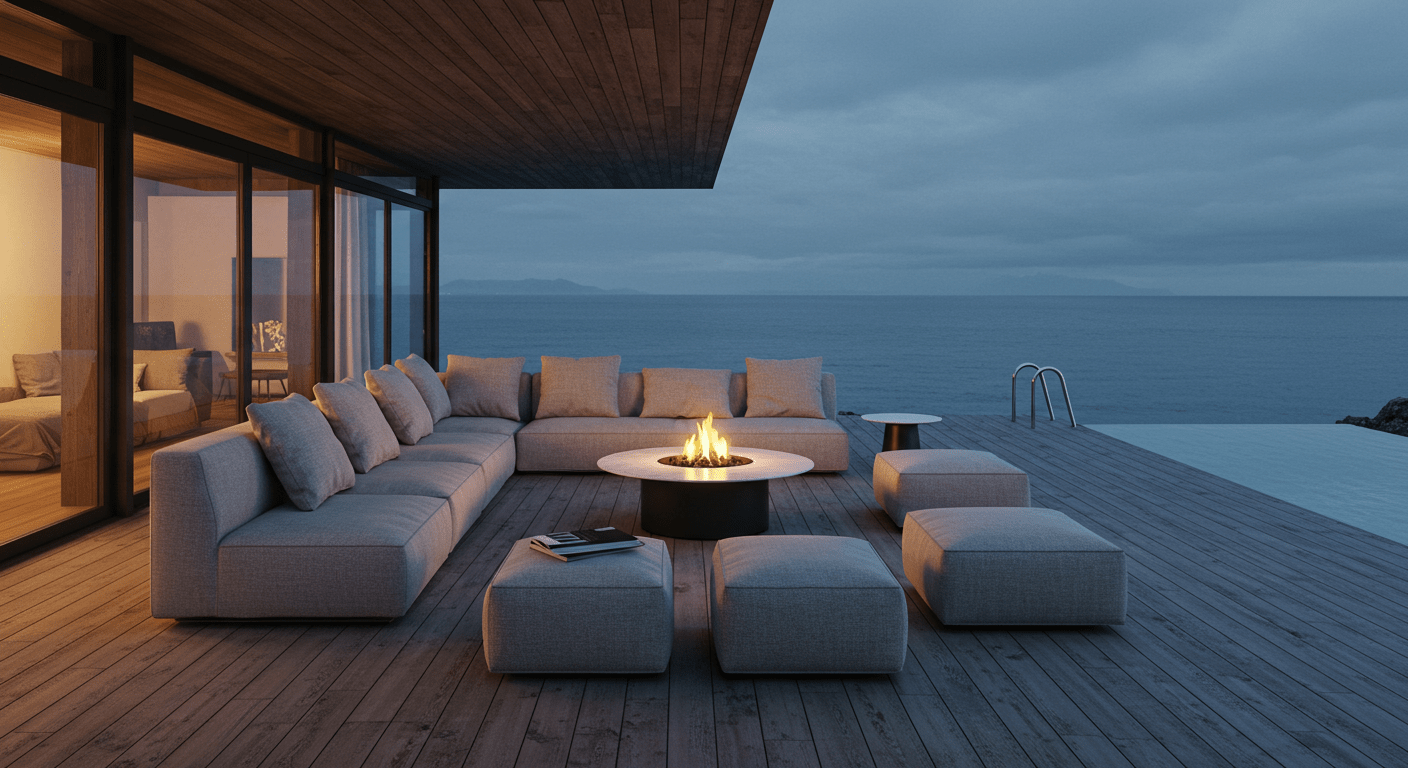
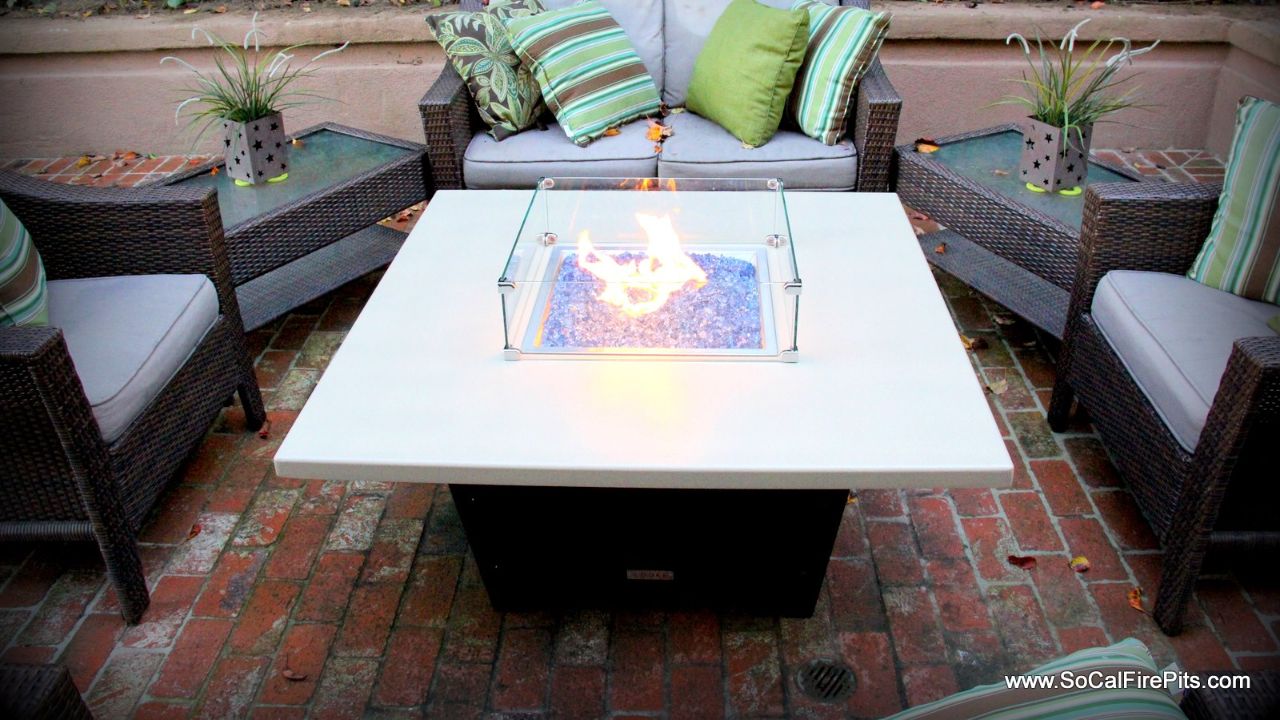
Documented installations showcase design impact: luxury California inns deploy circular stone fire pits with Adirondack seating arrangements, while modern cylindrical fire tables with smooth stone tops anchor dusk hospitality environments. Upscale restaurants feature rectangular marble-look porcelain fire tables with active linear flames as centerpiece elements.
Design integration strategies maximize visual appeal. Hotel resorts combine fire pits with stone seating wall systems, creating destination zones. Poolside installations utilize white Carrara marble-look porcelain surfaces for cohesive material palettes. Round white GFRC fire tables with smooth finishes define modern outdoor patios. Professional photography at 2560 x 1707 px resolution captures multiple angles—active flame features, ambient lighting, and twilight atmospherics—demonstrating how commercial-grade fire table materials perform as both functional heating and visual branding elements.
How Do Stone Fire Tables Complement Other Luxury Modern Outdoor Furniture?
Dual-function applications integrate fire features with dining infrastructure. Large porcelain slab fire tables with marble aesthetics serve simultaneous dining and fire functions. Rectangular formats at 60" length accommodate dining integration—the Elementi Plus Brugge Marble Porcelain Dining Fire Table exemplifies upscale restaurant applications where granite fire table or marble fire table aesthetics merge with functional seating.
Scale options adapt to venue requirements: round formats at 42" diameter (Santiago and Venice models), square formats at 42"-54", and rectangular formats at 54"-60" length in GFRC and porcelain configurations. Material coordination principles apply—powder-coated metal bases harmonize with stone tops, contemporary white bases pair with white marble-look surfaces, and natural stone tops complement dark tapered or carbon-finish bases. This flexibility allows stone fire table tops to anchor furniture groupings while maintaining cohesive design language across luxury modern outdoor furniture collections.
What Makes Granite and Marble Ideal for High-End Commercial Fire Tables?
Granite fire table and marble fire table aesthetics define luxury hospitality environments, though performance requirements favor granite and engineered marble alternatives for commercial applications. Material selection balances visual impact with technical durability in high-traffic outdoor settings.
How Does the Natural Beauty of Granite and Marble Enhance Outdoor Commercial Spaces?
Granite's natural characteristics deliver distinctive visual identity. Speckled granite stone top surfaces display unique mineral patterns—green and gold variations documented across commercial installations. Natural texture provides visual interest while concealing minor wear in high-use environments. Each granite slab offers exclusive character, communicating permanence and quality investment that signals property-level commitment to guest experience.
Marble aesthetics require engineered alternatives for outdoor durability. Carrara marble-look finishes achieved through porcelain slabs and sintered stone provide white veined surfaces with classic luxury appearance minus maintenance drawbacks. Dekton sintered stone maintains pristine appearance through Class 5 staining resistance (highest rating) for olive oil, iodine, and organic agents per EN ISO 10545-14 standards. Chemical resistance rated Class A (no damage) for common cleaning products ensures commercial-grade fire table materials sustain visual quality despite continuous hospitality use.
What Are the Technical Advantages of Using Granite and Marble for Fire Table Tops?
Granite technical performance supports 20-30 year commercial lifespans. Natural heat tolerance handles direct flame exposure, while flamed/textured finishes provide slip resistance and heat dissipation. Standard marble fire tables fail in outdoor applications—thermal shock and moisture infiltration limit viability.
Sintered stone (Dekton) exceeds natural stone specifications: passes thermal shock testing with no damage at 30-100°C temperature changes, withstands direct contact with heat sources exceeding 1,000°F, and maintains structural integrity through extreme temperature cycling. Flexural strength at 12mm thickness reaches 4,509-4,992 N breaking strength with 48-54 N/mm² resistance—maintaining performance under thermal stress. Porcelain slabs resist continuous 1,100°F exposure without thermal degradation or discoloration, outperforming marble in fire applications. Dekton's Taber abrasion testing (ASTM C501) shows 182.2-337 wear resistance index across product families—exceeding natural marble and limestone while delivering minimal surface degradation in high-traffic commercial environments.
What Are the Customization Options for Premium Stone Fire Tables in Commercial Projects?
Commercial-grade fire table materials offer specification flexibility matching architectural requirements and brand identity. Customization spans material finishes, dimensional formats, burner configurations, and multi-material construction strategies.
How Can Commercial Clients Customize Granite, Marble, and Engineered Stone Fire Tables?
Granite fire table customization starts with flamed/textured finishes standard for fire applications. Natural edge profiles or polished cut edges define perimeter treatments, while honed, polished, or thermal finishes create distinct aesthetic effects. Dekton format options include 8mm, 12mm, 20mm, and 30mm thicknesses—large-format slabs minimize seams and cut to custom dimensions or shapes.
GFRC versatility enables casting into round, square, rectangular, or free-form geometries. Surface finishes range from smooth and textured to sandblasted or acid-etched. Integral pigments customize color, and substrates accept stone veneer cladding or surface inlays. Burner system options align with table geometry: linear formats for rectangular tables, circular burners for 42" round models, and square openings for square configurations. Fire glass media provides color accents (blue, amber documented).
Multi-material construction combines performance advantages—GFRC structural bases support wood-look porcelain or composite tops, natural stone veneer exteriors pair with engineered stone working surfaces, optimizing aesthetics and durability in luxury modern outdoor furniture applications.
How Can Custom Stone Fire Tables Match the Brand Aesthetic of Commercial Properties?
Color palette options span white finishes (Carrara marble-look porcelain, smooth white GFRC), gray spectrum (carbon-finish GFRC, textured concrete), natural tones (granite with green/gold patterns, quartzite variations), and contemporary schemes (white bases with marble-look tops).
Style adaptability addresses diverse hospitality brands: modern/contemporary specifies smooth GFRC and clean-lined porcelain slabs; rustic/natural deploys stacked stone veneer over GFRC with natural granite; industrial aesthetics use textured GFRC in carbon or concrete gray; classic luxury selects marble-look sintered stone or porcelain. Documented brand approaches include Furniture Leisure's natural granite with traditional bases, Cooke Furniture's modern cylindrical hospitality designs, Elementi Plus's contemporary white and marble aesthetics, and AMS Creations' custom stack stone and textured GFRC.
Architectural coordination extends stone fire table tops into comprehensive design systems—material selection matches building facade elements, color and texture coordinate with hardscape infrastructure, and finishes integrate with existing outdoor furniture styles, creating cohesive branded environments across commercial properties.
Investing in Premium Stone Fire Tables for Long-Lasting, Luxury Commercial Outdoor Spaces
Stone fire table tops deliver quantifiable long-term value in commercial hospitality applications. Total cost of ownership analysis, refurbishment economics, and material innovation trajectories demonstrate financial advantages over replacement-cycle alternatives.
Why Are Granite and Marble Fire Tables Worth the Investment for Commercial Applications?
Total cost of ownership (20-year period) favors strategic material selection. Natural granite fire table configurations with 316 SS burners and manual ignition deliver lowest TCO at $19,200 total ($960/year). Premium sintered stone (Dekton) with 316 SS and All-Weather Electronic Ignition Systems (AWEIS) totals $27,750 ($1,388/year). Marble fire table installations with 304 SS and standard electronics exceed $20,000 requiring full replacement—demonstrating marble's commercial unsuitability despite initial aesthetic appeal.
Refurbishment economics justify premium commercial-grade fire table materials. Component refurbishment (burner replacement) costs $800-1,500 versus $12,000-15,000 full unit replacement—6-10x more economical. Granite offers optimal balance: 20-30 year lifespan at $960/year TCO. Sintered stone extends lifespans to 25-50+ years with minimal maintenance. GFRC structural durability exceeds 50 years with proper component servicing.
Material innovations (2023-2025) improve lifecycle economics. AWEIS technology extends electronic ignition from 3-7 years to 7-15 years. Field-serviceable ignition modules reduce replacement costs 40%. High-output corrosion-resistant burners now available to 400,000 BTU in 316 SS configurations. While 316 SS costs 40-60% more than 304 SS, 2.5x lifespan increase justifies premium. Materials commanding $95-200/sq ft eliminate replacement cycles despite commercial warranties (1-2 years) falling short of actual component lifespan expectations. Analysis of 138+ quantitative data points across 14 authoritative sources verifies ASTM/ANSI standards compliance and documents successful installations in luxury California resorts—confirming stone fire table tops outperform stone vs. steel vs. concrete alternatives in demanding hospitality environments.
Specify Premium Stone Fire Tables for Your Commercial Project
Cooke's team specializes in commercial-grade fire table materials engineered for hospitality environments. Whether specifying granite fire table tops, marble-look engineered alternatives, or custom GFRC configurations, expert consultation ensures optimal material selection for your climate conditions, aesthetic requirements, and budget parameters.
Cooke Furniture delivers luxury modern outdoor furniture with proven performance in resort, restaurant, and high-end commercial installations. Our specialists guide stone vs. steel vs. concrete decisions, recommend 316 SS burner systems for coastal properties, and coordinate multi-material construction matching your architectural vision.
Cooke's commercial design team is ready to help you specify the ideal premium custom fire pit for your property's unique requirements. Contact us to discuss stone surface options, review detailed Total Cost of Ownership analyses, and explore luxury fire table solutions engineered to deliver 20 to 50+ year lifespans in the most demanding outdoor hospitality applications.

%20delivers%2025-50+%20year%20lifespans,%20granite%20fire%20tables%20last%2020-30%20years,%20while%20marble%20fire%20tables%20fail%20in%205-10%20years%20due%20t...)